


§ Rabbinical Quotations · The
Record
One voice across
seventeen decades.
The Zionists have created a
factory of heresy, from which
they spread denial of the Torah to
the whole world.

Rabbi Yoel Teitelbaum · Satmar, 1961
From the founders of modern political Zionism in the late 19th century through the
establishment of the Zionist state in 1948 and into our own day, the overwhelming
consensus of the Torah world — across Chasidic, Litvish, Sephardi, and German-Orthodox traditions — has been one of principled, unambiguous opposition. The rabbis quoted below
spoke at different times, in different lands, and in different idioms. Their conclusions were the
same.
We present their words as they spoke
them, with sources, so that readers may
consult and verify. Use the index below to
jump to any tradition; tap any card to
open the full quote and citation list. This
is a representative selection, not an
exhaustive list.
I

14 authorities
The Chasidic
gedolim
Hassidic masters of Hungary, Galicia,
Poland and Ukraine — and the
dynasties they founded in Brooklyn
and Jerusalem.
№
9
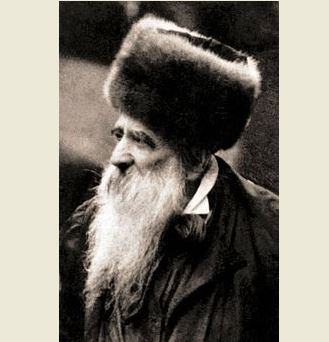
I · Chasidic Tradition
Rabbi Yissachar Dov Rokeach
Belzer Rebbe
1854-1925
Zionism itself is founded on denial of G-d's providence, reward and punishment and the coming of the redeemer. Nationalism is built only on the ruins of the holy Torah, belief in G-d, His prophets, and the Talmudic Sages. Therefore, even if the movement were led by G-d-fearing, righteous men with the best of intentions, it would be impossible for it not to destroy faith and Torah.
Source
Kuntres 22 Cheshvan p. 108

I · Chasidic Tradition
Rabbi Yissachar Dov Rokeach
×
Zionism itself is founded on denial of G-d’s providence, reward and punishment and the coming of the redeemer. Nationalism is built only on the ruins of the holy Torah, belief in G-d, His prophets, and the Talmudic Sages. Therefore, even if the movement were led by G-d-fearing, righteous men with the best of intentions, it would be impossible for it not to destroy faith and Torah. (Kuntres 22 Cheshvan, p. 108)
Once he refused to sit down at his Friday night tish, because one of his relatives, a Mizrachi rabbi, was present. The man was forced to leave, and only then the Rebbe came in. (Kuntres Mipi Dodi, stories told by Rabbi Moshe Kliers of Tiberias; Mishkenos Haro’im p. 378)
He stood out as someone who kept on the lookout, checking up on and determining the character of all the various movements that arose in his time. He was a strong opponent of the Zionist movement until his dying day. Every day he would warn his followers, who streamed to him from all parts of the world, not to stumble, G-d forbid, in coming close to or even identifying with this movement. Every Sabbath at the third meal, when all Chassidic rebbes give speeches full of words of Torah and inspiration for their followers, the Belzer Rebbe made the Zionists and Mizrachists one of the focal points of his speeches. One by one, he would enumerate all the prohibitions that this movement and all who joined it transgressed. (Kol Yisroel, Cheshvan 5686 (1926); Mishkenos Haro’im p. 377)
The viewpoint of the newspaper Machzikei Hadas was based on the strong opinions of the Belzer Rebbe. At the time when the Zionist movement was founded, all the greatest rabbis came out with a declaration against Zionism, which was printed in the Machzikei Hadas. From then on, the newspaper would attack the Zionist philosophy at every opportunity. In the year 5684 (1924) a declaration was published in Machzikei Hadas against the Mizrachi and the Zionists, with the signatures of more than a hundred rebbes and rabbis from all over Hungary. The newspaper published more open letters and announcements from time to time against the Zionists and the Mizrachi people. For example, one open letter featured the signatures of Russian rabbis and stated, “Our brothers, faithful Jews, be strong for our people and our Torah, close the breach and let us resolve not to let the destructive Mizrachi Zionist philosophy into our houses. (Mishkenos Haro’im p. 378)
"But it could be that before the arrival of moshiach, the Satan’s efforts will succeed and the wicked will get a state in Eretz Yisroel. Therefore it is an obligation on every Jew who must leave his home to move to America or somewhere else, but not to Eretz Yisroel under the state of these wicked men, because their state would be a great danger to every Jew’s body and soul." (Om Ani Chomah v. 6 13 Adar I 5717)

Sources & Citations
Kuntres 22 Cheshvan p. 108

№
8
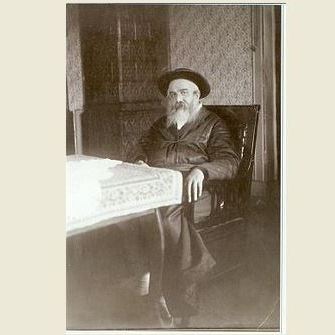
I · Chasidic Tradition
Rabbi Chaim Elazar Shapiro
Munkaczer Rebbe Author of Minchas Elazar
1871-1937
After the sin of the spies, the Torah tells us that some Jews tried to invade Eretz Yisroel against the command of Hashem: And they awoke early in the morning, and they ascended to the mountaintop, saying, Here we are, and we will go up to the place of which Hashem has spoken, for we have sinned.
Source
Succah 52a
I · Chasidic Tradition
Rabbi Chaim Elazar Shapiro
×
After the sin of the spies, the Torah tells us that some Jews tried to invade Eretz Yisroel against the command of Hashem: "And they awoke early in the morning, and they ascended to the mountaintop, saying, "Here we are, and we will go up to the place of which Hashem has spoken, for we have sinned." And Moshe said, "Why do you transgress the command of Hashem? And it will not succeed. Do not ascend, for Hashem is not in your midst, so that you do not get smitten by your enemies. For the Amalekites and the Canaanites are there before you, and you will fall by the sword, because you have turned aside from following Hashem, and Hashem will not be with you. And they defiantly ascended to the mountaintop, but the ark of the covenant of Hashem and Moshe did not move from the midst of the camp. And the Amalekites and the Canaanites, who lived on that mountain, descended, and they smote them and pounded them until Chormah. (14:40-45)
The Minchas Elazar interpreted these verses as a prophecy about the Zionists of his time: "The Zionists went up to Eretz Yisroel with a strong hand to found colonies and fight with the gentiles. They defiantly ascended to the mountaintop, against the command of Hashem Yisborach through our Sages and our forefathers, who warned that this is not the way, and said that their end would be bitter, G-d forbid. They went in the path of strength and brazenness, as Rashi explains the word ויעפלו (v. 44).
"Yet the ark of the covenant of Hashem - the holy Torah, for we believers have nothing else left over but this Torah - and Moshe - the Torah leaders and tzaddikim (as we find in Shabbos 101b that a great sage can be called Moshe) who cried out against the Zionists and did not ascend with them or join them - did not move from the midst of the camp - the loyal, believing Jews. And the Amalekites and the Canaanites, who lived on that mountain...this is a reference to the evil inclination, which will one day appear in the form of a mountain (Succah 52a). And they smote them and pounded them until Chormah - as unfortunately occurred with the destruction and the killings in Jerusalem, the Holy City, near the Kosel Hamaaravi (in 1929) through these wicked people. May Hashem save us and help us and redeem us soon, in our days, for the sake of His name and His Torah, with love." (Chaim Veshalom, Parshas Shlach)
The Rambam does not count living in Eretz Yisroel as one of the 613 mitzvos. The Megillas Esther explains that this is because the mitzvah only applied in the ancient Temple times, and the Rambam only counts mitzvos that apply for all times. This is a very strange statement by the Megillas Esther, for surely the mitzvah to live in Eretz Yisroel will apply in the times of Moshiach, and the Rambam counts mitzvos that will come back into force only in the times of Moshiach, such as terumah, maaser, challah, and all the mitzvos of the Temple service.
The Minchas Elazar explains that in the time of Moshiach, the mitzvah to conquer the land and expel its inhabitants will not simply come back into force like terumah and maaser. Moshiach will come in a miraculous way, predicted by a prophet; he himself will be a prophet close to Moshe Rabbeinu's level (Rambam Teshuva 9:2), and he will be able to tell each Jew what tribe he comes from (Melachim 12:3). He will succeed in getting all Jews to repent (Melachim 11:4), a feat no one could accomplish under normal conditions. All the gentile nations will call in the name of Hashem (ibid.), and they will come to hear Moshiach as well (Teshuva 9:2). The statement of the Gemora (Shabbos 63a), quoted by the Rambam (Melachim 12:2), that "there is no difference between this world and the days of Moshiach except the subjugation of the nations," means that in the general world there will be nothing miraculous, but Moshiach himself will be a wondrous person. Thus the Jewish people will not have to conquer Eretz Yisroel in those future times; Moshiach, with his influence over the nations, will solve that problem. It is thus incorrect to say that the mitzvah of taking over the land will apply in the future, for even in the future it will not be a mitzvah for the Jewish people; it will be Moshiach's task. (Minchas Elazar 5:16)
The Minchas Elazar adds that nowadays, since the Zionists have made living in Eretz Yisroel the center of their ideology, even the Ramban would agree that we should not put effort into this mitzvah. This is comparable to the one-stone altar called a matzeivah, which was used by the Avos and was beloved to Hashem at that time, but later became forbidden because the idol worshippers had begun to use it (Rashi on Devarim 16:22).
Sources & Citations
Succah 52a
№
7
I · Chasidic Tradition
Rabbi Yisroel Hager
Vizhnitzer Rebbe
1860-1936
Satan is constantly changing his disguise and sending his agents to entrap the Jewish masses in his net, so that they throw the yoke of the Torah off their necks. The names of these agents change every few generations. Today, they are called Zionists.
Source
Kedosh Yisroel ch. 16 p. 276
I · Chasidic Tradition
Rabbi Yisroel Hager
×
Satan is constantly changing his disguise and sending his agents to entrap the Jewish masses in his net, so that they throw the yoke of the Torah off their necks. The names of these agents change every few generations. Today, they are called “Zionists”. (Kedosh Yisroel ch. 16, p. 276)
Once he met a Zionist on the anniversary of Herzl’s death. The Zionist said, “In honor of this day it is proper to have a feast.” The Rebbe replied, “Certainly, for when the wicked perish there is joy.” (ibid. v. 2 ch. 24, p. 619)
In last week’s newspaper I saw things written in my name that I did not ever say or think of. I therefore request of you that you honor your newspaper’s principles and issue a correction. It claims that I said that “the Zionist idea is a lofty idea and no good Jew who follows the path of Judaism and clings to the commandments of G-d and His Torah should oppose this great idea”. This is a complete lie, for I never spoke such words. (ibid.)
I would very much like to travel to the Holy City of Jerusalem, but due to the “Zionists” I will not go, even if I would lock myself in my room and avoid any contact with them. (ibid. ch. 18 p. 300)
The Rebbe did not give everyone permission to go to the Holy Land, especially young people without their parents, lest they fall under the influence of the “Zionist” movement.
I am turning to you urgently to draw your attention to the holy obligation upon you to join the united religious kehillah (the Eidah Chareidis of Jerusalem), built on holy foundations, and not, G-d forbid, the kehillah of the Nationalist Council, which is not founded on the Torah of G-d. (ibid. ch. 24, letter 35)
Sources & Citations
Kedosh Yisroel ch. 16 p. 276
№
6
I · Chasidic Tradition
Rabbi Refoel Blum
The Kasho Rav
1910-2005
It has been some time since the greatest rabbis, leaders of the fight against Zionism, have passed away. They have left our generation, unfortunately, without a window to let in the light of truth. Therefore we must strengthen ourselves, not weaken in our battle, and not sit with folded hands and laziness; but rather raise our voices constantly against all the sins of the Zionists.
Source
Ketzei Hashomayim p. 56
I · Chasidic Tradition
Rabbi Refoel Blum
×
It has been some time since the greatest rabbis, leaders of the fight against Zionism, have passed away. They have left our generation, unfortunately, without a window to let in the light of truth. Therefore we must strengthen ourselves, not weaken in our battle, and not sit with folded hands and laziness; but rather raise our voices constantly against all the sins of the Zionists. Whenever the leaders of the Zionist state commit terrible desecrations of G-d‟s name, speaking heretical and insulting words in the name of the Jewish people, we are obligated to come out against them with constant protests and demonstrations. We must not limit our protest to speaking behind closed doors where nobody sees or hears. The protests must not be against one specific sin or the other, but rather to let the voice of the Torah be heard: that the very existence of the state is like a bonfire, burning, G-d forbid, the parchment and the letters of the Torah. It is not enough just to say that a certain problem needs to be rectified. Rather, the main stress should be that the entire state is forbidden according to the holy Torah. It is entirely founded on uprooting the Torah, and it is poison for everything holy to us. We must announce in the streets before the eyes of all the gentile nations that the Zionists are not the leaders of the Jewish people, that they have no right whatsoever to speak in the name of the Jewish people, and that there are still Jews left who are faithful to G-d and His Torah. We must let all this be heard with a powerful voice, not a weak voice. (Ketzei Hashomayim, p. 56)
Sources & Citations
Ketzei Hashomayim p. 56
№
5
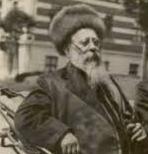
I · Chasidic Tradition
Rabbi Ben Zion Halberstam
Grand Rabbi of Bobov
1874-1941
Also the bird found a house, and the wild bird a nest for itself (Tehillim 84:4). The bird is a metaphor for the Jewish people, as Rashi explains there. When the time of redemption arrives, the Jewish people will go up to Jerusalem and find a house, a Beis Hamikdash already built by Hashem and brought down from Heaven.
Source
Tehillim 84:4
I · Chasidic Tradition
Rabbi Ben Zion Halberstam
×
“Also the bird found a house, and the wild bird a nest for itself” (Tehillim 84:4). The bird is a metaphor for the Jewish people, as Rashi explains there. When the time of redemption arrives, the Jewish people will go up to Jerusalem and find a house, a Beis Hamikdash already built by Hashem and brought down from Heaven. But the wild bird will make a nest for itself. The wild bird is a metaphor for the wicked Jews who want to be wild and free from the mitzvos. They force the end and wish to build a nest, a sovereign state, on their own, pretending that this is the ultimate redemption. But it is obvious and known that they speak falsely, and that their way is the complete antithesis of the Torah. See the Targum on Shir Hashirim 8:4: “The king Moshiach will say, I adjure you, my people, house of Israel, why do you fight with the people of the land, to leave the exile? Wait a little more until the nations who ascended to war in Jerusalem are destroyed, and after that the Master of the World will recall the love of the righteous ones and it will be His will to redeem you.” And this is based on the Gemora in Kesubos (111a), that Hakadosh Baruch Hu made the Jewish people swear not to force the end.
The Torah needed to warn the Jews not to follow these people, not to be influenced by their false beliefs. Therefore it says, “And if his hand was not able” (Leviticus 25:28) – if the Jewish people did not yet merit the complete and true redemption, then they should not think of doing as the wild bird does, building a nest for themselves, but rather “it is enough to return to him” – it is enough that they do complete teshuva. For the redemption is only dependent on teshuva (Sanhedrin 97b), and if they will only do teshuva then “also the bird will find a house,” for Hashem will redeem us and reveal the Beis Hamikdash from Heaven. (Kedushas Tzion on Tanach, p. 92)
On Hoshana Rabba, we say, "Hoshana Tzion Hametzuyenes" - save Zion, the designated one. The Bobover Rebbe, Rabbi Ben Zion Halberstam (1874-1940), asks: What is the meaning of this extra word "hametzuyenes" - the designated one? What is this designation or indication that Zion must have? He answers that the author of the Hoshanos saw with holy inspiration that there would come a time when wicked Jews would take the name Zion for themselves, to use for their movement to conquer Eretz Yisroel by force before the proper time. Then, whenever the simple Jewish masses would see the word “Zion” mentioned in the prayerbook, for example, “May you cause a new light to shine on Zion,” they would think that it refers to this new movement, G-d forbid. Therefore he wrote in the Hoshanos, “The designated Zion” – the Zion that has the mark and indication that it is the right one. What is that mark and indication? The Hoshanos continues, “Hoshana kodesh hakadashim” – it must be a Zion that is holy of holies, with the holiness of Eretz Yisroel – not, G-d forbid, the movement of these wicked men who call themselves Zionists. They have no connection to holiness. (Kedushas Tzion, Moadim, Hoshana Rabba p. 45).
The Bobover Rebbe composed a song describing how moshiach will come: "One fine day, while the storekeeper stands by his scale, and the tailor is in the middle of sewing, the porter is carrying bags and the gardener is in the middle of planting, suddenly we will hear a cry that the time has come! Jews will be free from exile at last!" He based the song on Sanhedrin 97a, where it says that moshiach will come when the Jewish people least expect him. This, he said, is the meaning of the verse in Micha 7:15, "I will show you wonders like the days when you came out of Egypt." The Exodus happened suddenly, without preparation by the Jews. They stood at the shores of the sea, with Pharaoh's army closing in on them. Four groups formed, expressing different opinions about what to do. Suddenly their salvation came in an unexpected way: Hashem commanded Moshe to stretch out his hand and split the sea. In the same way, we don't know how our future redemption will come, and how we will leave exile. This is what the Rambam says (Melachim 12:2). We don't have to form groups and look for ways to speed up the redemption by gathering the exiles and emigrating to Eretz Yisroel. Rather, we must rely completely on Hashem Yisborach, who will bring the redemption suddenly, in the middle of an ordinary day. (Related by Rabbi Yehoshua Wolf Zaffern, who heard it from the Kedushas Tzion)
Sources & Citations
Tehillim 84:4
№
4
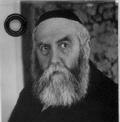
I · Chasidic Tradition
Rabbi Yosef Yitzchok Schneersohn
The Lubavitcher Rebbe
1880-1950
The straight-thinking Jew looks on in astonishment, thinking: what do these rebels against G-d and His Torah have to do with the Land of Israel?
Source
Mishmeres Chomoseinu 20 Shvat 5716
I · Chasidic Tradition
Rabbi Yosef Yitzchok Schneersohn
×
The straight-thinking Jew looks on in astonishment, thinking: what do these rebels against G-d and His Torah have to do with the Land of Israel? (Mishmeres Chomoseinu 20 Shvat 5716)
I hereby join with the honored rabbis who oppose and protest against Mizrachi and the like. They do not walk in the spirit of the Torah. I wish to convey in writing that the Jewish people should separate themselves from this terrible desecration. Let the defiled leave the face of the Holy Land! (Om Ani Chomah, 5709 ch. 4 p. 400)
We are foresworn by the covenant of G-d that we cannot overcome [exile] with might or power, only by understanding and knowing the word and command of G-d. (ibid.)
In the early 1920’s, the Lubavitcher Rebbe, Rabbi Yosef Yitzchok Schneersohn, wrote a fiery pamphlet opposing settlement in Eretz Yisroel. He refers to the following Midrash on Shir Hashirim 2:8, which gives a reason for the scattering of the Jewish people: G-d has decreed that they must be in exile in all 70 nations of the world. If they all stick together, it will take a very long time for them to go to all 70 nations. By spreading apart, Jews fulfill the decree of exile much more quickly:
“The voice of my beloved, behold it has come” (Shir Hashirim 2:8) – this refers to the king moshiach. When moshiach comes and says to the Jewish people, “In this month you will be redeemed,” they will say to him, “Our teacher, king moshiach, how can we be redeemed? Didn’t the Holy One, blessed is He, say that He is exiling us under the seventy nations?” And he will give them two answers: “One of you goes into exile in Barbary and another of you goes into exile in Sumatra (in the Pesikta Rabasi the text reads: Britain), and it will be considered as if you all went to these places.” The second answer is, “The government appoints local governors from various nations. If one Cuthean, for instance, becomes a ruler over the Jews, although the central government may not be Cuthean, it is considered as if the Jewish people were in exile under the Cuthean people.
If one travels around the world and looks at Jewish communities, he will see that, thank G-d, the Jewish people is alive and well. Although our enemies (who intend to be enemies but are actually benefactors) persecute us, still every city has a cheder, a yeshiva and charity organizations. When a religious Jew comes to a new place and gets settled, he will, with the encouragement of gedolim, help build one of these institutions. As the Midrash says (on Shir Hashirim 2:8), when one Jew lives in Barbary and another lives in Britain, it is considered as if the whole Jewish people went to these places and this fulfills the decree of exile to the seventy nations. We must believe with complete faith that when moshiach comes, he and Hashem will be more pleased with the cheder, the shul and the charity institution founded by the Jews in exile, in Barbary and Britain, than with the factory and workshop founded, G-d forbid, in Jerusalem the holy city. (Tikun Olam, Siman 41)
Sources & Citations
Mishmeres Chomoseinu 20 Shvat 5716
№
14
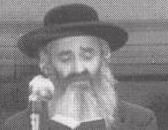
I · Chasidic Tradition
Rabbi Hillel Lichtenstein
Krasner Rav
d. 1979
We must make known and reveal that the establishment of the State of Israel and its government is against the Torah and fundamentally wrong. It is a source of poison, leading the Jewish people astray from belief in G-d… All their celebrations on Independence Day, including the Hallel prayer instituted by their rabbis and any other holiday celebrations – are all idolatry and heresy, and G-d forbid to celebrate their holiday.
Source
Letter to the Central Rabbinical Congress
I · Chasidic Tradition
Rabbi Hillel Lichtenstein
×
We must make known and reveal that the establishment of the State of Israel and its government is against the Torah and fundamentally wrong. It is a source of poison, leading the Jewish people astray from belief in G-d… All their celebrations on Independence Day, including the Hallel prayer instituted by their rabbis and any other holiday celebrations – are all idolatry and heresy, and G-d forbid to celebrate their holiday. (Letter to the Central Rabbinical Congress)
When the state was established, two people came to the rabbi’s room to give him what they thought was good news. The rabbi said to them, “On this day we should tear our garments and establish a fast day for all time.”
The rabbi also said, “I don’t know if there was ever a day as terrible for the Jewish people as this day.”
It is obvious to us that all great rabbis of the past unanimously warned to keep far from the Zionists’ opinions and ways, and they proved that according to Jewish law it is forbidden to join them for any purpose. They also placed a severe ban on the group known as the religious Zionists, who joined the Zionists. They looked ahead with their pure eyes and deep understanding and saw that if, G-d forbid, the Zionists would succeed in founding a state, they would induce masses of Jews to deny G-d and His Torah and to desecrate all that is holy. They would also cause the gentile nations to hate the remainder of the Jewish people both in the Holy Land and elsewhere. With a powerful voice, in writing and orally, they warned everyone to keep far from them in all ways, and to reject them as defiled.
Now it is not the time to be silent, sit with folded hands and see, G-d forbid, the destruction of our people. If we are silent, we will be found guilty of sin, as our Sages say that one person can be blamed for another’s sin. Whoever has the ability to protest against a sin and does not do so is blamed for that sin. Therefore in my opinion the rabbis must take action to save our generation from the poisonous trap of heresy. (Letter, 5717)
Perhaps it would be proper to make their independence day a fast day, in order to show our opposition to the heretics. (Letter to the Central Rabbinical Congress)
We must establish a fixed practice in all Jewish schools for boys and girls that the teachers should spend a little time twice a week teaching children of all ages about the evil of the Zionist doctrine, and condemning their anti-religious acts. They must inculcate into the children the concept of staying apart from the Zionism, their ideas and organizations, their books and newspapers, under any name. (ibid.)
The more one speaks to his children and wife about the evil of these heretics, the better. (Kavanas Halev, Shmini)
It is an obligation for every G-d-fearing Jew to fight against the Zionists in any way possible, to publicize their abominations and to inculcate into our children’s hearts to hate them and stay away from them. They must tell the Zionist idol, “Go away, defiled one!” (Responsa Kavanas Halev, Introduction section 5)
Rabbi Yitzchok Lebovitz said, “Particularly following the unprecedented destruction of our people under the wretched Nazi regime, when the indescribable abuse of our people had exceeded any thinkable limit, when Hell was literally experienced here on planet Earth; and following that, also the period of the notorious Soviet Communist persecution of Jews, who refused to surrender their Holy Faith, yearnings for independence were at their peak and suppression of acting upon these feelings was extremely difficult. So much that we are amazed at the character of those individuals who at that time withstood the challenge and controlled their emotions, favoring rather to accept the will of G-d. I find it appropriate to mention the courage of my uncle, the Krasner Rav, Rabbi Hillel Lichtenstein, who underwent the seven chambers of hell at Auschwitz, and not withstanding this fact, when the Zionist activists lurked in the DP camps morbidly abusing the situation for their personal agenda, recruiting pioneers to aid them in their struggle for independence from G-d, he did not lose his mind and was not able to be coerced. But rather, upon his arrival at the Landsberg DP camp immediately following liberation from Auschwitz, he stood up and vehemently protested against the Zionist delusion. Upon contemplation of this one should be awed at the greatness of this strength which was a result of his total submission to our Holy Torah.”
The Krasner Rav testified that his father-in-law, the Shimloyer Rav, cried out before he was killed by the Nazis, "Only the wickedness of the Zionists has caused this! It happened to us because we did not protest against them enough."
Rabbi Yitzchok Lebovitz said that the Krasner Rav was one of those who pressed the Satmar Rebbe to write a book explaining why it is forbidden to vote in the elections of the "evil state." He also helped edit the Satmar Rebbe's second book, Al Hageulah V'al Hatemurah, before it was published. And he was among the few who stood behind the Satmar Rebbe when he prohibited visiting the Western Wall after 1967.
Sources & Citations
Letter to the Central Rabbinical Congress
№
13
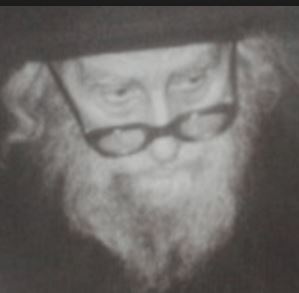
I · Chasidic Tradition
Rabbi Moshe Yitzchok Itzikel Gewirtzman
Pshevorsker Rebbe
1881-1976
When he sent a letter to the Holy Land, he would write the address himself, and he would write it using the gentile alphabet, not the Hebrew alphabet. Once in his later years, when he did not have the strength, he wrote a letter and asked his attendant to address it for him.
Source
I · Chasidic Tradition
Rabbi Moshe Yitzchok Itzikel Gewirtzman
×
When he sent a letter to the Holy Land, he would write the address himself, and he would write it using the gentile alphabet, not the Hebrew alphabet. Once in his later years, when he did not have the strength, he wrote a letter and asked his attendant to address it for him. The attendant wrote it using Hebrew letters. When the Rebbe saw this, he said, “Jewish?! Are they Jews?! Is it a Jewish state?!” He took the envelope and tore it up, and he took another envelope and wrote the address himself with the gentile alphabet.
He would not touch the currency of the Zionist state. When someone put some Zionist currency on his table, he would push it off with his elbow. When he had wine made by the Lipshitz company, on Friday afternoon he would peel off the Star of David from the label.
The Pshevorsker Rebbe founded a major Hasidic community in Antwerp, Belgium. The community has remained faithful to their founder's opposition to Zionism.
Sources & Citations
№
12
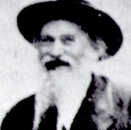
I · Chasidic Tradition
Rabbi Shaul Brach
Rabbi of Kasho Hungary
1865-1940
We have long ago been foresworn by the holy prophets not to force the end and not to enter the Land of Israel by force of arms. But these wayward sons say that with their strong arms and money they will save Israel. They say openly, G-d has forgotten us and we will save ourselves.
Source
Givas Shaul 386
I · Chasidic Tradition
Rabbi Shaul Brach
×
We have long ago been foresworn by the holy prophets not to force the end and not to enter the Land of Israel by force of arms. But these wayward sons say that with their strong arms and money they will save Israel. They say openly, “G-d has forgotten us and we will save ourselves.” (Givas Shaul, 386)
Anyone who believes in the Torah of Moses should keep very far from the Zionists and Mizrachists. He should avoid eating and drinking together with them. It would really be proper to expel them from the Jewish people, as our forefathers did to the Sadducees and the Karaites. Every person should guard his soul and avoid intermarriage with them. They have sent heretics and rebels to the Holy Land to anger G-d in His palace. It is especially important to keep away from them in our country, where all the greatest rabbis have unanimously forbade joining them. One should not debate with them, but rather keep as far as possible from them. (Avos Al Banim, introduction p. 24)
Rabbi Shaul Brach, rabbi of Kasho, Hungary (1865-1940), wrote: "The worst of all are those who transgress the oath that He made us swear not to go up as a wall to Eretz Yisroel. They think they have the power to fight against the officials of the government, and they are leading the Jewish youth like sheep to the slaughter to fight in Eretz Yisroel against the [British] government and against the Arabs. But it is explicit in the holy Zohar (end of Vo'eira) that the Ishmaelites will prevent Israel from living in Eretz Yisroel." (Kuntres Shomer Emunim)
Since the dawn of the Zionist movement, suffering has not ceased to exist in the world. All the warnings of the Torah have been fulfilled in their details among our people all over the world. For a believer it is no surprise that the Zionists are the same as the heretics at the time of the Destruction of the Temple. Divine judgment has been unleashed on the entire world. (Avos Al Banim, p. 14)
As far as our brethren in America who support the Zionist heresy in the Holy Land are concerned, if they do not recognize the truth, even in free America they will quickly feel the effects of the verse, “With anger poured out will I rule over you” (Ezekiel 20:33). May G-d have mercy.
Rabbinical Court of the Orthodox Community of Kasho, Hungary
Urgent Notice
It is our obligation to make a public announcement because we know the extent to which the issues are important. Despite all its propaganda, the Zionist movement stands in total opposition to the foundations of the Jewish faith transmitted to us throughout the generations. Zionism itself rejects the Jewish religion. This is the position of our great and pious rabbis in the past and the present, in the Holy Land and abroad, without exception.
In the early years of Zionism, when it pretended to express love for the Holy Land and the holiness of the opportunity to live there, a few rabbis were caught in its snare. Today, however, when Zionism shows its true face as a false messianic movement, our rabbis stand at war against it just as rabbis of former generations had opposed the false messiahs of their times, including during the time of the false messiah Sabbetai Zevi, may his name be obliterated, and the later movement of the Frankists.
Association with the Zionists is forbidden according to the Torah and our tradition. Zionism is a disgusting abomination.
This announcement is based on all aspects of Jewish law. Every Jew who fears G-d will certainly accept our statement under the Code of Jewish Law and shall not stray from it to the left or the right.
May those who follow it be blessed.
December 14, 1925, Kasho, Hungary
Rabbi Shaul Brach
Rabbi Hanoch H. Pack
Rabbi Shmuel Jungreis
Sources & Citations
Givas Shaul 386
№
11
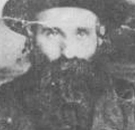
I · Chasidic Tradition
Rabbi Chuna Halberstam
Kalashitzer Rebbe
d. 1940
The plain truth is that there is no difference between the three groups: the Zionists, the Mizrachists and the Agudists, also known as Shlumei Emunei Yisroel. The ways of all of these are abominable to religious Jews.
Source
Tikun Olam ch. 56
I · Chasidic Tradition
Rabbi Chuna Halberstam
×
The plain truth is that there is no difference between the three groups: the Zionists, the Mizrachists and the Agudists, also known as Shlumei Emunei Yisroel. The ways of all of these are abominable to religious Jews. (Tikun Olam, ch. 56)
When someone asked the Rebbe if he should go to the Land of Israel, he replied, “When I was young I had a desire and yearning to go to the Land of the Israel, to the point that I contemplated leaving my father and mother and going there on foot. But now that the Zionists have settled there, I say that it is forbidden to settle there, for the place is prepared for punishment.”
Pinchus Backan, who grew up in the town of Reisha, once got up early and went to the synagogue to study Torah. On the way, he walked with the Kalashitzer Rebbe, who was on his way to the mikveh. As they passed the Bet Am building (the Zionist meeting hall), the Rebbe told him to say three times, “You shall surely despise it and hold it in disgust, for it is forbidden.” This is a verse from Deuteronomy 7:26, recited by Jews when they see a house of idol worship. (Mishkenos Haro’im v. 6)
In the main synagogue of Reisha, a certain man made a celebration for his son on the Sabbath preceding his wedding. The Kalashitzer Rebbe was invited and he attended. During the reading of the Torah, it is customary for the gabbai (sexton) of the synagogue to recite a prayer called “Mi Shebeirach” for each person who receives the honor of saying a blessing over the Torah, and in that prayer the gabbai often announces that the honoree will donate a certain sum of money to charity. At one point, the Rebbe heard the gabbai announce that the honoree was giving money to the Keren Kayemet (the JNF – the Zionist fund for land purchase). The Rebbe walked over to the gabbai, grabbed him by the back of his neck, and pulled him out of the synagogue, saying, “How did you have the audacity to say a prayer next to the holy Torah for the benefit of the Keren Kayemet?” (Mishkenos Haro’im, v. 6)
The Kalashitzer Rebbe was a great zealot against the Zionists and other new groups. When he lived in Poland, he once passed some people holding charity boxes to gather donations for the Zionists, and they asked him to donate as well. He grabbed some bills out of the charity box and tore them up, although he knew that according to Polish law he could be put in jail for this. (Noam Siach, p. 309, quoted in Mishkenos Haro’im v. 6)
The Mizrachi movement was the bridge that brought the filth of Zionism into the Orthodox Jewish camp. These Mizrachi members are people who outwardly fulfill some of the Torah’s practical commandments, but their poison lies within, for heretical opinions and denial of the Torah have taken up residence deep in their minds. Regarding them, it is written in Psalm 50:16, “To the wicked man G-d says, why do you speak of my laws?” Similarly, Isaiah (1:12) says, “Who asked you to trample my courtyards?” (Noam Siach, p. 309, quoted in Mishkenos Haro’im v. 6)
In Reisha, when a Mizrachist man was chosen to be principal of the main children’s yeshiva in town, the Kalashitzer Rebbe got up and announced in his synagogue on the holiday of Shavuos that no one should donate any more money to that yeshiva, because the principal might poison the children with his dangerous views. Better that such a school close down, he said. One of the board of directors of the school, the fine and pious Reb Reuven Eckstein, a Djikover Chassid, heard what the Rebbe said and immediately fired the Mizrachist man. (Mishkenos Haro’im, v. 6)
Once I spent a Shabbos with the Kalashitzer Rebbe. It was the Shabbos before a new month, and during the prayer for the new month, when the Rebbe reached the words “for redemption soon” he said, “The Gorlizer Rebbe said, a redemption soon but not through the wicked Herzl and his colleagues. And today I say, not through Itche Meir [Levine, leader of Agudath Israel] and his group.” (Related by Rabbi Yissachar Ber Dochner, Rabbi of Antwerp; quoted in Mishkenos Haro’im v. 6)
When people were discussing whether the Zionists would succeed in establishing a state for themselves, he placed his hand on the mezuzah and said, “Even if they succeed in establishing a state, they will have no rest there.” (Mishkenos Haro’im, v. 6)
Similarly, when someone asked the Rebbe what country he and his ten children should flee to for refuge when World War II began, the Rebbe replied in a letter, “Do not go to Palestine, because it will harmful for your children’s upbringing. Rather go to America.” (Mishkenos Haro’im, v. 6)
The Kalashitzer Rebbe was very particular to remove the Star of David from the curtain in front of the ark in the synagogue, and from other holy objects, since the Zionists chose that symbol for their flag. Although the symbol had been used on the curtain before Zionism, he did this as extra measure to keep away from Zionism. (Mishkenos Haro’im, v. 6)
The Rebbe used to relate that when the Zionists picked the Star of David as their symbol, Rabbi Shloime Halberstam, the Bobover Rebbe, ordered all the Stars of David torn and removed from the synagogue curtains and tablecloths. (Mishkenos Haro’im, v. 6)
The yartzeit of Rabbi Chaim Halberstam of Tzanz once fell on a Friday. The Kalashitzer Rebbe travelled to Tzanz for the occasion, and stayed on for Shabbos. One man in town was celebrating the birth of a daughter, and he invited the Rebbe to his house for Kiddush. When the Rebbe arrived, he noticed on the wall of the entry room a Star of David made of colored paper. The Rebbe stopped and declared that he would not enter the house as long as the Star of David was there. It was forbidden for a Jew to tear it down on Shabbos, so he waited there until they brought a non-Jew to tear it down. Only then did he enter the house. (Divrei Chuna, p. 212, quoted in Mishkenos Haro’im, v. 6)
Sources & Citations
Tikun Olam ch. 56
№
10
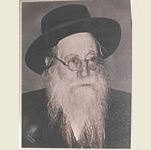
I · Chasidic Tradition
Rabbi Yonasan Steiff
1877-1958
Rabbi Yonasan Steiff was dayan of Budapest and, in America, rav and rosh yeshiva of the Viener Kehillah. In his introductory lecture to talmidim, he exhorted them to learn Torah, because knowledge of Torah is one's insurance against getting swept up into the heretical movements of the time.
Source
Tehillim 115:9
I · Chasidic Tradition
Rabbi Yonasan Steiff
×
Rabbi Yonasan Steiff was dayan of Budapest and, in America, rav and rosh yeshiva of the Viener Kehillah. In his introductory lecture to talmidim, he exhorted them to learn Torah, because knowledge of Torah is one's insurance against getting swept up into the heretical movements of the time:
In Hallel we say: House of Israel, trust in Hashem; He is their help and shield (Tehillim 115:9). The word He is added to show that only He can help us, and only to Him do we look for our salvation. This idea is repeated in the following two verses: House of Aharon, trust in Hashem; He is their help and shield. Those who fear Hashem, trust in Hashem; He is their help and shield.
The Oral Tradition teaches that the Omer Sacrifice was always harvested on the night following the first day of Pesach, and offered in the Beis Hamikdash on the second day of Pesach. The Mishnah in Menachos (65a) says that the heretical Baithusian sect disputed this tradition of Chazal, and held that the Omer should be harvested on the first Saturday night and offered on the first Sunday after the first day of Pesach. To combat the influence of this sect, Chazal enacted that the Omer be harvested with great fanfare, before a large crowd of people. The man designated to cut it would say to the crowd, “Has the sun set?” They would say, “Yes!” “Has the sun set?” “Yes!” “Has the sun set?” “Yes!” Then he would ask, “With this sickle!” They would say “Yes!” And so on three times. “With this basket?” “Yes!” “Should I cut?” “Cut!” Each question and answer was repeated three times, in order to reinforce the true interpretation of the Torah handed down to us by Chazal.
And the wise Rabbi Samson Raphael Hirsch in his Siddur writes that Chazal took a similar approach to the prohibition to fight wars during exile. They composed the fourth blessing of Birkas Hamazon: "He did good, He does good, He will do good to us; He bestowed upon us, He bestows upon us, He will bestow good upon us forever." They wished to instill faith in Jewish hearts, so that they should never again trust in false messiahs or attempt to help themselves, but rather to trust in G-d's great name alone, that He would certainly fulfill His promise: "If your exiles will be on the edge of heaven, from there Hashem your G-d will gather you and take you" (Devarim 30:4).
All of the above is found in Shas and Poskim, such that for whoever learns Shas, all these things are obvious, and there is no need even to bother writing them. It is well known that such was the ancient Jewish belief passed down to us by the Tannaim and Amoraim, who in turn received it from the generations before them, all the way back to Moshe Rabbeinu. Therefore, nowadays anyone who wants to escape the influence of all the crooked and empty movements must study the Oral Torah, and then he can be sure of his path, for the Oral Torah is the strong bridge leading to truth and justice. (Rabbi Yonasan Shteif, Introduction to Chadashim Gam Yeshanim on Chullin, p. 33)
Sources & Citations
Tehillim 115:9
№
3
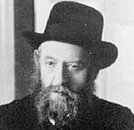
I · Chasidic Tradition
Rabbi Shalom Ber Schneersohn
Lubavitcher Rebbe
1860-1920
Even if these men were loyal to Hashem and His Torah, and even if there were a chance that they would achieve their goal, we must not listen to them in this matter, to make our redemption with our own power.
Source
Rashi Kesubos 111a and see Midrash Shir Hashirim 2:7
I · Chasidic Tradition
Rabbi Shalom Ber Schneersohn
×
Even if these men were loyal to Hashem and His Torah, and even if there were a chance that they would achieve their goal, we must not listen to them in this matter, to make our redemption with our own power. Is it not forbidden even to force the end with excessive prayer (Rashi Kesubos 111a, and see Midrash Shir Hashirim 2:7)? All the more so that with power and worldly methods, that is, to leave exile by force, we are not permitted. Not in this way will our salvation and the redemption of our souls come. And this is against our true hope, for our whole longing and hope is that that Hashem will bring us the moshiach soon and our redemption will come through Hashem Himself. This is what the Midrash says on the verse, "For with You is the source of life" - that even the redemption that came through Moshe Rabbeinu was not a complete one, and they were enslaved against afterward. Certainly this was true of the redemption that came through Chananya, Mishael and Azarya, although they acted in accordance with Yirmiyahu and the other prophets living at the time. And in this exile, we must hope only for the redemption and salvation of Hashem Himself, not through a human being, so that our redemption should be complete. (Ohr Layesharim, p. 57)
Those who assist these Zionists will pay on the Day of Judgment, for they are abetting those who cause the masses to sin. Therefore, whoever is for G-d and His Torah will not join the evildoers and will not cling to them. On the contrary, he will oppose them as much as possible. And until it is G-d’s will to redeem us, we must accept the yoke of exile to atone for our sins. (Ohr Layesharim, p. 59)
Their plan to gather the Jewish people together with their own power will never be; and all their strength, their many strategies and efforts will not work or have any success against the will of G-d. (Igros Kodesh, letter 130)
Whoever twists the meaning of the Torah and finds proofs to Zionism from the Torah, and especially from the Hidden Torah, is like one who places an idol in the Temple. G-d will not forgive him. May G-d in His great mercy remove this accursed doctrine from among the Jewish people, and inspire their hearts to repent to Him in truth. (ibid.)
And if the movement takes on this form, to go out of the exile by force and to redeem themselves with their own strength – this is something no believer in Torah and its commandments can ever do on his own, for this runs against the Jewish people’s strong faith and hope for their redemption with the coming of the messiah, when they will be redeemed physically and spiritually and will be elevated to the highest degree. Only with this deeply engrained hope can they find rest, and only with this have they lived during their bitter exile, encouraging themselves through Torah and observance. They will not be satisfied with the promises of Herzl and Nordau, who promise them their own state and a good physical life - even if we would fool ourselves into thinking that they could accomplish this. (Kuntres Umayan Mibeis Hashem, p. 50)
Sources & Citations
Rashi Kesubos 111a and see Midrash Shir Hashirim 2:7
№
2
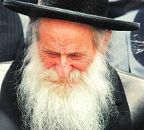
I · Chasidic Tradition
Rabbi Moshe Teitelbaum
Satmar Rebbe Author of Berach Moshe
1914-2006
We have all assembled today so that the speakers can explain to the audience the position of our holy rabbis against Zionism. Although this position has already been made clear, as my uncle, he should live long, has explained it in his books, and in particular Vayoel Moshe, we must understand that in today's times, when someone is opposed to Zionism and to the state they have made, people say he is a Satmar Hassid.
Source
Speech given on the first day of Chol Hamoed Pesach 1970
I · Chasidic Tradition
Rabbi Moshe Teitelbaum
×
We have all assembled today so that the speakers can explain to the audience the position ("shitah") of our holy rabbis against Zionism. Although this position has already been made clear, as my uncle, he should live long, has explained it in his books, and in particular Vayoel Moshe, we must understand that in today's times, when someone is opposed to Zionism and to the state they have made, people say he is a Satmar Hassid. Unfortunately, that's how it is seen.
We have to remember how it was one generation ago. There was really not one of the gedolei yisroel who held otherwise. There was no other such subject among Jews on which the gedolim, tzaddikim and religious Jews were so unified.
Of course, the Torah wasn't given to the angels, and there are different opinions on every matter. But when it came to Zionism - the idea that such a thing could exist - no one dreamed or imagined that such a thing could be, that there could be a Jewish state in Eretz Yisroel before the coming of the messiah.
But we see how all the tzaddikim and gedolim of the past generation felt, with their holy inspiration, that a great danger was coming upon the Jewish people. Because usually the rule is that the rabbis don't speak about cases that rarely occur, and then everyone was so certain, it didn't occur to anyone that a Jewish state could come into existence. And yet we see that all the gedolei Torah, both from the Hassidic world and the Lithuanian non-Hassidic world, all of them without exception were deeply worried about this, because they realized that this undermined the foundations of the holy Torah.
Let us remember one generation ago, how far tzaddikim went and how worried they were. I remember how in Sighet after the First World War, like everywhere else, the ideas of Zionism began to penetrate. In Sighet there was the old synagogue, where my great-great-great grandfather, the Yismach Moshe, once gave a speech. Then my great-great-grandfather, Rabbi Elazar Nissen Teitelbaum, became rabbi of Sighet and gave speeches and prayed in that synagogue. Then my great-grandfather served as rabbi, and then my grandfather the Kedushas Yom Tov was rabbi. So my family prayed in that synagogue for almost one hundred years. Yet, when Zionism emerged and began to take over the Jewish communities, and they wanted to lay their hands on this synagogue as well, my father said that if the synagogue became Zionist, he would no longer set foot in it.
That's how it was. All the gedolei Torah held that way. That's how it was in Hungary, that's how it was in Galicia. We know that the Cheshianover Rav was a big fighter against Zionism. He said that if one day went by and the Zionists didn't bother him, he would have to repent (for not fighting them enough). The same was true of the Belzer Rav. He wouldn't come to the table when there was a rabbi sitting there who was suspected of supporting the Mizrachi. That's how all the gedolei Torah held. We see from the letter of the Maharshab, the Lubavitcher Rebbe, how far good Jews were able to see. Although it was far off, they saw the danger coming, as clearly as we see it today.
That's how all gedolei yisroel were, without exception. They saw, even back then, the great danger of Zionism. But that they would set up a state in Eretz Yisroel - no one dreamed that such a thing could ever happen.
But unfortunately, after the war, when the Jewish people suffered the great tragedy, and so many gedolei Torah from that period passed away - some naturally, but most killed by the evil one. We were left so spiritually poor, there had never been anything like it before. And just at that time, when the Jews were still languishing in the DP camps, the Satan succeeded and the state was founded in Eretz Yisroel.
It was truly a great danger. What tzaddikim foresaw a generation earlier came true - but in an unimaginable way. Had this happened in a time of gedolei Torah, religious Jews, when most Jews kept the Torah, it would not have been such a danger. But it had to happen just at the time when the Jewish people was in the lowest possible state, spiritually and physically. That is when the great test took place, when the Satan was given the power to set up a state in Eretz Yisroel, when Jews could be convinced that there was, G-d forbid, some salvation in it, and it might help. (Speech given on the first day of Chol Hamoed Pesach, 1970)
Sources & Citations
Speech given on the first day of Chol Hamoed Pesach 1970
№
1

I · Chasidic Tradition
Rabbi Yoel Teitelbaum
Grand Rabbi of Satmar
1887-1979
I remember fifty or sixty years ago, many gedolei yisroel said that after all the Zionists did to undermine Jewish-gentile relations, it would be a miracle if destruction did not come upon the Jews of Europe. And today we know that the accursed murderers, yimach shmam, said that Herzl's book was what aroused them against the Jews.
Source
Kinus Haklali 1961 printed in Divrei Yoel Naso p. 128-9
I · Chasidic Tradition
Rabbi Yoel Teitelbaum
×
I remember fifty or sixty years ago, many gedolei yisroel said that after all the Zionists did to undermine Jewish-gentile relations, it would be a miracle if destruction did not come upon the Jews of Europe. And today we know that the accursed murderers, yimach shmam, said that Herzl's book was what aroused them against the Jews. And now, after the Kastner Trial, we know the role the Zionists played in the destruction of Hungarian Jewry in particular. There is no need to speak at length on these well-known facts.
And today they continue in their evil ways, provoking the countries in which Jews live to anger against the Jews. For example, the voice of our brethren in Morocco cries out to us! They write us letters saying that they once lived under a kind government and were lacking nothing, until the Zionists came and made an upheaval, bringing danger upon all the Jews. The Torah commands us not to stand idle while our neighbor bleeds! Yet everyone is silent. If people would only open their eyes they would see that in America as well, they are doing everything they can to increase anti-Semitism, as they once did in the European countries. The Jewish people needs Heavenly mercy that they should not succeed.
And needless to say, the low spiritual state of the Jewish people is also thanks to them. True, most American Jews are not religious, but that is due to ignorance and assimilation. They are not out to fight Judaism. But the Zionists have created a factory of heresy, from which they spread denial of the Torah to the whole world. Look at the tens of thousands, hundreds of thousands of Jews that they worked hard to brainwash into believing complete kefirah. Yet the Orthodox Jewish world is tolerant of them. And not only that, they lift them up as leaders. Where are the rabbinic leaders who will raise their voices in protest against this insult to Hashem?
It is a serious danger to the Jewish people if we point to those who do not keep the Torah and deny Hashem and call them the leaders of the Jewish people. All the nations are thereby misled to think that they speak in the name of Jewry, and thus they are transformed into anti-Semites. And really, if it were possible, even at the risk of our lives, to let the nations of the world know that these wicked men are not the representatives of the Jewish people, and that observant Jews have no connection with them, it would be one of the biggest mitzvos to do so. We would have to risk our lives to do it. But unfortunately, the rabbis are afraid of the people, and if there are any of them who do say something publicly against the Zionists, the chareidi leaders fight against him and defend the Zionists with various excuses.(Kinus Haklali, 1961, printed in Divrei Yoel Naso p. 128-9)
I heard that the religious Zionists announced that this war [of 1967] was necessary and obligatory according to Torah [in order to save the Jewish people from danger]. But it is obvious and known to all who see truth that all these troubles, including the danger of the war, came upon us only as a result of the existence of that Zionist state…it is the Zionist government that aroused the anger of the Arabs by provoking them in various ways, and if not for the stubbornness of its wicked leaders the danger of the war would never have been. And even now, if they were to give up their state and their government, there is no doubt that they would take Hashem’s anger away from the Jewish people. Had they done this, the entire calamity – the danger of the war and the loss of Jewish lives – would not have come upon them. And for every minute that they hold on to their power they are offending the Creator, blessed be He, with violation of the oaths and rebellion against the nations, which the holy Torah has forbidden and for which we have been warned of a severe punishment… And even naturally speaking, if they were to give up their government and Zionist state, there is no doubt that the United Nations would be able to find some way to prevent war, bloodshed and loss of Jewish lives.” (Al Hageulah V’al Hatemurah, Chapter 44)
In my youth I heard an important rabbi offer a fitting parable about the Zionists: Once there was an evil and cruel man who was vengeful and constantly on alert. He wanted to take revenge against his friend, and burn all his and wealth and possessions. So he hired a second wicked person who was an expert in these sorts of operations to do his task in such a way that the victim would not even notice that it was he who had committed this act. Since the hired criminal knew that his victim often welcomed guests into his home, he went to the victim’s home in the evening disguised as a guest and asked for a place to spend the night. The unwitting victim welcomed him in immediately and gave him a room for the night. In the middle of the night the wicked man observed that the householder and his family members were all asleep and that they would not notice anything. He silently set about to start a fire in a hidden area and then quickly returned to his room and pretended to be asleep.
The flames soon became noticeable and awakened the entire household in great panic; everyone soon realized that everything was on fire, but due to their confusion, panic and sorrow, the members of the family could not properly decide how to save their property. In order to avoid suspicion the wicked guest, who had caused the fire, pretended to wake up in great panic and rushed to the aid of the householder, who noticed that the guest was able to calmly do a good job to save more furniture and household objects than the householder himself.
The following morning, when the householder went to the synagogue with a heavy and bitter spirit, he told his friends about the terrible calamity that had befallen him. He explained that he was now left impoverished and destitute, and that he had no idea where to look for a new home and livelihood. While telling the story he mentioned the importance of the commandment of welcoming guests, because the guest he had invited into his home had helped save what little could be rescued from the fire in his home. The victim of the arsonist was asked by his friends to identify the guest. He described him, and they immediately recognized him as a very cruel and wicked man who was renowned for these sorts of deeds.
His friends mocked him and told him to watch himself, because were it not for that “guest,” there would have been no fire at all. The “guest” was actually an arsonist who had set fire to the house, and was no savior at all. They added that the householder should never again allow that evildoer to cross his threshold, for if he should ever again have anything to do with that evildoer, his tricks would be even worse, and could result in the death of the householder altogether, G-d forbid.
The lesson of this parable is obvious: through their sins and their deeds the Zionists are the cause of all troubles and sufferings, yet they always come around to brag that they are the saviors when they are actually the arsonists! Those that do not wish to seek the truth fall for the ruse and think that they are saviors. Satan blinds their eyes so that they end up in heresy and atheism, G-d forbid. By analyzing all the activities of the Zionists one can easily discover that their acts are utter destruction and no salvation. It would require a book specifically dedicated to this subject, and I have already written that in this book I do not wish to get into this history, only to shed light on the matter. G-d will guide those who seek the truth.
This is the last challenge of the Jewish exile, the hardest challenge the Jewish people have ever faced. Regarding these tribulations prior to the arrival of the messiah, Rabbi Yochanan said, “Let him come, but let me not see it.” (Talmud, Tractate Sanhedrin 98b) The sufferer cannot tolerate any more suffering, and now we need the mercy of G-d to strengthen our true faith in G-d, His holy Torah and His servants who have served Him with all their hearts and souls in the generations before us. (Vayoel Moshe 1:111)
Sources & Citations
Kinus Haklali 1961 printed in Divrei Yoel Naso p. 128-9
II
21 authorities
The Lithuanian
yeshiva world
Roshei yeshiva and poskim of
Brisk, Volozhin, Telz, Kamenitz,
Slabodka — and those who carried
that tradition to America.
№
0
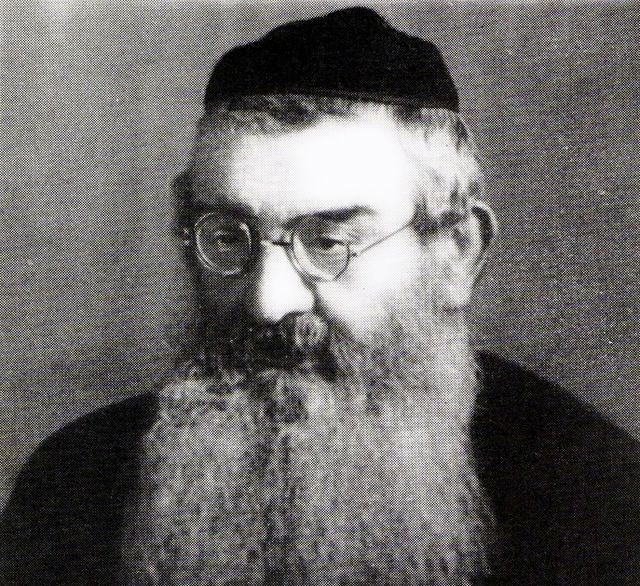
II · Lithuanian Tradition
Rabbi Mordechai Rottenberg
rabbi of Antwerp
1872-1944
<p>The question of the oaths was first presented to rabbis as a practical issue in 1937, when Britain's Peel Commission proposed partitioning Palestine into a Jewish state and an Arab state. In that year, Agudath Israel held its Knessiah Gedolah and presented the question of a Jewish state to its rabbinic panel, the Moetzes Gedolei Hatorah.</p><p>Two of the rabbis of the Moetzes were Rabbi Yehuda Leib Zirelson of Kishinev and Rabbi Mordechai Rottenberg of Antwerp. Rabbi Zirelson was in favor of the state, Rabbi Rottenberg opposed the state, and each put his opinion into writing.</p><p>However, it would inaccurate to call it a dispute over the oaths, because Rabbi Zirelson did not mention the oaths at all. In fact, he did not even present his essay as a response to the question of whether or not Jews are allowed to have a state. Instead, his focus was on whether we should accept a state in such a small area of land (about 20% of Palestine). He based his support for the state on five points: 1) The heart of a king is like streams of water in the hand of Hashem (Mishlei 21:1). Thus if the British are making this proposal, it must be the will of Hashem and we should accept it. 2) The state will eventually be big and powerful, but let it at least start now, even if small. The Zohar says that blessing cannot take effect on an empty table. We have to start with something, and later it can be enlarged. 3) It could be this small state is referred to in the Yerushalmi Berachos 1:1, which says that the redemption of the Jewish people will start out small and increase slowly, like the dawning day. 4) We need not fear that the irreligious will rule over us and persecute us. Hashem can save us, and besides, as the Gemara (Berachos 10a) says, "What business have you with the secrets of Hashem? Do what you are commanded to do, and let Hashem do what He wants." 5) The Gemara (Berachos 7a) says that when Moshe asked to see Hashem, Hashem replied, "You missed your chance. When I wanted to show you, you didn't want to see. Now that you want, I don't want." Let's not miss our chance! Let's not let such an opportunity slip through our hands, for if even Moshe was punished for missing an opportunity, all the more so will we.</p><p>To this Rabbi Rottenberg replied: "I am shocked that you rule on such a serious halacha question based solely on Aggadah. Would you permit an agunah (stranded woman) based on Aggadah?" Nevertheless, he responded to the above Aggadah points before beginning his halachic discussion. 1) The Yalkut on Mishlei 21 says that if the generation is worthy, Hashem inclines the king's heart to good, and if not, He inclines him to do evil. How are we to know whether this decision of Britain to give a piece of Eretz Yisroel to the Jews is for good or for evil? 2) We have to start with something, but not something negative. Having nothing is better than having something bad - a state under the control of the wicked. 3) The Yerushalmi gives, as an example of a slow redemption, the story of Mordechai. Clearly it has to begin with a tzaddik. 4) History proves that when the irreligious come to power, they use their power to incite the Jewish people away from Hashem. In such a case, we must indeed "do what we are commanded to do" - not join the wicked. 5) You say let us not miss our chance. It sounds like it's obvious to you that it is the will of Hashem that we should found a state as Britain proposes. But to me it is obvious that even besides the prohibition on joining the wicked, founding a Jewish state before the coming of moshiach is against the will of Hashem and against the best interests of the Jewish people.</p><p>The Gemara in Kesubos 110b brings a dispute between Rabbi Zeira and Rav Yehuda as to whether an individual Jew is allowed to return to Eretz Yisroel during exile. But all agree that the oaths at least prohibit the Jewish people from going up "as a wall" - which Rashi explains as "together, with a strong hand." And there is no greater instance of "as a wall" than the establishment of a Jewish state in Eretz Yisroel. And see the Ahavas Yonasan who says that even if all the Jews are ready to go to Jerusalem, and all the nations agree, G-d forbid that we should go there.</p><p>Furthermore, who can estimate what loss we will have from this when the true redemption arrives? The Midrash (Shir Hashirim Rabbah 2:7) tells us the reason for the oath against going up as a wall: “If so, why does the king moshiach have to come to gather the exiles of Israel?” The Maharzu explains that it is moshiach’s job to bring all of Israel up together from the exile, and if, G-d forbid, they do this on their own, they will lose the redemption of the moshiach.</p><p>Lastly, we must fear that if we accept this gift from Britain, we will be considered like the Jews who brazenly ascended the mountain to conquer Eretz Yisroel against the will of Hashem (Bamidbar 14:44).</p><p>Therefore, Agudath Israel, in keeping with its goal of resolving every question in accordance with the Torah, must say no to this gift. And in the event that another Jewish party does accept it, they must beg the British government to ensure freedom of religion in the new state. In any case, we must proclaim to the world leaders that although we long to see our scattered people gathered to Zion and Jerusalem, we are waiting for moshiach to do the job. (Shailos Uteshuvos Yad Mordechai, Siman 53)</p><p></p>
Source
№
15
II · Lithuanian Tradition
Rabbi Yitzchok Zev Soloveitchik
The Brisker Rav
1887-1959
Rabbi Meir Soloveitchik related that the Brisker Rav once asked: Why is the wording of the last oath different from the first two? In the first two it says If you arouse and if you awaken, and in the last one it says, Why do you arouse and why do you awaken? He answered that the verses refer to two different situations during the Jewish people's exile.
Source
Shir Hashirim 2:7 and 3:5
№
16
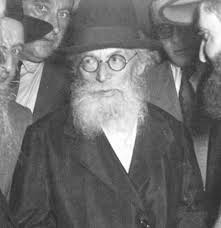
II · Lithuanian Tradition
Rabbi Avraham Yishaya Karelitz
Author of Chazon Ish
1878-1953
The Chazon Ish said: Who keeps mitzvohs in our time and is still considered a non believer? Anyone who claims that it is the fault of the rabbis that 6 million Jews were murdered in Europe, and anyone who celebrates Independence Day.
Source
Reb Aharon Roter
№
17
II · Lithuanian Tradition
Rabbi Aharon Kotler
Rosh Yeshiva of Lakewood NJ
1891-1962
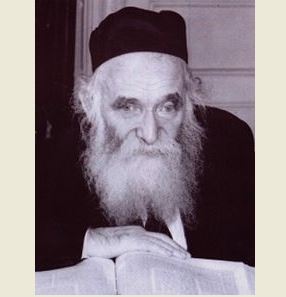
In the summer of 1937, the third convention of the rabbinical leaders of Agudath Israel was held in Marienbad. It was attended by hundreds of rabbis, heads of yeshivas and grand rabbis of Chassidic communities from a number of countries. Rabbi Aharon Kotler attended this convention.
Source
Rabbi A.L. Spitzer
№
18
II · Lithuanian Tradition
Rabbi Elchonon Wasserman
Rosh Yeshiva of Baranovitch
1875-1940
In the 1930s Rabbi Elchonon Wasserman, one of the greatest European Jewish Torah scholars and head of the Yeshiva of Baranowitz Poland, published a series of essays entitled Ikvesa D'meshicha on the problems facing Jewry at that time. He deals with the subject of Zionism and much of what he writes could apply equally today.
Source
Tehillim 92:8
№
19
№
20
№
21
№
22
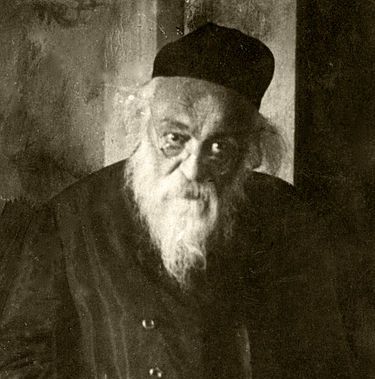
II · Lithuanian Tradition
Rabbi Chaim Soloveitchik
Rabbi of Brisk
1853-1918
When Rabbi Chaim of Brisk spoke about Zionism, he gave the following parable: Once there was a town in which there was a well that had been closed and sealed for as long as anyone could remember. It was common knowledge that the water of this well was poisoned, such that anyone who drank from it would go insane.
Source
Mikatowitz Ad Hei B'Iyar p. 56
№
23
№
24
.jpeg)
II · Lithuanian Tradition
Rabbi Chaim Ozer Grodzinsky
Chief Rabbi of Vilna
1863-1940
Reb Chaim Ozer opposed the creation of a Jewish state due to the danger it would bring. The following is a letter to the Agudas Horabbonim of the United States and Canada, dated the fifth day of Selichos 5697 (1937).
Source
Mikatowitz Ad Hei B'iyar p. 302
№
25
II · Lithuanian Tradition
Rabbi Meshulam Dovid Soloveitchik
Rosh Yeshiva of Brisk
b. 1921
The Zionists claimed that they would save the Jews from government persecution in Russia, and already then Rabbi Chaim Brisker said that their entire purpose in founding a state was in order to have a way to uproot the Torah from the Jewish people and to transform them into a nation like all other nations.
Source
Shiurei Rabbeinu Meshulem Dovid Halevi vol. Sichos V'inyanei Hashaah p. 662
№
26
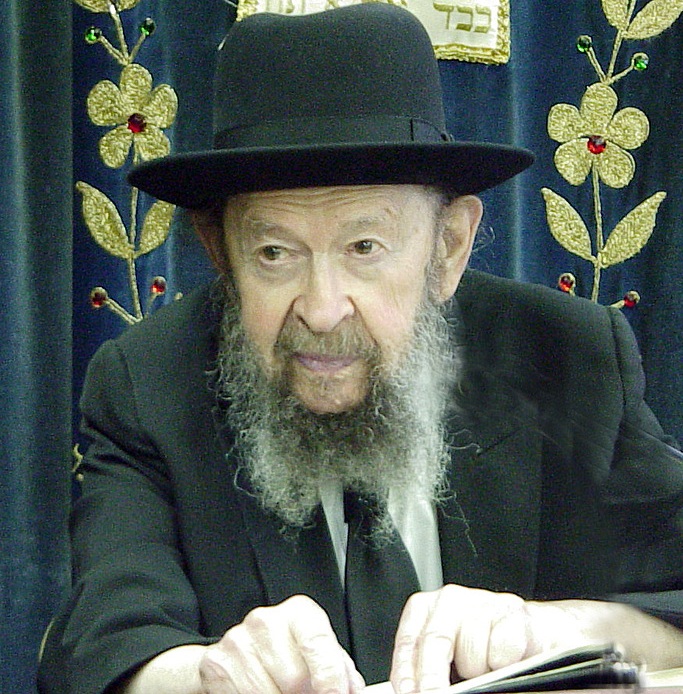
№
27
II · Lithuanian Tradition
Rabbi Moshe Feinstein
Rosh Yeshiva of Tiferes Yerushalayim
1895-1986
Regarding your question if there is a mitzvah nowadays to live in Eretz Yisroel, as the Ramban says, or if there is no mitzvah nowadays, as Rabbeinu Chaim says, quoted in Tosafos on Kesubos 110b: Most poskim hold it is a mitzvah.
Source
Igros Moshe Even Hoezer 1:102
№
28
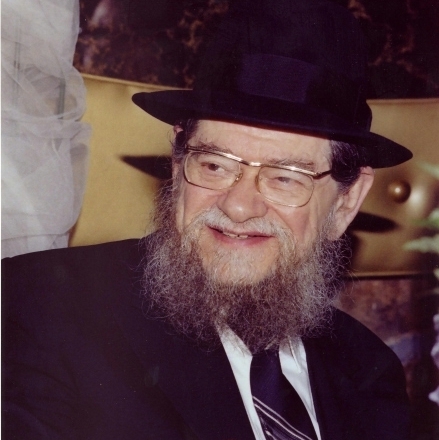
II · Lithuanian Tradition
Rabbi Mordechai Gifter
Rosh Yeshiva of Telshe Yeshiva Cleveland
1915-2001
Things have been happening lately concerning Jews. We have to know about this and we have to know how to look at these events. We have to look at them with a Jewish look - with a Jewish eye, and not the way the non-Jews look at such things.
Source
Sinnah
№
29
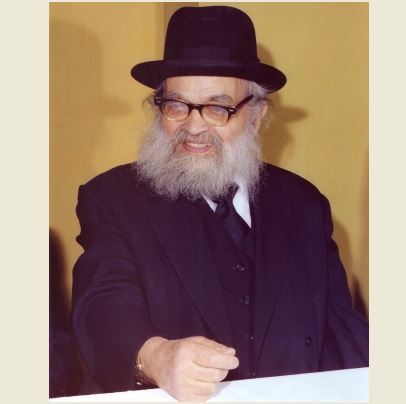
II · Lithuanian Tradition
Rabbi Yaakov Kamenetsky
Rosh Yeshiva of Torah Vodaas
1890-1986
For He will see that the enemy's hand is strong, and no one is saved or supported. The Gemara in Sanhedrin 97a derives from here that moshiach will not come until the Jewish people gives up on the redemption and thinks that there is no supporter or helper for Israel.
Source
Devarim 32:36
№
30
II · Lithuanian Tradition
Rabbi Yitzchok Hutner
Rosh Yeshiva of Chaim Berlin
1906-1980
An example of how public opinion can be molded — indeed, warped — at the whim of powerful individuals can be taken from a study of Russian history textbooks published during the respective reigns of Lenin, Stalin and Khrushchev. During each period, the textbooks hail the then-current leader to the exclusion of all his predecessors as the savior of Russia and hero of his people.
Source
The Jewish Observer October 1977
№
31
II · Lithuanian Tradition
Rabbi Shneur Kotler
Rosh Yeshiva of Beis Medrash Govoha of Lakewood
1918-1982
Rabbi Shneur Kotler said, People call the Satmar Rav's ideas a shitah, but it is not. He proves in Vayoel Moshe that this is what Shas and poskim, Rishonim and Acharonim all held. What he holds is what all gedolei Yisroel once held.
Source
№
32
№
33
II · Lithuanian Tradition
Rabbi Yosef Kahaneman
The Ponevezher Rav
1886-1969
The Ponevezher Rav built many yeshivos using money from the Zionist government. Every time he made a gathering to celebrate the laying of the cornerstone of one of his buildings, a small group of Neturei Karta members would attend, holding signs saying that they protested against the acceptance of the money.
Source
№
34
II · Lithuanian Tradition
Rabbi Boruch Kaplan
Principal of Bais Yaakov
1911-1996
This is a free translation of a Yiddish transcript of a taped interview made some 30 years ago with the late Rabbi Boruch Kaplan, who was a principal of the Beis Yaakov Girls School in Brooklyn, and who was a student in the Hebron yeshiva in 1929 at the time of the killing of a number of Jews by some Arabs.
Source
Avraham Isaac Kook
№
35
II · Lithuanian Tradition
Rabbi Meir Simcha of Dvinsk
Author of Ohr Somayach
1843-1926
Rabbi Meir Simcha of Dvinsk brings up the oaths in his comment on Yosef's last words to his brothers: G-d will surely visit you and take you up from this land, to the land that He promised to Avraham, Yitzchak and Yaakov. Yosef was warning them not to go up as a wall.
Source
Pakod pakadti
III
14 authorities
The Chasidic
gedolim
Hassidic masters of Hungary, Galicia,
Poland and Ukraine — and the
dynasties they founded in Brooklyn
and Jerusalem.
№
36
III · Jerusalem Tradition
Rabbi Moshe Aryeh Freund
Chief Rabbi of Jerusalem
1904-1996
Whoever votes in the election has a portion in the defiled regime. By going out to vote, they give strength to the defiled regime, a regime of heretics whose entire goal is to leave behind the holy Torah, may G-d spare us.
Source
Ateres Yehoshua Vayikra p. 4
№
37

III · Jerusalem Tradition
Rabbi Avraham Yitzchok Kahn
Toldos Ahron Rebbe
d. 1996
Rabbi Kahn wrote in 5754 (1994): We always saw the constant state of war and terrorism in Eretz Yisroel as the fulfillment of the punishment of the Oaths. Until recently, this punishment was confined to wars, or terrorist acts against the settlers and those on the borders.
Source
Igros Divrei Emunah p. 225
№
38
III · Jerusalem Tradition
Rabbi Amram Blau
Founder of Neturei Karta Jerusalem
1894-1974
In the name of humanity, justice and righteousness, we appeal to you not to forsake us and not to make us subservient to an authority whose principles and practices violate all that we have been taught to hold sacred and to cherish, and whose avowed intention is to undermine our religious existence.
Source
Letter to the United Nations Conciliation Commission for Palestine July 18 1949
№
39
№
40
III · Jerusalem Tradition
Rabbi Zelig Reuven Bengis
Chief Rabbi of Jerusalem
d. 1953
We have already spoken about these nationalists. They are a recently-founded group with the purpose of fooling the people and leading the masses astray, thinking that they can settle the Holy Land by natural means and attain sovereignty over it. They are mistaken and they are swindlers, and their plan will not succeed.
Source
Liflagos Reuven Drashos Chanukah 5672 p. 331
№
41
III · Jerusalem Tradition
Rabbi Yosef Chaim Sonnenfeld
Chief Rabbi of Jerusalem
1848-1932
Rabbi Yosef Chaim Sonnenfeld used an analogy: Once there was a prince who excelled in all areas and was perfect in every way. He was also the only child of his father, the king, and his father loved him dearly. One day the prince became seriously ill.
Source
Mara D'ara Yisroel v. 1 p. 145
№
42

№
43
.jpeg)
III · Jerusalem Tradition
Rabbi Yehoshua Leib Diskin
Chief Rabbi of Jerusalem
1817-1898
When Rabbi Yehoshua Leib Diskin, in his last years, heard about the new Zionist movement, he realized the danger it posed to the Jewish people. He called for his two of his greatest disciples, Rabbi Zorach Braverman and Rabbi Moshe Frankenthal, and said to them: Write letters in my name to three of the gedolei hador, asking them to call a meeting of rabbanim to decide how to stop this movement before it is too late.
Source
Mara D'ara Yisroel v. 2 p. 43
IV
21 authorities
The Lithuanian
yeshiva world
Roshei yeshiva and poskim of
Brisk, Volozhin, Telz, Kamenitz,
Slabodka — and those who carried
that tradition to America.
№
44
IV · Sephardi & German Tradition
Rabbi Samson Raphael Hirsch
Rabbi of Frankfurt
1808-1889
Rabbi Samson Raphael Hirsch devotes a long section of his book Horeb to the obligation of Jews to seek the welfare of their government. If this applied under the Babylonians, who exiled the Jews by force, all the more so in our current countries of residence, in which we settled by choice.
Source
Yirmiyahu 29:7
№
45
.jpeg)
IV · Sephardi & German Tradition
Rabbi Yisrael Abuhatzeira
The Baba Sali
1890-1984
Rabbi Yisrael Abuhatzera, the Baba Sali, held the Satmar Rebbe and his sefer Vayoel Moshe in very high esteem. In Hasaba Kadisha Baba Sali, Rabbi Yehuda Yehudayoff, the Baba Sali's son-in-law, recounts how his father-in-law asked him to buy a copy of Vayoel Moshe.
Source
Tiferes Yoel v. 3 pp. 113-114
№
46
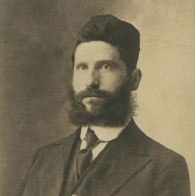
IV · Sephardi & German Tradition
Rabbi Eliezer Silver
President of the Union of Orthodox Rabbis of the US and Canada
1882-1968
However the call for a Jewish state is something not all Jews agree to at this time, especially if it comes about through protests and threats, for regarding this the Holy One blessed is He already made us swear not to go up as a wall - with strength, and not to force the end, and even that they should not pray excessively.
Source
Kol Yisroel number 16 22 Teives 5706 (1946)
№
47
IV · Sephardi & German Tradition
Rabbi Chaim Shaul Douek
Leader of the Sephardic Kabbalists of Jerusalem
This is how the Zionists succeed in capturing the religious: by means of the Mizrachi, who disguise themselves as rescuers [of the Torah], when in truth it is they who are the destroyers and damagers of the path of Torah. May G-d spare us from them. (Om Ani Chomah, 22 Tamuz 5711)
Source
Om Ani Chomah 22 Tamuz 5711
№
48
IV · Sephardi & German Tradition
Rabbi Shlomo Eliezer Alfandri
Leader of the Sephardic Community In Jerusalem
1820-1930
I hereby make known that it is forbidden for any Jew whose forefathers stood at Mount Sinai and has a portion in the G-d of Israel and His Torah, to remain a member in the Nationalist Council, which has lifted up its hand against the Torah of Moses and desecrates the laws of the Torah brazenly.
Source
Responsa Saba Kadisha 1:32
№
49
IV · Sephardi & German Tradition
Rabbi Solomon Breuer
Rav of Frankfurt
1850-1926
But more than the most radical reform, Jewish truth is threatened by the movement propagated under the name of Zionism, which, if given ever greater influence would, God forbid, only serve to prolong our Galuth. Yet there are numerous Yehudim who do not shrink back from joining this movement which displays the most sinister kfiro on its banner in the hope to return the homeland under its leadership.
Source
Chokhmo U'musar volume Bamidbar-Devarim p. 39-40. Felheim Publishers Jerusalem New York 5737/1977
№
50
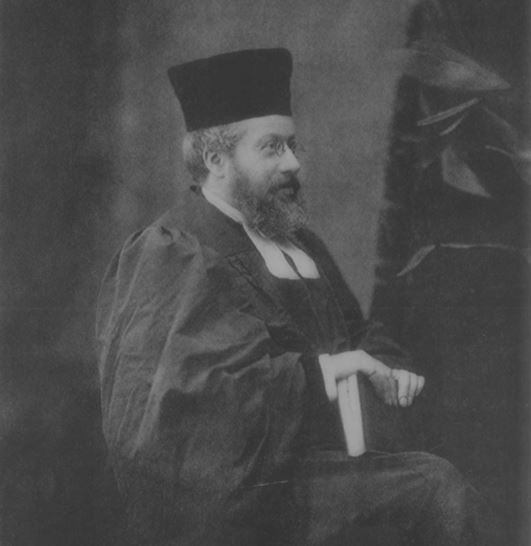
№
51
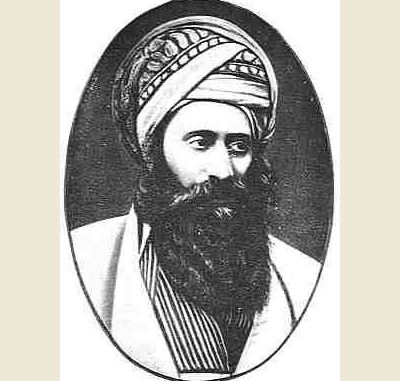
IV · Sephardi & German Tradition
Rabbi Yosef Chaim of Baghdad
Author of Ben Ish Chai
1832-1909
On Shabbos Chol Hamoed Pesach we read the Haftarah about the dry bones resurrected by Yechezkel the prophet. This story took place in Tishrei, so why do we read it in Nissan? Because our Sages tell us that these were the bones of the men of the tribe of Ephraim who forced the end and left Egypt before the foreordained time, and were killed by the Philistines.
Source
Yechezkel Chapter 37
№
52
IV · Sephardi & German Tradition
Rabbi Marcus Lehmann
1831-1890
Let us consider the history of other nations! First they are small and unimportant; they grow stronger and more powerful by perpetual warfare against their neighbours and other enemies; thus they become great, mighty and rich. Later on they stagnate and become the victims of other advancing nations.
Source
Commentary on the Passover Haggadah p. 72
V
128 Authorities
All The
Lists of Rabbanics
№
53
Maimonides
the Rambam
1135-1204
<p>We find in Sefer Daniel (11:14): "And the wicked among your people will rise up to actualize a vision, but they will stumble."</p><p>Clearly in reference to this verse, the Rambam writes at the end of Iggeres Teiman: “And these are things the prophets have already foretold, and they have told us about what I have told you, that when the time of the true moshiach draws near, there will be many who lift themselves high and place doubts in people's minds, but their claims will not be born out, and they will perish and many will perish with them. And when Shlomo, peace be upon him, made known with his holy inspiration, that this nation when it is sunk into exile will try to arouse itself not at its proper time, and they will die because of this and travails will come upon them – he warned against this, and made an oath against this in an allegorical way, and said (Shir Hashirim 2:7), ‘I adjure you, daughters of Jerusalem…’ And you, our brethren, our beloved – keep his oath and do not arouse the love before it is desired!”</p><p>Although the Rambam wrote Iggeres Teiman against a particular false moshiach, in retrospect we see that that false moshiach did not get very far, neither did any other false moshiach in Jewish history. Even the Sabbatean movement’s spread among a large part of the Jewish people lasted less than a year; after that it was a mostly undercover, shunned heresy. The warning of Shlomo Hamelech was clearly referring to the by far most successful false messianic movement in Jewish history: Zionism.</p><p>Another verse from the prophets, also quoted by the Rambam in his Letter to Yemen, predicts Zionism. “And Zion said, Hashem has deserted me, and Hashem has forgotten me” (Yishaya 49:14). G-d foretold, says the Rambam, that due to the length and heaviness of the exile, many would think that He had deserted us and removed His face of kindness from us, G-d forbid. But afterwards He testified that He would never leave us and never forget us, as the prophet continues: “Can a woman forget her baby, and not have mercy on the fruit of her womb? They can forget, but I will not forget you.”</p><p>“The king moshiach will arise and restore the dynasty of David to its original power. He will build the Temple and gather the dispersed of Israel.” (Hilchos Melachim 11:1) If moshiach will be the one who gathers in the Jewish people, then it is clear that we are not allowed to gather ourselves in before the coming of moshiach.</p><p></p>
Source
№
54

Rabbeinu Bachya ben Asher
major commentator on the Torah
c. 1340
<p>Rabbeinu Bachya ben Asher writes at the beginning of Vayishlach: We must follow in the footsteps of the Avos and prepare ourselves to approach the gentiles with gifts, with soft speech and with prayer before Hashem. But war is impossible, for it is written (Shir Hashirim 2:7), "I adjured you, daughters of Jerusalem…" Hashem made the Jewish people swear not to wage wars against the nations.</p><p>Later Esav proposed to Yaakov, “Let us travel and go, and I will go by your side” (Bereishis 33:12), and Yaakov declined. Rabbeinu Bachya explains that Esav wanted to split this world with Yaakov. Yaakov, however, said, “My master knows that the children are weak” - the Jewish people will be weak in mitzvos – “and if they pressure them in one day all the sheep will die” - without the atonement of exile they will be sent to Gehinom on the day of judgment and they will not be able to bear the suffering. Therefore, said Yaakov, “Let my master pass before his servant” – you take this world first – “and I will travel in my lowliness” - I will stay in my exile and lowliness. I will not wage any war and I will not rise up in exile at all, but rather “according to the work that is before me” - I will bear the yoke of subjugation. And until when will the subjugation last? “Until I come to master, to Seir.”</p><p></p>
Source
№
17
II · Lithuanian Tradition
Rabbi Aharon Kotler
Rosh Yeshiva of Lakewood NJ
1891-1962
In the summer of 1937, the third convention of the rabbinical leaders of Agudath Israel was held in Marienbad. It was attended by hundreds of rabbis, heads of yeshivas and grand rabbis of Chassidic communities from a number of countries. Rabbi Aharon Kotler attended this convention.
Source
Rabbi A.L. Spitzer
№
55
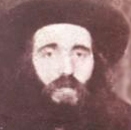
Rabbi Ahron Roth
Shomer Emunim Rebbe
1894-1946
<p>A festive meal was held to celebrate the completion of a Torah scroll in memory of the Jews killed in the Holocaust. All the Chassidic rebbes and heads of yeshivas attended, including the Rebbe. He said down at the table opposite the Zionist chief rabbi [Herzog]. He asked others who this man was, and they replied that it was the Zionist chief rabbi. The Rebbe immediately stood up from his place and left the hall. On the way home, he said, “I did not want to sit at the meal together with him.” One of the Chassidim commented that this chief rabbi was somewhat better than his predecessor, but the Rebbe said angrily, “I don’t want to hear any praises of him. If he is with them, it is forbidden to speak positively of him.”</p><p>Once the Rebbe was taking a walk in the field and his Chassidim wanted to bring him a chair to sit on and rest. But the Rebbe refused, preferring to sit down on a rock. “I don’t want to sit on something that the wicked Zionists made,” he said. “I would like to sit on a place that these wicked people did not yet touch and defile.”</p><p>He scrupulously avoided any words that came from the Zionist language, modern Hebrew. Once he was at an engagement meal and was honored with reading the engagement contract aloud. The contract said that the bride's side promised to give "rehitim" (furniture). When the Rebbe reached this word, he stopped reading and said, "This is a Zionist word! Although we find the word used in the Bible (Song of Songs 1:17), it has not been used for a long time, and so whoever uses it today is using it because of the influence of modern Hebrew!" (Furthermore, the original meaning of the word was beams or bolts, not furniture.) Then he tore up the document and told them to rewrite it. "But what word should we use for 'furniture'?" they asked. He replied that they should use the Yiddish word "mebbel." (Mishkenos Haro'im, p. 743)</p><p>It is a temporary settlement that will not be successful in the end, for soon we will see the fulfilment of “to dump the wicked out of the land”. (Az Nidberu, p. 77)</p><p>The Rebbe always spoke strongly against coming close to the wicked, saying that we must have no connection with them and stay as far from them as possible. At the end of his life he said often that it is a miracle that these wicked people do not command us to put on tefillin, for if they were to pass such a law, it would almost be forbidden to put on tefillin, since we must always do the opposite of what they do. (Preface to Shomer Emunim)</p><p></p>
Source
№
38
III · Jerusalem Tradition
Rabbi Amram Blau
Founder of Neturei Karta Jerusalem
1894-1974
In the name of humanity, justice and righteousness, we appeal to you not to forsake us and not to make us subservient to an authority whose principles and practices violate all that we have been taught to hold sacred and to cherish, and whose avowed intention is to undermine our religious existence.
Source
Letter to the United Nations Conciliation Commission for Palestine July 18 1949
№
26
№
59
Rabbi Avraham
son of the Rambam
1186-1237
<p>Rabbi Avraham, son of the Rambam, writes in the Sefer Hamaspik Leovdei Hashem (Maamar Habitachon) about the trust a Jew must have in Hashem. He says that when the nations of the world are trying to kill Jews, our trust in Hashem must be accompanied by protective actions. In the times of King David, this would mean war; but in exile it means flattery and flight. We see that Rabbi Avraham forbids war even when the nations are trying to kill us.</p>
Source
№
56
Rabbi Avraham Azulai
1570-1643
<p>The mekubal Rabbi Avraham Azulai, writes in his work Chesed L'avraham, Mayan 3 Nahar 22: "You must know that we have a tradition that on the day when moshiach will arrive in Eretz Yisroel with the ingathered Jews, he will find there seven thousand Jews." He goes on to say that after the coming of moshiach, those seven thousand Jews will reach a higher spiritual level than everyone else. When the ingathered Jews complain about this, moshiach will reply, "Hashem rewards people measure for measure. They risked their lives and subjected themselves to deprivation to come here and lead spiritual lives; therefore Hashem rewards them with a high spiritual level. You put your body and your possessions first and stayed in Chutz Laaretz; therefore your reward will be material wealth."</p><p>On many occasions the Satmar Rebbe would show this Chesed L'avraham to people and say, "I tremble when I read this. From all the millions of Jews who are there now, only seven thousand will be left!" (Yishai Buchinger, Zichronos Fun Heiligen Satmarer Rebben, pp. 46-47)</p><p>Now, it does not seem like the Chesed L'avraham is saying that there will be some massive expulsion that will leave only seven thousand Jews in Eretz Yisroel. If that would be the case, why would the Jews of Chutz Laaretz be to blame for not living in Eretz Yisroel? They tried to live there and were expelled! Furthermore, the Chesed L'avraham sounds like he is encouraging people to live in Eretz Yisroel, saying that those who live there during exile will get a special reward. Why then would he write that Hashem will bring a disaster, chas veshalom, upon the vast majority of the Jews living there?</p><p>The answer is that he does not necessarily mean there will be an expulsion or a disaster. Rather, he means that the Jews who will be rewarded for shunning materialism and living in Eretz Yisroel are only those few who want to live there no matter who is in power. But the vast majority of the millions living there today are only willing to live there because of the existence of the State of Israel and the supposed protection and opportunities it affords. When it reverts back to being a gentile country as it was in past centuries, these people, in the best case scenario, will leave of their own accord. Then, when moshiach comes he will find only seven thousand Jews in Eretz Yisroel, and he will tell the rest: By opting not to live a deprived but spiritual life in Eretz Yisroel under the gentiles, you placed your bodies and wealth higher than your souls.</p>
Source
№
57
Rabbi Avraham Borenstein
Sochatchover Rebbe, author of Avnei Nezer
1838-1910
<p>The Avnei Nezer (Yoreh Deah 454) asks: when and where did the Jewish people accept the Oaths that prohibit them from leaving exile and taking over Eretz Yisroel? He answers that the Jewish Oaths were imposed on the roots of the Jewish souls in Heaven, and the gentiles' oath was imposed on the angels of each nation.</p><p>This fits well with the Zohar (Bereishis 242a), which says in reference to Shir Hashirim 5:8 that the words “daughters of Jerusalem” refer to the souls of the righteous. Here too, Hashem made the souls of the Jewish people swear to keep to the terms of exile. This is similar to the oath administered to the soul before it comes into the world, “Be righteous and do not be wicked” (Niddah 30b).</p><p>If every person’s soul swears to be righteous before it is born, what was the purpose of the oath the Jews took when they accepted the Torah? The Avnei Nezer answers that an oath accepted by the soul is not legally binding. It merely means that the soul is infused with a desire to be good. But a person can ignore his soul and follow the evil inclination. The Jews had to take an oath in this world; otherwise they would not have been punished for not listening to the soul.</p><p>At this point, the Avnei Nezer is bothered: if the oaths are not legally binding, how could there be a punishment for violating them? He answers that “I will permit your flesh as the gazelles and deer of the field” is not to be understood as a direct punishment, but as a cutting off of Hashem’s protection that comes as a result of the sin. Sometimes even when a person cannot be culpable for what he did, the sin itself distances him from Hashem. We find this in Tikunei Zohar regarding the concept that the Heavenly Court does not judge a person under twenty years of age (Shabbos 89b). Why, then, do people sometimes die under the age of twenty? Because, says the Zohar, “a wicked person’s own sins entrap him” (Mishlei 5:22).</p><p>Here too, if the Jews violate the terms of exile and conquer Eretz Yisroel or fight against the nations, Hashem will ask their souls why they did it, and the souls will answer, “We tried our best to push the bodies in the right direction, but they did not listen to us.” Then He will call their bodies in for judgement, but the bodies will reply that they never took any oath; only the souls did. Each has a good excuse, but the connection between body and soul has been ruptured. Hashem’s providence and supervision is removed from the body, and the body is left as ownerless as the wild animals, which have no soul. The Rambam in Moreh Nevuchim (3:17) and the Chinuch in Mitzvah 169 write that Hashem's supervision does not apply to the particulars of each animal but only to the preservation of the species. The same will be the case for a human being who distances himself from his soul.</p><p>Of all wild animals, the gazelle and the deer are singled out because they are used elsewhere as the symbols of detachment from holiness. In three places, when the Torah wants to teach us that meat is not holy, it says “like the gazelle and the deer.” Devarim 12:15, says Rashi, is talking about sacrificial animals that became blemished and were redeemed with a replacement animal. The new animal is brought as a sacrifice instead, and the blemished one may be eaten as plain meat without any special restrictions. The Torah uses the same comparison in 12:22 when referring to plain meat that was never designated as a sacrifice, and in 15:22 when referring to a firstborn animal that became blemished and is permitted to eat as plain meat.</p><p>In two out of those three places, the Torah is discussing meat that was once holy but now its holiness has been removed. Here also, the result of violating the oaths of exile is that one is cut off from his source of holiness and removed from Hashem’s supervision, may Hashem spare us.</p><p></p>
Source
№
58
Rabbi Avraham Lichtenstein
author of Kanfei Nesharim
1700s
<p>Rabbi Avraham Lichtenstein was an eighteenth-century rabbi of Prassnysz, in the region of Plotzk, Poland, and author of Kanfei Nesharim. In his commentary Migdenos Avraham on Shir Hashirim 8:4, he says regarding the oaths:</p><p>Heaven forbid for Israel in exile to make any effort with a strong hand, whether through the gentile kings and ministers, or to go up as a wall, all together, each one strengthening the other, saying, 'Let us go to Jerusalem with a strong hand and build the Temple,' or 'Let us pay off the king of Turkey until he sells us all the state of Eretz Yisroel to be ours like it was in ancient times, and we will build the Temple and offer sacrifices.' Heaven forbid for us to do this! We will wait until Hashem pours out His kindness from above and sends our redemption through his moshiach, with permission from the King Who sits on high.</p><p>He quotes a story in the Gemara (Taanis 29a): When the Temple was burning, the young kohanim went up onto the roof of the sanctuary with the keys to the sanctuary in their hands. They said, "Master of the World! Since we did not merit to be trusted custodians, we are handing over the keys to You!" They threw the keys upwards, and a hand came out of heaven and accepted them. Then the young kohanim leapt into the flames.</p><p>The Migdenos Avraham explains:</p><p>Imagine a person who wants to enter a house, but the house is locked. It appears that the house is ownerless. He wants to break down the door, but we tell him, "Fool! Stop!" The house does have an owner, the keys are in his hand, and you want to enter by force? You will be considered a burglar! Wait till the owner comes and gives you the keys, and then open the door. Here too, since Hashem accepted the keys, how could it occur to us to go up by force without receiving permission from Hashem? We must wait until the Owner of the key comes and gives us the key, and then we will go to Zion with song.</p><p>At the same time, Hashem warned the nations of the world not to make the exile too difficult for Israel. This is the meaning of the verses in Shir Hashirim (2:6-7 and 8:3-4) from which the oaths are derived. Israel says to Hashem, "Let His left hand be under my head (i.e. prophecy), and let His right hand embrace me." Hashem replies, "Look what I have already given you during this exile, and see My great love for you. I have adjured the daughters of Jerusalem – the nations – not to afflict you. So why do you pray so persistently for the return of My love and prophecy – better to wait until the proper time, when it is desired."</p><p>The Migdenos Avraham mentions that his teachers used the story of the hand accepting the keys to explain the meaning of the words we say in Musaf of Yom Tov: "And we cannot go up and appear and prostrate ourselves before You, in the great and holy house upon which Your name was called, because of the hand that was stretched out upon Your Temple." The words "we cannot" really mean "we are not allowed to" - see the Targum and Rashi on Devarim 12:17. Even though we might be able to force our way in by petitioning the king and his ministers (he uses the words "yad chazakah" - the same words used by Rashi on Kesubos - which shows that he understood Rashi to be in agreement with him), we are not allowed to do so, because of the hand that was stretched out over the Temple to accept the keys from us.</p><p>In his commentary on the oath in Shir Hashirim 8:4, he connects the oath with the next verse (v. 5): "Who is this who ascends from the wilderness, overcoming her Beloved? Under the apple tree I woke you, there your mother injured you..." Model your behavior after those early days in the wilderness, when you traveled only when Hashem commanded you to do so. And when, after the sin of the spies, Hashem commanded you not to conquer the land, and you tried to overcome your Beloved and fought anyway, you were injured! So you see that without Hashem's permission, there is no wisdom and no counsel.</p>
Source
№
16
II · Lithuanian Tradition
Rabbi Avraham Yishaya Karelitz
Author of Chazon Ish
1878-1953
The Chazon Ish said: Who keeps mitzvohs in our time and is still considered a non believer? Anyone who claims that it is the fault of the rabbis that 6 million Jews were murdered in Europe, and anyone who celebrates Independence Day.
Source
Reb Aharon Roter
№
37
III · Jerusalem Tradition
Rabbi Avraham Yitzchok Kahn
Toldos Ahron Rebbe
d. 1996
Rabbi Kahn wrote in 5754 (1994): We always saw the constant state of war and terrorism in Eretz Yisroel as the fulfillment of the punishment of the Oaths. Until recently, this punishment was confined to wars, or terrorist acts against the settlers and those on the borders.
Source
Igros Divrei Emunah p. 225
№
60
Rabbi Avrohom Loewenstamm of Emden
1820
<p>The oaths and the concept surrounding them are explained beautifully in a book called Tzeror Hachaim, written by Rabbi Avrohom Loewenstamm of Emden in 1820. The book is actually a polemic work against the Reform movement, which was becoming prevalent in Germany at that time. The book contains discourses against organ music in the synagogue, prayer in German, going bareheaded and other innovations of the Reform movement. The last chapter is entitled Ketz Hayamin, and discusses our belief in the coming of moshiach. The Reform movement had produced new prayerbooks, omitting all reference to Eretz Yisroel, Jerusalem, the redemption or moshiach. They argued that such subjects inherently contradict the concept of patriotism and loyalty to one’s land and government. How could Jews claim to be “Germans of the Mosaic faith” if their longing was to rise up from exile and go back to their homeland?</p><p>The Reformers even published books (for example, a pamphlet called Nogah Hatzedek, published in Dessau in 1818) arguing that this was Chazal’s outlook. Didn’t Chazal prohibit us from forcing the end of exile, which, according to Rashi in Kesubos 111a, means praying too much for the redemption?</p><p>In response to this, Rabbi Avrohom Loewenstamm quotes numerous verses, Chazal and stories to prove that there is no contradiction between our longing for Jerusalem and our loyalty to our exilic host countries. This is because the redemption will come about only through G-d and His emissary, moshiach; we are forbidden to make any efforts on our own.</p><p>In particular, he discusses five episodes in Jewish history that bear on the discussion of the oaths:</p><p>1. During their Egyptian slavery, the Jews lived in concentrated areas and could have organized themselves to rebel against their masters. They were capable warriors, as we see from their later victories over Amalek, Sichon, Og and the Canaanites. Yet they accepted their exile willingly.</p><p>2. During the Babylonian exile, and continuing under the Median and Persian empires, the Jews never had any thought of rebelling and returning to their land by force. Indeed, the prophet Zechariah (4:6) declared, "Not by might and not by power, but by My spirit, said Hashem Tzevaos."</p><p>3. When Haman's decree was overturned, the Jews carried out an attack on their enemies throughout Achashverosh's empire, killing 75,000 of them. Seemingly this proves that it is allowed to organize ourselves in self-defense during exile.</p><p>But, writes Rabbi Loewenstamm, it is actually proof to the contrary. When the king gave Mordechai his royal seal and told him to "write whatever is good in your eyes regarding the Jews," he also cautioned him that "a decree that is written in the name of the king and and stamped with the king's seal cannot be revoked" (Esther 8:8). Knowing that he could not revoke the decree of Haman, Mordechai instead wrote that "the king gives the right to the Jews in every city to gather and defend themselves" (8:11). Upon the issuing of Mordechai's decree, the Jews rejoiced (8:16-17).</p><p>What was there to rejoice about? The Jews were a small minority and didn't stand a chance against the non-Jews of the empire. The answer is that the Jewish people had a long history of beating nations more mighty and numerous than they - when they repented and Hashem was on their side. Therefore they trusted in Hashem to help them in this war as well, which He did. If so, why did they need Mordechai's decree at all? Because without it, they would have been forbidden under the oath from rebelling against the king's decree. They would have had no right to rely on a miracle and fight back. Therefore, prior to Mordechai's decree, they used only the power of their mouths - prayer, fasting and repentance.</p><p>4. According to Roman historians, the Jews of Alexandria rebelled against Rome and were crushed by the emperor Trajan, who killed 200,000 of them. Rabbi Loewenstamm responds that according to Jewish sources (Esther Rabbah, Pesicha 3) the destruction of the Alexandrian Jewish community was unprovoked, and resulted from the accusation that the Jews were celebrating the death of the emperor's baby by lighting candles on Chanukah.</p><p>5. Regarding Rabbi Akiva’s position on the war of Bar Kochba, Rabbi Loewenstamm asks: How could the great Rabbi Akiva have sanctioned this sin, this transgression of the oath? (Although the Yerushalmi says that Rabbi Akiva believed Bar Kochba to be moshiach, Rabbi Loewenstam evidently holds that he did not believe it with enough certainty to permit the abrogation of the oaths. Perhaps Bar Kochba did not complete the job of forcing all Jews to keep the Torah.)</p><p>The answer is, he says, that the city of Beitar, in which Bar Kochba reigned for two and a half years, had never been conquered by Rome at all. Beitar was a living remnant of the Jewish kingdom that had existed before the destruction of the Temple. Evidence to this can be found in the words of the Midrash Eichah (2:2): “Fifty-two years Beitar lasted after the destruction of the Temple. And why was it destroyed? Because they lit candles to celebrate the destruction of the Temple.” The Midrash goes on to explain that they rejoiced that Jerusalem was gone, and now Beitar would be the commercial center of the Land. Thus, Beitar had been a Jewish center all along, and Bar Kochba’s reigning in Beitar was not really an act of revolt against Rome. Rabbi Akiva was completely justified in supporting this, and he never, G-d forbid, entertained thoughts of rebellion.</p><p></p>
Source
№
5
I · Chasidic Tradition
Rabbi Ben Zion Halberstam
Grand Rabbi of Bobov
1874-1941
Also the bird found a house, and the wild bird a nest for itself (Tehillim 84:4). The bird is a metaphor for the Jewish people, as Rashi explains there. When the time of redemption arrives, the Jewish people will go up to Jerusalem and find a house, a Beis Hamikdash already built by Hashem and brought down from Heaven.
Source
Tehillim 84:4
№
23
№
34
II · Lithuanian Tradition
Rabbi Boruch Kaplan
Principal of Bais Yaakov
1911-1996
This is a free translation of a Yiddish transcript of a taped interview made some 30 years ago with the late Rabbi Boruch Kaplan, who was a principal of the Beis Yaakov Girls School in Brooklyn, and who was a student in the Hebron yeshiva in 1929 at the time of the killing of a number of Jews by some Arabs.
Source
Avraham Isaac Kook
№
61
Rabbi Chaim Ben Attar
the Ohr Hachaim Hakadosh
1696-1743
<p>The Ohr Hachaim Hakadosh finds a reference to the oaths in the first Tochacha: “And I will scatter you among the nations, and I will draw out a sword after you; and your land will be desolate, and your cities waste” (Vayikra 26:32-33). “I will scatter” refers to the first oath, which mandates that the Jews remain scattered and not come up as a wall, with a strong hand, to resettle Eretz Yisroel. “Among the nations” refers to the second oath, which mandates that the Jews remain submissive to the nations and not rebel against their authority. “I will draw out a sword after you” means that G-d will enforce the oaths: if the Jews violate them, they will die by the sword, G-d forbid, as the Gemara says (Kesubos 111a), “If you keep the oaths, good, but if not I will permit your flesh like the gazelles and deer of the field.” The final words “and your land will be desolate…” are the reason for the oaths: G-d wants the Holy Land empty in order that it should rest and make up for the Shmittah years that were not observed. We see here that the Ohr Hachaim says that the purpose of the oath is that the land be desolate and empty. The oath has nothing to do with the nations, and so the nations’ permission makes no difference.</p><p>The Ohr Hachaim comments that the book of Shemos, which describes the exile, begins with the word "and" alluding to Avraham, Yitzchok and Yaakov who were the first to live during exile. (The promised 400 years of exile began with the birth of Yitzchok.) Just as the Avos accepted the exile, these twelve sons accepted it as the decree of the King, unlike Esav, who moved to the land of Seir in order to avoid the decree (Bereishis 36:4 with Midrash Rabbah 84:2).</p><p>This also provides an answer to Rashi's question: Why does the Torah repeat the names of the twelve sons of Yaakov who came down to Egypt? It already listed them in Bereishis 46. According to the Ohr Hachaim, the answer is that the Torah is making a point of listing those who willingly accepted the exile.</p><p>The rest of the words of the verse fit in with this theme: "Who were coming" is in the present tense to indicate that even if they had not been forced to come, they would have come willingly. "With Yaakov" indicates that they were similar to Yaakov in their willingness to accept the exile. "Each man with his household they came" is the proof that they were accepting exile, for if they had come to Egypt for some temporary personal reason, they would not have uprooted their entire households from Canaan.</p><p>The Ohr Hachaim Hakadosh in his commentary Rishon Letzion explains the meaning of the verse in Eicha 1:7, “When her people fell into the hands of the enemy, and she had no helper, the enemies saw her and laughed at her end.” When the Babylonians besieged the city and Yirmiyahu announced clearly that it would fall into their hands, and similarly when the Romans besieged the city and Rabbi Yochanan ben Zakai announced that it would fall into their hands, the Jewish people had no helper, i.e. they did not take the advice of their helpers, their sages. Hashem gave them a chance to save themselves and the Temple by surrendering to the enemies, but instead they fought back and lost everything. “The enemies laughed at her end” – at the fact that everything came to an end and the Jews lost their city and the Temple.</p><p>The next verse continues on the same theme: “Jerusalem sinned a sin; therefore she became an outcast.” Hashem’s decree was only that the Jews should be subservient to Babylon, not necessarily that they should go into exile. Hashem would have found a way to punish them in their land. But because Jerusalem stubbornly refused to give in, the destruction of the Temple resulted, says the Ohr Hachaim.</p><p>In his commentary Rishon Letzion on Shir Hashirim, the Ohr Hachaim Hakadosh connects the oath in Shir Hashirim 2:7 with the previous verse, 2:6: “His left hand is under my head, and His right hand embraces me.” The “left hand” of Hashem is an expression for His attribute of strict justice and retribution, while His “right hand” signifies mercy. We find the same symbolism used by Rashi on Shemos 15:6, who says that when we do Hashem's will, even His left hand becomes a right hand. In Sotah 47a we find that a person as well “pushes away [a child or disciple] with his left hand and brings near with his right hand.” Here too, in exile Hashem chastised the Jewish people, but with His right hand he embraces them by allowing them to attain great heights of Torah knowledge.</p><p>Perhaps the Jews will feel abandoned in exile and say, “Although we are studying Torah, we are suffering and it seems as though Hashem is ignoring us.” Therefore Scripture says, “I adjure you, daughters of Jerusalem…” Do not force the hour and do not arouse the love, for perhaps Hashem does not want to bring the redemption now. When Hashem desires the love, He will rush to bring it.</p><p>This explains the next verse, 2:8: “The voice of my Beloved, behold it has come…” It is so certain that Hashem will fulfill His promises to us that it is considered as if it already happened.</p><p><strong>tags: </strong></p><p></p>
Source
№
66
Rabbi Chaim ben Betzalel
brother of the Maharal
c. 1600
<p>Rabbi Chaim ben Betzalel writes (Sefer Hachaim, Chelek 5, Perek 6) that the current, fourth exile is similarly to “kadachas” (an illness characterized by high fever), which the body has to fight off completely in order to be immune from a future attack. If the person takes medicine and stops the illness too early, it will only come back in a stronger form. So too, we must not bring the geulah before its time. “Even though he may tarry, wait for him” (Chavakuk 2:3).</p>
Source
№
62
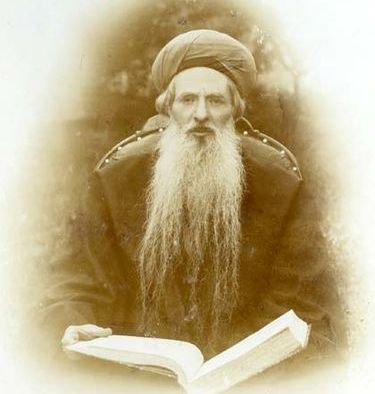
Rabbi Chaim Chizkiyahu Medini
author of the Sdei Chemed
1833-1904
<p>Rabbi Chaim Chizkiyahu Medini, author of the Sdei Chemed, was also contacted by the compilers of Ohr Layesharim, and he responded with a letter against Zionism. But his letter reached Kovna too late to be included in the book. It was later discovered and published a hundred years later. Here is what he wrote:</p><p>"As far as the essence of this philosophy, I am completely opposed to it, for this false philosophy has brought physical and spiritual harm to the Jewish people. Physically, because it has caused the Jews to lose their rights to immigrate to the Holy Land. And spiritually – woe! This philosophy negates in all its followers all the hopes and promises made to the Jewish people, who wait for the coming of the true redeemer, the righteous redeemer, a spiritual redeemer, far from earthliness, who will bring us a miraculous, not natural, redemption."</p><p></p>
Source
№
63

Rabbi Chaim David Chazan
c. 1862
<p>Rabbi Chaim David Chazan was the Rishon Letzion (Sephardic chief rabbi of Jerusalem under the Ottoman empire). He writes in his letter of approbation to the sefer Derishas Tzion, by Rabbi Tzvi Hirsch Kalischer::</p><p>Not by might and not by power, G-d forbid, to rebel against the nations of the world, the benevolent kings who surround us; or, G-d forbid, to go up against the walls, to fight with the rulers; but rather to fulfill our desire and perfect our hearts, to fulfill the will of G-d, by arousing from below, by doing what we have the power to do, with G-d’s help and the help of benevolent kings and their complete willingness.</p><p></p>
Source
№
8
I · Chasidic Tradition
Rabbi Chaim Elazar Shapiro
Munkaczer Rebbe Author of Minchas Elazar
1871-1937
After the sin of the spies, the Torah tells us that some Jews tried to invade Eretz Yisroel against the command of Hashem: And they awoke early in the morning, and they ascended to the mountaintop, saying, Here we are, and we will go up to the place of which Hashem has spoken, for we have sinned.
Source
Succah 52a
№
24
II · Lithuanian Tradition
Rabbi Chaim Ozer Grodzinsky
Chief Rabbi of Vilna
1863-1940
Reb Chaim Ozer opposed the creation of a Jewish state due to the danger it would bring. The following is a letter to the Agudas Horabbonim of the United States and Canada, dated the fifth day of Selichos 5697 (1937).
Source
Mikatowitz Ad Hei B'iyar p. 302
№
64
Rabbi Chaim Palaggi
Chacham Bashi of Smyrna
1788-1869
<p>"And He let them fall into the hands of the nations, and their enemies ruled over them. And their enemies oppressed them, and they humbled themselves under their hand. Many times He saved them." (Tehillim 106:41-43)</p><p>This means that despite the fact that their enemies oppressed them, the Jewish people did not rebel. On the contrary, they humbled themselves under their hand; they did not rebel against the governments. And that is the reason why G-d saved them many times.</p><p>(Tochachas Chaim, Parshas Va'eira, p. 33a)</p><p>The Holy One, blessed is He, said to Israel: "I adjure you that if the government makes harsh decrees against you, do not rebel against them in any way, unless they decree to annul Torah and mitzvos" - Midrash Tanchuma Noach, and Midrash Shir Hashirim 2:7.</p><p>(Nefesh Chaim, Section Shin, under Shevua, os gimel)</p><p></p>
Source
№
47
IV · Sephardi & German Tradition
Rabbi Chaim Shaul Douek
Leader of the Sephardic Kabbalists of Jerusalem
This is how the Zionists succeed in capturing the religious: by means of the Mizrachi, who disguise themselves as rescuers [of the Torah], when in truth it is they who are the destroyers and damagers of the path of Torah. May G-d spare us from them. (Om Ani Chomah, 22 Tamuz 5711)
Source
Om Ani Chomah 22 Tamuz 5711
№
22
II · Lithuanian Tradition
Rabbi Chaim Soloveitchik
Rabbi of Brisk
1853-1918
When Rabbi Chaim of Brisk spoke about Zionism, he gave the following parable: Once there was a town in which there was a well that had been closed and sealed for as long as anyone could remember. It was common knowledge that the water of this well was poisoned, such that anyone who drank from it would go insane.
Source
Mikatowitz Ad Hei B'Iyar p. 56
№
65
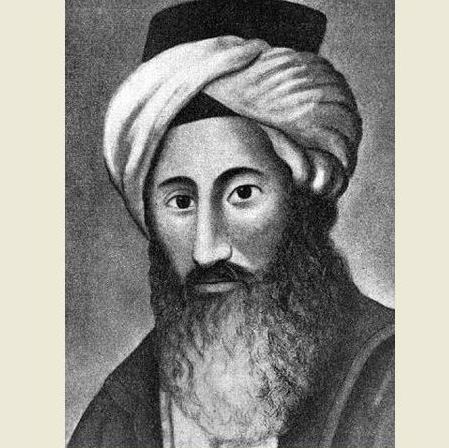
Rabbi Chaim Yosef David Azulai
the Chida
1724-1806
<p>The Chida suggests that the three oaths correspond to the three segments of the Jewish people in exile: our familiar Jewish exile in the four corners of the earth, the ten lost tribes, and the descendents of Moshe. Despite the fact that the lost tribes are powerful and unified, they are not permitted to force the end and leave exile before the time (Chomas Anach, Shir Hashirim 3:14).</p>
Source
№
11
I · Chasidic Tradition
Rabbi Chuna Halberstam
Kalashitzer Rebbe
d. 1940
The plain truth is that there is no difference between the three groups: the Zionists, the Mizrachists and the Agudists, also known as Shlumei Emunei Yisroel. The ways of all of these are abominable to religious Jews.
Source
Tikun Olam ch. 56
№
67
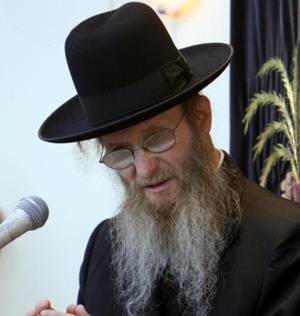
Rabbi Dan Segal
the Mashgiach
b. 1939
<p>The secular leaders of the State of Israel are placing us in danger. Here there is a greater danger than any other place, because things are more serious here due to the holiness of Eretz Yisroel. They put us in danger by rebelling against the Three Oaths. That’s why the situation in Eretz Yisroel is more dangerous than elsewhere. Only the Torah and mitzvos that Jews keep here provide protection.</p><p>As our Sages say, if the gentile nations only knew what benefit the Temple brings them, they would place guards to prevent it from being destroyed. They come to undermine the Torah, unaware that the Torah is protecting them. If they knew, they would give anything to help scholars sit and study. In any case, they are truly endangering us.</p><p>I will tell you the truth. You see what happened, G-d spare us, at Yeshiva Merkaz Harav. Why did it happen there, of all places? You'll say, the terrorist just happened to walk in there? Nonsense. There is a message from Heaven here. And why was it religious settlers in particular who were expelled at Gush Katif? Because this whole idea, this worldview that holds this is the redemption, this entire state and all that is in it, is the opposite of our faith and is a violation of the Three Oaths. It’s terrible. And those who keep Torah and mitzvos are held to a higher standard when their worldview is wrong.</p><p>Someone came to tell me that they announced the massacre on the radio, and a second later they said, “Now we return to the basketball stadium,” as if nothing happened. The person came to me in a state of shock. “Why are you so shocked?” I asked him. “The leaders here don’t care about anything. For a little glory, they are constantly killing people. Like that wicked man (Ben-Gurion) and the one with the missing eye (Moshe Dayan) made the war in Sinai in order to go down in history. They murder in a terrible way. What copious tears the Satmar Rebbe cried over the blood that was shed! That’s how everything goes. Everything is their personal calculations and they don’t care about anything. They are exactly like the worst of the nations, on the lowest level. It’s terrible! They have taken power here and they do whatever they wish. (Speech given to his students on Monday, March 10, 2008)</p><p></p>
Source
№
68
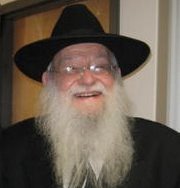
Rabbi David Cohen
Rabbi of Congregation Gvul Yaavetz, Brooklyn
b. 1932
<p>As history shows, it was by a hair’s breadth that Ben-Gurion decided to proclaim a state. The members of the Jewish Agency had to come to a decision because five Arab armies were threatening them… it was a fifty-fifty vote… It was Maimon, I think, who broke the tie and they proclaimed the state… The decision to proclaim the medinah was a clear cut decision which brought about the avadon (loss) of ten thousand Jewish neshamos (lives). The great tragedies we know – that the Jews who were killed were both husbands, fathers, sons, and grandsons all wrapped up into one. What kind of a loss and tragedy this was! It is not up to us to measure. Even it if is one Jewish life, we do not measure lives. By gentiles, for nationalistic or chauvinistic reasons, for the muterland, one does this. But in our value system, what is worth more? So this momentous decision to say that we are taking medinah over Jewish lives is to me a decision which is grounds for mourning rather than simcha. The Gemara says that when someone hears that his father died, he recites two blessings: one that G-d is the true judge and one for his inheritance. But what does he celebrate the next year? The yahrzeit or the fact that he got his inheritance? A year ago his father died so it is a yahrzeit. The fifth of Iyar is a yahrzeit. The medina is not more important than the loss of ten thousand Jews, who died as a result of this decision. That decision was a momentous error. It was an achzarius (extreme cruelty). (Speech to the Torah Umesorah Convention in 1983, printed in The Jewish Guardian, Summer 1983)</p>
Source
№
69
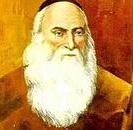
Rabbi Don Yitzchak Abarbanel
Major Scriptural Commentator
1437-1508
<p>“Avraham foresaw the length of this exile and the great misfortunes it brought, and he feared that his descendants would rise up to leave the exile before the time set by Hashem, just as the children of Ephraim left the Egyptian exile before the time, whereupon Hashem became angry at them and killed thousands of their best. So Avraham, knowing the time of the End, chased away the birds (Bereishis 15:11) - the son of David (i.e. moshiach) - preventing them from coming down on the carcasses - the nations - until evening, i.e. the time of redemption and the end of exile, as it says, ‘And at the time of evening there will be light.’</p><p>“And there is no doubt that it was in reference to this that Shlomo said (Shir Hashirim 2:7), ‘I have adjured you, daughters of Jerusalem, with the deer and the hinds of the field, that you not awaken nor arouse the love before it desires.’ And in Kesubos 111a, ‘Rabbi Yossi bar Chanina said: To what to these three oaths refer? One, that Israel should not go up as a wall. One, that the Holy One, blessed is He, adjured Israel not to rebel against the nations of the world. One, that the Holy One, blessed is He, adjured the nations not to subjugate Israel too much.’ The prohibition on ‘rebelling against the nations’ means that we must bear the yoke of the exile and live under them until the time of the End, when they will pass on. And this is what the prophet Tzefaniah meant when he said (3:8), ‘Therefore wait for Me, said Hashem, for the day when I arise,’ i.e. He commands them to wait until the time of the End, and not rebel and leave the exile before the time set by Him.” (Yeshuos Meshicho v. 1, p. 11b)</p><p>In his commentary on Vayishlach he echoes the Ramban: “Just as Yaakov prepared himself with prayer, gifts and war, so it will happen to us in all generations, that our efforts to be saved from Esav and his descendents will be, firstly, by prayer and supplication before the G-d of Yaakov, with gifts, bribes and presents to him, and with war – to flee and save from his hand.” We see clearly that for later generations, war does not mean real war.</p><p>"And Hashem your G-d will bring back your captivity and have mercy on you, and He will once again gather you from all the nations where Hashem your G-d scattered you." (Devarim 30:3) The Abarbanel writes that we learn from this passage that at the time of the future redemption G-d Himself will bring back our exiles, in contrast to the time of the Second Temple when the Jews returned to Eretz Yisroel by the permission of the Persian emperor Cyrus. That settlement, since it was established at the command of a mortal human being, was temporary; it came to an end with the destruction of the Second Temple 420 years later. But the future settlement will be established by G-d Himself, and therefore it will be permanent. (Mashmia Yeshuah, Mevaser 2, Nevuah 3)</p><p>In the Haggadah we say, "Ha lachma anya - this is the poor bread..." in Aramaic. But the final words, "Next year we will be free" are in Hebrew. The reason is so that the non-Jews of Babylonia (who spoke Aramaic) should not understand, lest they think the Jews were planning to set themselves free by means of a rebellion against the government. (Zevach Pesach, commentary on the Haggadah, reprinted in Hishbati Eschem)</p><p>Our Sages say that everything that happened to Yaakov with Esav was symbolic of what would happen between us and Esav's descendents, and just as Yaakov prepared himself with prayer, gifts and for war, so it will be with us in every generation: we must make efforts to save ourselves from Esav and his descendents, firstly through prayer and supplications before the G-d of Yaakov, through gifts and bribes, and through war - to run away and be saved from under his hand. (Abarbanel on Vayishlach)</p>
Source
№
70
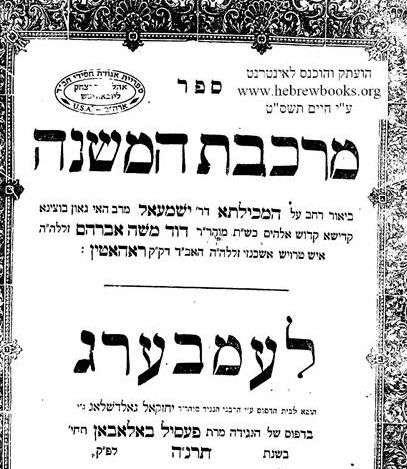
Rabbi Dovid Moshe Avraham Ashkenazi
early 1700s
<p>Rabbi Dovid Moshe Avraham Ashkenazi, who lived in the time of the Baal Shem Tov, wrote a commentary on the Mechilta called Mirkeves Hamishneh. In Parshas Noach the Torah says, “However, I will hold you responsible for your own blood; every animal I will hold responsible” (Bereishis 9:5). The Midrash says that the animals refer to the Four Kingdoms that subjugated the Jewish people in exile. According to this, the Mirkeves Hamishneh says that the word “however” is coming to exclude independent action undertaken by the Jewish people. “Only I will avenge your blood from the Four Kingdoms and from Esav,” says Hashem. “You are not allowed to do it yourselves.” (Mirkeves Hamishneh on Shemos 14:14)</p>
Source
№
71
Rabbi Elazar Rokeach of Worms
the Rokeach
1176-1238
<p>The Rokeach in his commentary on Shir Hashirim speaks about the oaths and offers two new explanations of the word “bitzvaos.” 1) It means that Hashem made the Jewish people swear by Tzevaos, one of His holy names. 2) It means the legions of the Jewish people (as in Shemos 12:41).</p><p>Then he offers an entirely new explanation of the verse, “I adjure you…” The word “hishbati” (I adjure you) can also be read “hisbati” (I sated you). “When the proper time comes, I will sate you with the nations, who are like gazelles and deer.” In order words, the Jews will dominate the other nations. We find that the Torah uses the word “eating” in the sense of dominating: “And you will eat all the nations that Hashem your G-d gives you” (7:16). According to this interpretation, says the Rokeach, we can understand the second half of the verse as a warning not to do things too early: “That time will come. Do not hurry to dominate the nations before the time. Do not arouse or awaken the love before it is desired – until moshiach comes.”</p><p></p>
Source
№
18
II · Lithuanian Tradition
Rabbi Elchonon Wasserman
Rosh Yeshiva of Baranovitch
1875-1940
In the 1930s Rabbi Elchonon Wasserman, one of the greatest European Jewish Torah scholars and head of the Yeshiva of Baranowitz Poland, published a series of essays entitled Ikvesa D'meshicha on the problems facing Jewry at that time. He deals with the subject of Zionism and much of what he writes could apply equally today.
Source
Tehillim 92:8
№
46
IV · Sephardi & German Tradition
Rabbi Eliezer Silver
President of the Union of Orthodox Rabbis of the US and Canada
1882-1968
However the call for a Jewish state is something not all Jews agree to at this time, especially if it comes about through protests and threats, for regarding this the Holy One blessed is He already made us swear not to go up as a wall - with strength, and not to force the end, and even that they should not pray excessively.
Source
Kol Yisroel number 16 22 Teives 5706 (1946)
№
72
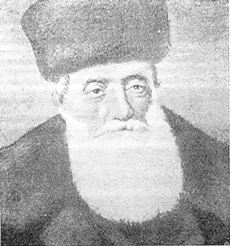
Rabbi Eliyahu Chaim Meisel
Rabbi of Lodz
1821-1912
<p>The Zionists do not seek out Zion. They say, our hands will triumph, our lips are under our power. They do not wait for the redemption of Hashem. They have donned the cloak of Zion to fool the weak-hearted and entrap them in their net. They are like the bardeles which, when it meets a man, dances, laughs and cries in order to lure him into its lare; and once it has caught him, it sucks out his brains. Therefore every man who has the fear of Hashem in his heart should stay far from them. A Jew must believe that our salvation is not in the hands of man. Salvation belongs only to Hashem. A Jew must walk in the path of the Torah as our rabbis have taught us, to love Hashem and his people and all of mankind, and then Hashem will be our light and from on high He will send us the true redeemer. G-d forbid for a Jew to look for tricks and devise schemes. We have only to hope to Hashem. He is our hope and He will have mercy on us." (Ohr Layesharim, p. 53)</p>
Source
№
14
I · Chasidic Tradition
Rabbi Hillel Lichtenstein
Krasner Rav
d. 1979
We must make known and reveal that the establishment of the State of Israel and its government is against the Torah and fundamentally wrong. It is a source of poison, leading the Jewish people astray from belief in G-d… All their celebrations on Independence Day, including the Hallel prayer instituted by their rabbis and any other holiday celebrations – are all idolatry and heresy, and G-d forbid to celebrate their holiday.
Source
Letter to the Central Rabbinical Congress
№
73
Rabbi Isaac of Komarna
1806-1874
<p>Rabbi Isaac of Komarna has a different explanation of why the Rambam doesn't count settling Eretz Yisroel as a mitzvah. He contends that the Rambam basically agrees to the Ramban that there is a mitzvah to conquer Eretz Yisroel and that we must not leave it in the hands of gentiles or unoccupied. However, he holds that it cannot be counted among the 613 mitzvos because we do not count mitzvos that are not within human power to fulfill. For example, prophecy is central to Judaism, yet there is no mitzvah for a Jew to be a prophet, because a Jew cannot select that status for himself; it is up to G-d to give it to him.</p><p>Here too, the conquest of Eretz Yisroel, no matter at what point in history, was not something that the Jews could just do on their own. They needed to be commanded by a prophet to do so. The conquests of Yehoshua and David, as well as the establishment of the Second Commonwealth in the time of Ezra and the Men of the Great Assembly, were all accompanied by commands from the prophets of the time. But in the absence of a command, Jews are forbidden under oath to rebel against the nations, and we must accept exile with love until the coming of moshiach. When moshiach arrives, the restoration of the Jews to Eretz Yisroel will not take place naturally, but through prophecy and wonders. Thus it cannot be counted as one of the 613 mitzvos, for the mitzvos were given to men of flesh and blood, not to prophets who change the laws of nature. (Otzar Hachaim, Kitzur Taryag Mitzvos, p. 59)</p>
Source
№
74
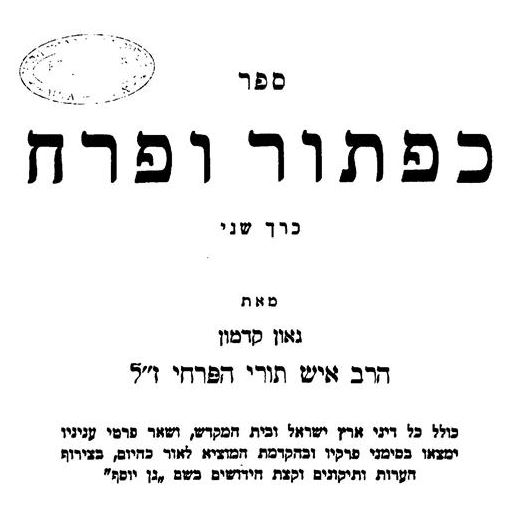
Rabbi Ishtori Haparchi
author of Kaftor Vaferach
1280-1366
<p>The book Kaftor Vaferach, written in 1322, details the geography of Eretz Yisroel and discusses the great mitzvah to live there: "It was taught in the name of Rabbi Meir: Whoever establishes his residence in Eretz Yisroel, speaks the Holy Tongue, eats only ritually clean food and recites Shema morning and evening is guaranteed the World to Come (Yerushalmi Shkalim 14b). However, they must not go up with the intent of conquering until the end arrives, as it states in the end of tractate Kesubos: Do not arouse or awaken... Rabbi Zeira says: This teaches that Israel must not go up as a wall." (Kaftor Vaferach chapter 10, p. 197)</p>
Source
№
52
IV · Sephardi & German Tradition
Rabbi Marcus Lehmann
1831-1890
Let us consider the history of other nations! First they are small and unimportant; they grow stronger and more powerful by perpetual warfare against their neighbours and other enemies; thus they become great, mighty and rich. Later on they stagnate and become the victims of other advancing nations.
Source
Commentary on the Passover Haggadah p. 72
№
35
II · Lithuanian Tradition
Rabbi Meir Simcha of Dvinsk
Author of Ohr Somayach
1843-1926
Rabbi Meir Simcha of Dvinsk brings up the oaths in his comment on Yosef's last words to his brothers: G-d will surely visit you and take you up from this land, to the land that He promised to Avraham, Yitzchak and Yaakov. Yosef was warning them not to go up as a wall.
Source
Pakod pakadti
№
25
II · Lithuanian Tradition
Rabbi Meshulam Dovid Soloveitchik
Rosh Yeshiva of Brisk
b. 1921
The Zionists claimed that they would save the Jews from government persecution in Russia, and already then Rabbi Chaim Brisker said that their entire purpose in founding a state was in order to have a way to uproot the Torah from the Jewish people and to transform them into a nation like all other nations.
Source
Shiurei Rabbeinu Meshulem Dovid Halevi vol. Sichos V'inyanei Hashaah p. 662
№
28
II · Lithuanian Tradition
Rabbi Mordechai Gifter
Rosh Yeshiva of Telshe Yeshiva Cleveland
1915-2001
Things have been happening lately concerning Jews. We have to know about this and we have to know how to look at these events. We have to look at them with a Jewish look - with a Jewish eye, and not the way the non-Jews look at such things.
Source
Sinnah
№
75

Rabbi Mordechai Ha-Kohein
c. 1605
<p>The Shach on the Torah, in the name of the Shaarei Orah, explains that Yitzchok loved Esav because he saw that Yaakov’s children would one day sin and deserve to be punished in Gehinom. In order to spare them this punishment, Yitzchok chose for them the lesser punishment of exile, and chose Esav to carry out the exile. In this manner, he followed in the footsteps of his father, Avraham Avinu, who also chose exile for his children (Bereishis Rabbah 44:21). This is the meaning of the Midrash in Shir Hashirim. “Do not arouse the love before it is desired” is understood by the Midrash to mean: “Do not use actions to upset the love of Yitzchok for Esav before the desire of the patriarch [Yitzchok] has been achieved.” In other words, Yitzchok’s love for Esav is behind our exile, and it is forbidden to use actions to upset that love.</p>
Source
№
76
Rabbi Mordechai Leib Winkler
rav of Madd
1845–1932
<p>Rabbi Mordechai Leib Winkler, rav of Madd, wrote the following to Rabbi Yonasan Steiff, rav of Budapest, who asked his opinion about an organization to settle Eretz Yisroel, probably a project of Agudah (printed in Levushei Mordechai, v. 3 Yoreh Deah 49):</p><p>You are correct in opposing them, for the Zionists will have the power, and who knows what they will decree on a group like this.</p><p>And everyone knows what Rabbi Yonasan Eybeshutz writes on the Haftarah of Parshas Vaeschanan, that even if the Jewish people gathers together to go to Eretz Yisroel and the nations of the world agree, we must not go, for it is only a temporary permission. Who knows if they will not change their minds and decree another exile worse than the first one? This, he says, is the meaning of Shir Hashirim 8:4: Why do you arouse and why do you awaken the love before it is desired - until the true time for redemption arrives?</p><p>Buying up farmland in Eretz Yisroel is a waste of time and a sickness</p><p>And Rabbi Yaakov Emden, in the introduction to his Siddur called Sulam Beis Eil, writes at length about the greatness of the mitzvah to settle in Eretz Yisroel, saying that outside the Holy Land we are under the power of an angel who causes us to forget our Torah learning. He recommends that whoever is wealthy enough to support himself for the rest of his life should go and live in Eretz Yisroel, learning Torah and serving Hashem. But, he says, buying up farmland in Eretz Yisroel is a waste of time and a sickness.</p><p>And the Chasam Sofer comments on the Haftarah of Parshas Shoftim: The Jewish people have already deserved many times to be redeemed through an incomplete redemption, or – better yet – there could have been a real redemption as in the time of the Second Temple, but that is not desirable. Even if we ourselves would settle for such a redemption – just to be redeemed – our holy forefathers would not consent now to anything less than a complete redemption, in which we will see Hashem's return to Zion with our own eyes.</p><p>However, we must ask: If Jews are discouraged from returning to Eretz Yisroel en masse, why did Chazal (Gittin 8b and Bava Kama 80b, quoted in Orach Chaim 306:12) give special permission to tell a gentile to write on Shabbos in order to purchase a house in Eretz Yisroel? Perhaps the answer is that this law applies only to a house, not to a field or a vineyard. [Chazal wanted Jews to live in Eretz Yisroel during exile only to study Torah, not to farm the land and make a living. This would guarantee that only a select few would come, and there would be no massive takeover of the country.]</p><p></p>
Source
№
0
II · Lithuanian Tradition
Rabbi Mordechai Rottenberg
rabbi of Antwerp
1872-1944
<p>The question of the oaths was first presented to rabbis as a practical issue in 1937, when Britain's Peel Commission proposed partitioning Palestine into a Jewish state and an Arab state. In that year, Agudath Israel held its Knessiah Gedolah and presented the question of a Jewish state to its rabbinic panel, the Moetzes Gedolei Hatorah.</p><p>Two of the rabbis of the Moetzes were Rabbi Yehuda Leib Zirelson of Kishinev and Rabbi Mordechai Rottenberg of Antwerp. Rabbi Zirelson was in favor of the state, Rabbi Rottenberg opposed the state, and each put his opinion into writing.</p><p>However, it would inaccurate to call it a dispute over the oaths, because Rabbi Zirelson did not mention the oaths at all. In fact, he did not even present his essay as a response to the question of whether or not Jews are allowed to have a state. Instead, his focus was on whether we should accept a state in such a small area of land (about 20% of Palestine). He based his support for the state on five points: 1) The heart of a king is like streams of water in the hand of Hashem (Mishlei 21:1). Thus if the British are making this proposal, it must be the will of Hashem and we should accept it. 2) The state will eventually be big and powerful, but let it at least start now, even if small. The Zohar says that blessing cannot take effect on an empty table. We have to start with something, and later it can be enlarged. 3) It could be this small state is referred to in the Yerushalmi Berachos 1:1, which says that the redemption of the Jewish people will start out small and increase slowly, like the dawning day. 4) We need not fear that the irreligious will rule over us and persecute us. Hashem can save us, and besides, as the Gemara (Berachos 10a) says, "What business have you with the secrets of Hashem? Do what you are commanded to do, and let Hashem do what He wants." 5) The Gemara (Berachos 7a) says that when Moshe asked to see Hashem, Hashem replied, "You missed your chance. When I wanted to show you, you didn't want to see. Now that you want, I don't want." Let's not miss our chance! Let's not let such an opportunity slip through our hands, for if even Moshe was punished for missing an opportunity, all the more so will we.</p><p>To this Rabbi Rottenberg replied: "I am shocked that you rule on such a serious halacha question based solely on Aggadah. Would you permit an agunah (stranded woman) based on Aggadah?" Nevertheless, he responded to the above Aggadah points before beginning his halachic discussion. 1) The Yalkut on Mishlei 21 says that if the generation is worthy, Hashem inclines the king's heart to good, and if not, He inclines him to do evil. How are we to know whether this decision of Britain to give a piece of Eretz Yisroel to the Jews is for good or for evil? 2) We have to start with something, but not something negative. Having nothing is better than having something bad - a state under the control of the wicked. 3) The Yerushalmi gives, as an example of a slow redemption, the story of Mordechai. Clearly it has to begin with a tzaddik. 4) History proves that when the irreligious come to power, they use their power to incite the Jewish people away from Hashem. In such a case, we must indeed "do what we are commanded to do" - not join the wicked. 5) You say let us not miss our chance. It sounds like it's obvious to you that it is the will of Hashem that we should found a state as Britain proposes. But to me it is obvious that even besides the prohibition on joining the wicked, founding a Jewish state before the coming of moshiach is against the will of Hashem and against the best interests of the Jewish people.</p><p>The Gemara in Kesubos 110b brings a dispute between Rabbi Zeira and Rav Yehuda as to whether an individual Jew is allowed to return to Eretz Yisroel during exile. But all agree that the oaths at least prohibit the Jewish people from going up "as a wall" - which Rashi explains as "together, with a strong hand." And there is no greater instance of "as a wall" than the establishment of a Jewish state in Eretz Yisroel. And see the Ahavas Yonasan who says that even if all the Jews are ready to go to Jerusalem, and all the nations agree, G-d forbid that we should go there.</p><p>Furthermore, who can estimate what loss we will have from this when the true redemption arrives? The Midrash (Shir Hashirim Rabbah 2:7) tells us the reason for the oath against going up as a wall: “If so, why does the king moshiach have to come to gather the exiles of Israel?” The Maharzu explains that it is moshiach’s job to bring all of Israel up together from the exile, and if, G-d forbid, they do this on their own, they will lose the redemption of the moshiach.</p><p>Lastly, we must fear that if we accept this gift from Britain, we will be considered like the Jews who brazenly ascended the mountain to conquer Eretz Yisroel against the will of Hashem (Bamidbar 14:44).</p><p>Therefore, Agudath Israel, in keeping with its goal of resolving every question in accordance with the Torah, must say no to this gift. And in the event that another Jewish party does accept it, they must beg the British government to ensure freedom of religion in the new state. In any case, we must proclaim to the world leaders that although we long to see our scattered people gathered to Zion and Jerusalem, we are waiting for moshiach to do the job. (Shailos Uteshuvos Yad Mordechai, Siman 53)</p><p></p>
Source
№
78
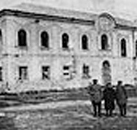
Rabbi Mordechai Yosef of Izhbitzeh
d. 1854
<p>Rabbi Mordechai Yosef of Izhbitzeh says that even in the technical laws of preparing food on Shabbos, Chazal hinted at the oaths. The Torah forbids cooking on Shabbos, and Chazal enacted the precaution of not even insulating cooked food on Friday with a substance that adds heat: "We may not insulate with olive pulp, manure, salt, plaster, or sand…we may insulate with clothing, fruit, the wings of a dove, sawdust or fine flax dust" (Mishnah Shabbos Ch. 4). We may insulate our life-force during exile so that it should not burn out, but we may not do anything that "adds heat" – to stir ourselves up to the point where we want to leave exile by force and push to the End, as the Gemara (Kesubos 111a) says that Hashem made us swear not to do this. "We may insulate with clothing" – the tzitzis, which protect us – "fruit" – the Four Species of the lulav – "the wings of a dove" – tefillin and mezuzos, as explained in the Gemara (Shabbos 49a) – "sawdust" – afflictions which bring atonement (from the similarity of the words "yisurin" and "nesores") and "fine flax dust" – acts of kindness. All these mitzvos protect us during exile, but we may not add heat and leave on our own, only when Hashem Yisborach shines His light upon us. (Mei Hashiloach on Shabbos, Ch. 4.)</p>
Source
№
36
III · Jerusalem Tradition
Rabbi Moshe Aryeh Freund
Chief Rabbi of Jerusalem
1904-1996
Whoever votes in the election has a portion in the defiled regime. By going out to vote, they give strength to the defiled regime, a regime of heretics whose entire goal is to leave behind the holy Torah, may G-d spare us.
Source
Ateres Yehoshua Vayikra p. 4
№
79

Rabbi Moshe Ben Nachman
the Ramban
1194-1270
<p>The Ramban holds that permission granted by a gentile government for Jews to return to Eretz Yisroel does not nullify the oaths. In his Sefer Hageulah, end of Shaar 1 (p. 274 in the Chavel edition), he asks: Why were the Jews at the time of the Purim miracle still scattered in all the states of King Achashverosh? Just a few years earlier, the first Persian king Cyrus had given permission for the Jews to return to Eretz Yisroel and build the Temple (Ezra 1:3). The permission to build the Temple was later revoked, but we should still expect to find most of the Jews back in Eretz Yisroel. Yet the vast majority remained in exile (and only 42,360 Jews were back in Eretz Yisroel, according to Ezra 2:64). And even later, when Darius reinstated the permission, only about 1500 Jews came up with Ezra from Babylonia (Ezra 8:1-20). The answer is, he says, that the Jews would not have taken advantage of these kings’ offers had they not been foretold by a prophet, speaking in the name of Hashem. That prophet was Yirmiyahu, who said (29:10), “When seventy years of Babylonia are complete, I will revisit you.” Now, the Jews were uncertain whether these kings had meant to give permission for all the tribes of Israel to return, or only for Yehuda. And even if they had meant to give permission to all of Israel, perhaps Yirmiyahu’s prophecy had only referred to those Jews living in Babylonia proper, not in all the 127 Persian states. The king’s permission was not enough; they needed Hashem’s permission as well. Without Hashem’s permission, they had no right to leave exile; this would be “forcing the End.”</p><p>We see clearly that the Ramban did not agree with the contention that permission from a king alone is proof of a Divine visitation. For the Jews in Ezra's time, nothing short of prophecy was enough to warrant their return, and they were not sure if the prophecy referred to all of them.</p><p>The Ramban at the beginning of Vayishlach writes: “This passage (about Yaakov meeting Esav) is a guideline for all generations, because everything that happened to Yaakov Avinu with his brother Esav happens to us continually with Esav's descendants. We must therefore adopt the righteous Yaakov's approach, to prepare ourselves in the three ways that he prepared himself: tefillah, gifts, and saving by way of war, to flee to safety.”</p><p>Lest anyone think that the Ramban means that war and fleeing to safety are both valid options during exile, the Chofetz Chaim writes (on Parshas Devarim): “The Torah teaches us not to resist the nations even when they fight against us. We must follow in the footsteps of Yaakov Avinu in his encounter with his brother Esav. As the Ramban writes in Vayishlach, everything that happened between Yaakov and Esav happens to us constantly with Esav’s children…” and he continues to quote the Ramban. It is clear from the Chofetz Chaim that he understood that “to flee to safety” is the Ramban’s adaptation of “war” for our times.</p><p>“As long as we walked on that well-tread path, Hakadosh Baruch Hu saved us from their hands. But since we have strayed from the path and new leaders have arisen who chose new methods, leaving behind our ancestors’ weapons and adopting the methods of our enemies, we have fared worse and worse, and great travails have befallen us. May Hashem have mercy on our people and restore our judges as of old,” concludes the Chofetz Chaim.</p><p>Alternatively, it is possible that the Ramban meant real war, but only in reference to Yaakov himself. The word “war” refers back to the “three ways that he (Yaakov) prepared himself” and not to us in later generations.</p><p>This seems to be how the Abarbanel understood it. In his commentary on Vayishlach he echoes the Ramban: “Just as Yaakov prepared himself with prayer, gifts and war, so it will happen to us in all generations, that our efforts to be saved from Esav and his descendents will be, firstly, by prayer and supplication before the G-d of Yaakov, with gifts, bribes and presents to him, and with war – to flee and save from his hand.”</p><p>The Ramban in Sefer Hamitzvos writes, "We were commanded to take possession of the land that G-d promised to our forefathers, to Avraham, to Yitzchak and to Yaakov, and that we should not leave it in the hands of any other people, or leave it desolate... We must not leave the land in their [the Canaanites] hands or in the hands of any other people in any generation." Many have asked: how could the Ramban say that we must conquer Eretz Yisroel in every generation, if there are these three oaths prohibiting such a conquest? Obviously, these people say, the Ramban must hold that these oaths are not halachically binding.</p><p>However, one cannot understand the Ramban to mean we must conquer Eretz Yisroel in every generation, including during exile, because if one takes a look further in the Ramban one will see that it's not so. He brings a proof from Chazal's statement that Dovid Hamelech was wrong to conquer Syria before completing the conquest of Eretz Yisroel, and he ends off, "So we see that we were commanded to conquer it in all generations."</p><p>Then he says, "And I say that the mitzvah of which Chazal speak highly, living in Eretz Yisroel...is all part of this positive commandment, for we were commanded to take possession of the land in order to live in it. If so, it is a positive commandment for all generations, in which each one of us is obligated, even during exile."</p><p>We see clearly that the Ramban needed a second proof, from the fact that Chazal speak highly of living in Eretz Yisroel, that the mitzvah applies during exile. His first proof from Dovid Hamelech did not cover exile.</p><p>Why then does he say "we were commanded to conquer it in all generations"? The answer is that he is anticipating someone defending the Rambam, who does not count this mitzvah, by saying that the mitzvah was a one-time-only command to Yehoshua to conquer the land. One-time-only mitzvos aren't counted in the 613, as per the Rambam's third rule of counting mitzvos. The fact that the mitzvah applied to Dovid Hamelech proves that it was not a one-time-only mitzvah. To use the halachic terms, it is ledoros (for the generations) and not leshaah (one-time-only). And that is exactly what the Ramban means when he says we were commanded to conquer it in all generations - that it is a permanent mitzvah. But there are certainly times when the mitzvah of conquest is suspended, namely during exile. In this respect it is just like all the mitzvos relating to the Beis Hamikdash and the korbanos, which are considered permanent mitzvos, counted among the 613, yet are suspended during exile.</p><p>It is true that in the end, the Ramban proves that the mitzvah of living there applies during exile too, but that is only the mitzvah of living there, not the mitzvah of conquering. You have to read the Ramban carefully. Up until this point, the Ramban calls the mitzvah lareshes, "to take possession" of the land. Now he makes an additional point: that the mitzvah of living in Eretz Yisroel of which Chazal speak is also part of this same mitzvah, "for we were commanded to take possession of the land in order to live in it." In other words, the real mitzvah is to live in the land, and conquering is only a hechsher mitzvah - a preparatory stage in order to reach the mitzvah. Writing tefillin is preparation for putting them on, but the mitzvah is only to put them on. If one has pre-written tefillin, he is under no obligation to write them. Building a succah is preparation for sitting in it, but the mitzvah is only to sit in it. If one has a pre-built succah he does not have to build another one. Similarly, from the fact that Chazal speak highly of living in Eretz Yisroel even during exile, the Ramban concludes that the real mitzvah is living there, not conquering it. Conquering in the time of Yehoshua and Dovid was only a preparation that made it possible to live there, but if one can live there without conquering it, he also fulfills the mitzvah. Therefore, even during exile when conquest is forbidden under the oaths, it is possible to live there and fulfill the mitzvah.</p><p>And on the contrary, the Ramban actually sounds like he makes the unstated assumption that there is an oath that forbids conquest during exile. Otherwise, why does he have to bring another proof that the mitzvah applies during exile? What should be the difference between Dovid Hamelech's time and our time, if not the oath?</p><p>And the Ramban expresses no surprise that Chazal in their time speak only of the mitzvah of living in Eretz Yisroel, not conquering it. He merely says that despite the suspension of the hechsher mitzvah of conquering, it is still possible to do the mitzvah itself, living there.</p><p>Also note his words: "It is a positive commandment for all generations, in which each one of us is obligated, even during exile." Why does he say "each one of us"? Because he knows that if the mitzvah were on the Jewish people as a whole, it would be impossible to fulfill it during exile without conquest. There is no way that any power ruling the land would allow the entire Jewish people to return to the land en masse - they would see it as a threat to their rule. They would only allow one Jew here and one Jew there to come. Therefore, the Ramban says, it is a mitzvah that whatever individual Jews can come and live there, should do so.</p><p>Furthermore, pay close attention to the Ramban's words: "And I say that the mitzvah of which Chazal speak highly, living in Eretz Yisroel, to the point that they said in Kesubos: Anyone who goes out of it and lives in Chutz Laaretz should be in your eyes as if he worships idols..." If you look in Kesubos 110b, the Gemara doesn't say "anyone who goes out of it." It says, "Anyone who lives in Chutz Laaretz is similar to one who has no G-d... is as if he worshipped idols." Why did the Ramban misquote the Gemara?</p><p>The answer is that there are really two different statements of Chazal: one in the Gemara, and one in the Toras Kohanim on Parshas Behar (Vayikra 25:38). The Torah says, "To give you the Land of Canaan, to be your G-d." Chazal comment, "Every Jew who lives in Eretz Yisroel accepts upon himself the kingdom of Heaven. And whoever goes out to Chutz Laaretz is as if he worships idols." Rashi quotes this in his commentary on Vayikra 25:38. According to this statement, only one who is born in Eretz Yisroel and leaves it is considered as if he worshipped idols, but one who is born in Chutz Laaretz is under no obligation to move to Eretz Yisroel.</p><p>It is this statement that the Ramban quotes. Based on this, it seems clear that the Ramban did not even mean that an individual who is able to move to Eretz Yisroel should do so. He meant that it is an optional mitzvah that one fulfills if he lives there, but is not obligated to go.</p><p>The Gemara in Kesubos indeed says, "Anyone who lives in Chutz Laaretz..." It sounds like even those born in Chutz Laaretz are not allowed to stay there. This could be understood in the context of the Tosefta Avodah Zarah 5:2, which says, "Rabbi Shimon ben Elazar says: Jews in Chutz Laaretz worship idols in purity. How so? If an idol worshipper makes a feast for his son, and goes and invites all the Jews in his city, even if they eat their own food and drink their own drinks and their own waiter waits on them, they are idol worshippers." Here too, the Gemara in Kesubos is talking about Jews who socialize with the gentiles, which has bad consequences even for those who are born in Chutz Laaretz.</p><p></p>
Source
№
80
Rabbi Moshe Chaim Luzzatto
the Ramchal
1707-1746
<p>Rabbi Moshe Chaim Luzzatto composed a prayer asking Hashem to look at the merit of the Jews who bear their exile and keep the oaths (The Book of 515 Prayers, number 168). It reads in part: “One and unique G-d, how beloved is your dwelling, Hashem Tzevaos, in so many synagogues and study halls where they study Your Torah in exile, and Your Presence rests there, like one who rests in an inn on the way, like a bird who find a home; and they study Your Torah and bear their exile, for so they were foresworn, not to force the end, as it says ‘I adjure you, daughters of Jerusalem, by Tzevaos…” and therefore that name (Tzevaos) shines upon them, and they accept it lovingly, like a donkey bearing its burden. And sometimes they stumble under their burden because the Samech Mem makes it too heavy for them, but You help them back up through the many inspirations of holiness with which you inspire them; whereupon they stand up and bear their burden again, as before.”</p>
Source
№
27
II · Lithuanian Tradition
Rabbi Moshe Feinstein
Rosh Yeshiva of Tiferes Yerushalayim
1895-1986
Regarding your question if there is a mitzvah nowadays to live in Eretz Yisroel, as the Ramban says, or if there is no mitzvah nowadays, as Rabbeinu Chaim says, quoted in Tosafos on Kesubos 110b: Most poskim hold it is a mitzvah.
Source
Igros Moshe Even Hoezer 1:102
№
81

Rabbi Moshe Hager
the Kossover Rebbe
1860-1925
<p>The Kossover Rebbe quoted the oath against forcing the end (yidchaku) and applied it to Zionism. Rashi says it means that we must not pray too much; how much more is it forbidden to try to end exile through political means.</p><p>According to the other version of the text, that they should not delay the end (yerachaku), we also have a proof against Zionism. Rashi says it means delaying the end through our sins. If sins delay the end, then only teshuva can hasten the end, not political maneuvering.</p><p>The Kossover Rebbe says that the reason for the oaths is that every Jew must accept upon himself the yoke of exile lovingly, until the time of the redemption arrives. The exile is of great importance, because it atones for the sin of Adam eating from the Tree of Knowledge. Furthermore, exile was chosen by Avraham our father at the Covenant Between the Parts to spare us from Gehinom. We must not try to force the hour, for in so doing we will really just be delaying the redemption, since G-d will in any case make us return to exile to serve the remainder of our term.</p><p>With this in mind, we can explain the two versions of the text in Kesubos 111a as being identical in meaning. According to one version, G-d adjured the Jewish people not to force (yidchaku) the end of exile. According to the other version, the oath was not to delay (yerachaku) the end of exile. Seemingly these two version are opposites, but according to the above, the oath forbids pushing for the end, since by so doing we will really be delaying the end.</p><p>Therefore we must be wise and scrutinize any movement that superficially seems to be working to bring the redemption nearer, lest it actually be delaying the redemption.</p><p>If we understand the atonement we are getting through exile, wrote the Kossover Rebbe, we can feel its sweetness and accept it lovingly. (Leket Ani)</p><p>The Kossover Rebbe brings further proof against Zionism from the Gemara in Sanhedrin 97a: "Whenever Rabbi Zeira saw the rabbis occupied with the subject of moshiach, he said to them, 'I beg of you, do not delay him.' For three things come only when our mind is diverted from them, and one of them is moshiach." From the words of the Gemara, it does not sound like the rabbis were praying for moshiach; it sounds like they were actively seeking ways to accelerate his coming. And Rabbi Zeira told them that this sort of activity actually delays his coming. As Shlomo Hamelech said, "If Hashem does not build a house, its builders toil in vain" (Tehillim 127:1). Not through might and strength will we return to our land, and not through political skill will our kingdom be restored to us. It will happen only when Hashem bestows upon us His spirit of favor from above, and a voice proclaims to us, "Long enough you have dwelt in the valley of weeping! Return, children, to the land of your ancestors!" (Leket Ani, Purim)</p><p></p>
Source
№
82
Rabbi Moshe Sofer
the Chasam Sofer
1762-1839
<p>The Chasam Sofer gives an explanation for the punishment for violating the Three Oaths, based on the Midrash at the beginning of the Vayikra, which comments that Moshe, in his wisdom, knew not to come into the Mishkan before Hashem called him. From this we learn, says the Midrash, that a Torah scholar who has no wisdom is worse than an animal that died of itself.</p><p>An animal that died of itself is considered "killed by the King" whereas an animal slaughtered by human hands is considered "killed by an officer" and thus on a lower level (Shabbos 108a). Lower still is an animal that was torn apart by wild predators. One who presses for closeness to Hashem in an unauthorized way is, G-d forbid, made ownerless and vulnerable to wild predators, and thus meets an end that is worse than the animal that dies of itself. (Drashos Chasam Sofer, p. 152, Drush for Adar Sheni 7 and Vayikra 5586)</p><p>The Chasam Sofer comments on the Haftarah of Parshas Shoftim: The Jewish people have already deserved many times to be redeemed through an incomplete redemption, or – better yet – there could have been a real redemption as in the time of the Second Temple, but that is not desirable. Even if we ourselves would settle for such a redemption – just to be redeemed – our holy forefathers would not consent now to anything less than a complete redemption, in which we will see Hashem's return to Zion with our own eyes.</p><p>On the Hagaddah, the Chasam Sofer explains that the wicked son's sin is that he cannot stand to wait, and therefore he asks, “What is this long service to you? Why do you have to drag it out so much? It’s already time to eat.” We reply to him: “Because of this – in the merit of our waiting for the redemption and not leaving early like the tribe of Ephraim – Hashem redeemed us from Egypt. If you, the impatient son, had been there, you would not have been redeemed.”</p>
Source
№
2
I · Chasidic Tradition
Rabbi Moshe Teitelbaum
Satmar Rebbe Author of Berach Moshe
1914-2006
We have all assembled today so that the speakers can explain to the audience the position of our holy rabbis against Zionism. Although this position has already been made clear, as my uncle, he should live long, has explained it in his books, and in particular Vayoel Moshe, we must understand that in today's times, when someone is opposed to Zionism and to the state they have made, people say he is a Satmar Hassid.
Source
Speech given on the first day of Chol Hamoed Pesach 1970
№
13
I · Chasidic Tradition
Rabbi Moshe Yitzchok Itzikel Gewirtzman
Pshevorsker Rebbe
1881-1976
When he sent a letter to the Holy Land, he would write the address himself, and he would write it using the gentile alphabet, not the Hebrew alphabet. Once in his later years, when he did not have the strength, he wrote a letter and asked his attendant to address it for him.
Source
№
50
№
83
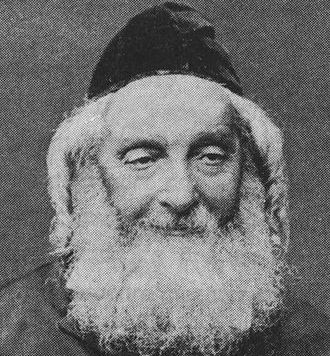
Rabbi Naftali Tzvi Yehuda Berlin
known as the Netziv, Rosh Yeshiva of Volozhin
1816-1893
<p>The Netziv supported the Chovevei Tzion movement, but at the same time he cautioned that settling the land should never be associated with messianism, the Temple or the redemption in any way. When asked in 1891 whether Rabbi Hirsch Kalischer's book should be reprinted, he responded:</p><p>All these things were only considered appropriate [by Rabbi Kalischer] because he thought that the light of redemption had begun to shine in his time. But in our time, when we are in exile and new decrees are constantly made, it is forbidden for us to mention the idea of redemption in connection with the settlement of the Land. For without a doubt the Sultan and his ministers will hear that Jewish settlement in the Land is the beginning of redemption, and he will, G-d forbid, put a stop to all settlement. Other governments will get worried about it and pass decrees like those of Haman, G-d spare us. Therefore, G-d forbid to point out any signs of redemption in connection with the project of settling the Land. Rather, Hashem has inspired our hearts to build up the ruins of the Land and make it a settled place; more than this we do not know. We must not speak about it, but only wait and believe in our hearts that there will be a redemption, in whatever way Hashem wants, according to our deeds. Therefore I do not approve of the republication of the book Drishas Tzion, for it contains a danger to the entire project [of settling the Land]. May Hashem Yisborach show us the straight path, and may we be successful in doing His will, to build up the ruins of the Land, and may we merit to see Israel in their dwellings.</p><p>If the Netziv was worried about a mere book arousing the anger of the nations, he would certainly not have approved of an armed takeover of Eretz Yisroel, followed by 63 years of continual war.</p><p>The Netziv also says that the Jewish people’s survival is a clear demonstration of Divine Providence, and he understands that this is the meaning of G-d’s promise to Yaakov Avinu: “And your descendents will be like the dust of the earth, and you will spread out west, east, north and south; and all the families of the earth will be blessed through you and your descendents” (Bereishis 28:14). “Like the dust of the earth” means, as the Sforno explains it, that the Jewish people will be in exile, as low as dust. Only afterwards will they “spread out” in the Holy Land at the redemption. “The families of the earth will be blessed through you” means that during exile, when the nations witness the Jewish people’s wondrous survival and come to recognize the greatness of the Shepherd who watches over them. This recognition is only possible during exile (Haamek Davar, Vayeitzei).</p><p>The Mechilta (introduction to Beshalach) says: The Bnei Ephraim were killed when they escaped from Egypt 30 years early, as Scripture says, “For they did not keep the covenant of G-d and they refused to follow His Torah” (Tehillim 78:10). They transgressed the End and the Oath. The Netziv comments: The explanation of this oath is the verse, “I have adjured you, daughters of Jerusalem, not to arouse…” The Gemara explains in Kesubos and in the Midrash there, that He made them swear not to force the end. This was known by tradition to the Jews who went down to Egypt. (Birkas Hanetziv)</p><p></p>
Source
№
6
I · Chasidic Tradition
Rabbi Refoel Blum
The Kasho Rav
1910-2005
It has been some time since the greatest rabbis, leaders of the fight against Zionism, have passed away. They have left our generation, unfortunately, without a window to let in the light of truth. Therefore we must strengthen ourselves, not weaken in our battle, and not sit with folded hands and laziness; but rather raise our voices constantly against all the sins of the Zionists.
Source
Ketzei Hashomayim p. 56
№
44
IV · Sephardi & German Tradition
Rabbi Samson Raphael Hirsch
Rabbi of Frankfurt
1808-1889
Rabbi Samson Raphael Hirsch devotes a long section of his book Horeb to the obligation of Jews to seek the welfare of their government. If this applied under the Babylonians, who exiled the Jews by force, all the more so in our current countries of residence, in which we settled by choice.
Source
Yirmiyahu 29:7
№
3
I · Chasidic Tradition
Rabbi Shalom Ber Schneersohn
Lubavitcher Rebbe
1860-1920
Even if these men were loyal to Hashem and His Torah, and even if there were a chance that they would achieve their goal, we must not listen to them in this matter, to make our redemption with our own power.
Source
Rashi Kesubos 111a and see Midrash Shir Hashirim 2:7
№
12
I · Chasidic Tradition
Rabbi Shaul Brach
Rabbi of Kasho Hungary
1865-1940
We have long ago been foresworn by the holy prophets not to force the end and not to enter the Land of Israel by force of arms. But these wayward sons say that with their strong arms and money they will save Israel. They say openly, G-d has forgotten us and we will save ourselves.
Source
Givas Shaul 386
№
32
№
84
Rabbi Shimon Yisroel Posen
the Shoproner Rav
<p>Even if the leaders of this state were to be believers in the Torah and the words of Chazal on some level, and even if they did not persecute religious Jewry, the entire concept behind this state would be complete heresy, for it is impossible to imagine that the Jewish people should have their own country before the holy Divine Presence returns to the holy site of the Temple. Heaven forbid for the children to despise the honor of their Father in heaven, that they should attach no value to their Father's honor, and they should prefer to accept from the nations this gift of independence. Whoever thinks this way is like someone who says to his father, "What do I have to do with you? I have built my house, and what do I care if you continue to wander in exile?" ...Whoever is proud of the fact that there is an independent state called "the State of Israel" is revealing that deep down, he hates his Father in heaven.</p><p>Whoever believes in or admires this state of heretics even the slightest bit, is a heretic like them. Anyone who wants it to continue existing, even in the inner chambers of his heart, even if he does not make this known to others, or derives secret pleasure from the existence of this state, is a believer in idolatry. This should definitely be spoken of in public all the time, so that the masses who do not understand this on their own should not forget about it. We must not allow them to become dull with time, G-d forbid, and be drawn after all the noise made by the priests of this idolatry. (Toras Alef, v. 4 ch. 31 par. 7)</p><p>In 1957, after the attempted Hungarian revolution, most of Hungary's Jews succeeded in escaping to Vienna, Austria, where they awaited a country to take them in. The Zionists campaigned strongly to bring all of these Jews to their state. At that time, the Shoproner Rav, who had stayed in Hungary for some time after the war and established a yeshiva, but was now in America, headed a delegation to Vienna to speak to the Jewish refugees. The members of the delegation met with the refugees and explained to them the great spiritual danger that awaited them in the State of Israel.</p><p>The Shoproner Rav wrote a long, impassioned plea to the Hungarian Jews not to give into Zionist pressure.</p><p></p>
Source
№
88
Rabbi Shlomo ben Shimon Duran
the Rashbash
1400-1467
<p>"There is no doubt that living in Eretz Yisroel is a great mitzvah at all times, both during and after the time of the Temple, and my ancestor the Ramban (he was a sixth generation descendent of the Ramban) counted it as one of the mitzvos, as it says, 'You shall take possession of it and live in it,' and so is the opinion of my father the Rashbatz in his work Zohar Harakia. And even according to the Rambam who did not count it as a mitzvah, it is at least a Rabbinic mitzvah, besides the many other benefits of living there. However, during exile this is not a general mitzvah for all Jews, but on the contrary it is forbidden, as the Gemara says in the last chapter of Kesubos, that this is one of the oaths that the Holy One, blessed is He, made the Jews swear: that they not hurry the end and not go up as a wall. Go and see what happened to the children of Ephraim when they hurried the end! However, it is a mitzvah for any individual to go up and live there, but if there are considerations that prevent him he is not obligated." (Shailos Uteshuvos Rashbash, siman 2)</p>
Source
№
48
IV · Sephardi & German Tradition
Rabbi Shlomo Eliezer Alfandri
Leader of the Sephardic Community In Jerusalem
1820-1930
I hereby make known that it is forbidden for any Jew whose forefathers stood at Mount Sinai and has a portion in the G-d of Israel and His Torah, to remain a member in the Nationalist Council, which has lifted up its hand against the Torah of Moses and desecrates the laws of the Torah brazenly.
Source
Responsa Saba Kadisha 1:32
№
85
Rabbi Shlomo Ephraim Luntschitz
author of Kli Yakar
1550-1619
<p>The Kli Yakar, in his work Ir Giborim, speaks about the lesson from the meeting of Yaakov and Esav that we must prepare ourselves with prayer, gifts and war. He interprets our war to be the war of Torah (the disputes waged between scholars of the Torah), with which we can win over Esav. This is based on Chazal’s famous statement, “When the voice is the voice of Yaakov, the hands are not the hands of Esav” (Bereishis Rabbah 65:20). But, he says, “real war is impossible, as our Sages (Kesubos 111a) derived from the verse, I adjure you daughters of Jerusalem etc.”</p><p>In his comment on Vayikra 25:2, the Kli Yakar quotes some of the reasons given by the commentators for the mitzvah of Shmittah, rejects them, and then gives what he holds is the real reason. The Rambam in Moreh Nevuchim says that the purpose of Shmittah is to let the earth rest, so that it will produce more in the working years. The Kli Yakar argues: 1) If so, why did the Jewish people deserve exile for not keeping Shmittah? The punishment should have been the simple result of their actions: that the land would grow tired and stop producing. 2) Why is this called a "Sabbath to Hashem," if it is for the sake of the land? 3) Why does the Torah say (26:34) that during exile the land will rest and make up its missed Sabbaths? When the gentiles take over Eretz Yisroel, they will certainly not keep Shmittah, and it will not rest at all.</p><p>The Akeidah says that Shmittah is a reminder of the creation of the world. The Kli Yakar argues: For that we already have Shabbos. If a reminder every week won't help, how will a reminder once every seven years be any better?</p><p>But the true reason for Shmittah, he says, is to teach the Jewish people emunah and bitachon in Hashem. Hashem feared that upon coming into the land, working it and reaping its fruits, the Jews would begin to feel that everything was natural and they need not rely on Him. They would feel that they were the owners and masters of the land. Therefore He commanded that they work six years straight, not letting the land rest every three years, as farmers usually do, and promised that not only would the land not tire - it would produce extra in the sixth year, enough to last until the ninth year. They would rest in the seventh year, rely on miracles and know that the entire land belonged to Hashem. They would depend only on Him for their food, just as the Jews in the desert depended on Him for the manna.</p><p>The Kli Yakar's reason is really explicit in the Gemara, Sanhedrin 39a: "A student asked Rabbi Avahu: What is the reason for Shmittah? He said: The Holy One, blessed is He, said to Israel: Plant for six years and let the land rest in the seventh, so that you may know that the land is Mine."</p><p>Their failure to keep Shmittah showed that they lacked faith and felt the land was theirs, continues the Kli Yakar, and for that they were exiled. Furthermore, the Holy Land was angry at them: it had hoped to be used as a vehicle to teach the Jewish people trust in Hashem, that all Jews should know that Hashem is the true Owner of the Land, and they are mere sharecroppers. The Land, wanting to be under the ownership of Hashem alone, threw them out. During exile, the Land does not mind when gentiles live on it and farm it naturally, for the gentiles are not expected to live lives based on faith. The Land prefers this situation to the Jewish people living on it and not learning the proper lessons in emunah.</p><p>"You have circled this mountain long enough; turn yourselves northward.” (Devarim 2:2)</p><p>The Klei Yakar writes: Many say that this verse contains a penetrating lesson. It refers to both the immediate context and to future generations. Circling the mountain is a prophecy that the Jewish people will circle around, not coming close to the vineyard of Hashem Tzevaos (Eretz Yisroel). For a long time Israel will wander around it, and they will not be given even a footstep of power over it, until Hashem comes and plants His feet on the Mount of Olives.</p><p>And during all the time that Israel is wandering around, the Torah says, “Turn yourselves northward.” Tzafonah (northward) also means “hidden”; thus when it is Esav’s time to rule, we must keep a low profile. If a Jew achieves any success during exile, he should hide it from Esav, for there is no nation that is as jealous of the Jews as Esav. They consider everything we have as stolen, since Yaakov Avinu took the blessings away from Esav. And so Yaakov commanded his children, “Why do you show yourselves?” Rashi explains, “Why do you flaunt your prosperity In front of Yishmael and Esav?” In their eyes, Yitzchak stole the success of Yishmael and Yaakov stole the success of Esav. That is why this command to hide our success is written specifically regarding Esav. This is the opposite of what Jews do in our time in the lands of their enemies: any Jew who has a little money walks around in high-class garments and a beautiful house, as if he were a millionaire. With this they arouse the non-Jews against them, and transgress this verse. This is the way of most of our people, and it is the cause of all the troubles that have befallen us. Let the wise understand and learn their lesson.</p>
Source
№
86

Rabbi Shlomo Yitzchaki
Rashi
1040-1104
<p>We find in Sefer Daniel (11:14): "And the wicked among your people will rise up to actualize a vision, but they will stumble."</p><p>Clearly in reference to this verse, the Rambam writes at the end of Iggeres Teiman: “And these are things the prophets have already foretold, and they have told us about what I have told you, that when the time of the true moshiach draws near, there will be many who lift themselves high and place doubts in people's minds, but their claims will not be born out, and they will perish and many will perish with them. And when Shlomo, peace be upon him, made known with his holy inspiration, that this nation when it is sunk into exile will try to arouse itself not at its proper time, and they will die because of this and travails will come upon them – he warned against this, and made an oath against this in an allegorical way, and said (Shir Hashirim 2:7), ‘I adjure you, daughters of Jerusalem…’ And you, our brethren, our beloved – keep his oath and do not arouse the love before it is desired!”</p><p>Although the Rambam wrote Iggeres Teiman against a particular false moshiach, in retrospect we see that that false moshiach did not get very far, neither did any other false moshiach in Jewish history. Even the Sabbatean movement’s spread among a large part of the Jewish people lasted less than a year; after that it was a mostly undercover, shunned heresy. The warning of Shlomo Hamelech was clearly referring to the by far most successful false messianic movement in Jewish history: Zionism.</p><p>Another verse from the prophets, also quoted by the Rambam in his Letter to Yemen, predicts Zionism. “And Zion said, Hashem has deserted me, and Hashem has forgotten me” (Yishaya 49:14). G-d foretold, says the Rambam, that due to the length and heaviness of the exile, many would think that He had deserted us and removed His face of kindness from us, G-d forbid. But afterwards He testified that He would never leave us and never forget us, as the prophet continues: “Can a woman forget her baby, and not have mercy on the fruit of her womb? They can forget, but I will not forget you.”</p><p>“The king moshiach will arise and restore the dynasty of David to its original power. He will build the Temple and gather the dispersed of Israel.” (Hilchos Melachim 11:1) If moshiach will be the one who gathers in the Jewish people, then it is clear that we are not allowed to gather ourselves in before the coming of moshiach.</p><p></p>
Source
№
87
Rabbi Shlomo Zalman Ehrenreich
the Shimloyer Rav
1863-1944
<p>G-d forbid to accept the position of the Zionist heretics, who want to take the Holy Land by force and rebel against the government, for it will be bitter for them in the end. They hate the Torah and it is like a thorn in their eye. G-d forbid to support them with money, for they are not Jews. Without Torah, one is neither a Jew nor a gentile, and they have no right to speak in the name of the Jewish people. Who appointed them for this mission? We have no portion with them. (Lechem Shlomo, Drasha 120, Shavuos 5699)</p><p>G-d forbid to support the Zionists, for they have brought all this upon us. They want to achieve a government there. G-d forbid! For it is better for us to be in exile under the nations of the world than to be in spiritual exile under them. And I adjure you: G-d forbid to donate even one penny to those heretics and wicked Jews, by whose hands many innocent souls have been killed. (Lechem Shlomo, Drasha 144)</p><p>We do not agree to join the wicked people who are called Zionists, for there is no heavier or worse exile that what they wish to achieve when they rule over us, may G-d protect us from them and their masses. (Avnei Hamakom, Even Hoezer p. 55)</p><p>But these organization do not build, they destroy; they lay to the ground the Holy Land and the Holy City of Jerusalem. All the tragedies from which we suffer today are due to them and their actions. G-d forbid to support them with money, and whoever gives to them is strengthening the hands of heretics and bringing misfortunes upon the Jewish people; their sin is too great to bear. This is as clear as the sun to anyone whose eyes are not pasted over. (Tiul Bapardes v. 1 Lamed, 15)</p><p>Not only did the Zionists cause us to suffer great tragedies in all the countries of Europe; their wickedness goes even further. For if the filthy Zionists had not roared with a great voice, “The Land is ours” and requested that they be given the Land in order to make a Jewish state, the Arabs would not have done any harm to us. On the contrary, the Holy Land would now be a haven for Jewish refugees from Europe. The Arab people were always kind to the Jews living in Palestine; Jews could walk alone in the streets at night without fear. For many years they did not do any harm to Jews. It would not have occurred to them not to accept them or to do them any harm. But since the Arabs saw the Zionists saying, “The Land is mine” and wishing to be masters there, they were aroused to persecute us. If so, all the evil and misfortunes are the fault of the Zionists. (ibid.)</p><p>The Torah tells us that before the splitting of the Sea, Moshe said to the people, "Do not fear! Stand by and see Hashem's saving that He will perform for you today… Hashem will fight for you, and you will be silent." (Exodus 14:13-14) Why did Moshe have to say "stand by"? Wasn't it enough to say "do not fear, see Hashem's saving"? The answer is that among the Jewish people there were many mighty men, and furthermore, anyone who sees that he is about to meet his death will put up a great fight, summoning superhuman energy. When the Jews saw the sea on one side and the Egyptian army on the other, they thought they were doomed. Let us go and fight the Egyptians, they thought, kill as many as we can of them, and perhaps we will overcome them – for in any case we are about to die. Moshe Rabbeinu knew what they were thinking, so he said, "Stand by, stay in your places and do nothing, for Hashem Yisborach does not need you to help Him save you. On the contrary, that would make it worse. "Hashem will fight for you" only if "you will be silent."</p><p>In general, Hashem comes to our aid only when we recognize that we cannot fight for ourselves. This is what Dovid Hamelech said in Tehillim (94:17), "If Hashem had not been my help, my soul would easily have dwelt in death. If I said, 'My foot has slipped,' Your kindness, Hashem, supports me." The meaning of these verses is: If I had not recognized that Hashem helps me, my soul would easily have dwelt in death. But since I say, "My foot has slipped, I am nothing, I cannot save myself with my own power" - Your kindness, Hashem, supports me.</p><p>This is why when the rebellious Jews tried to invade Eretz Yisroel against the will of Hashem after the sin of the spies, the Amalekites and the Canaanites came down and smote them and smashed them until Charmah (Bamidbar 14:45). And this is why when some of the tribe of Ephraim left Egypt thirty years before the end of the exile, the Philistines killed them (Sanhedrin 92b). Their sin was that they relied on their own power, without Hashem's help.</p><p>This is what we must know, that we cannot save ourselves with our own power, without the help of Hashem and without the holy Torah. The Zionists, however, want to conquer and control Eretz Yisroel by force, with their own power, without the help of Hashem and without the Torah. It will be bitter for them in the end, for they will never succeed or accomplish anything. They will meet the fate of the rebellious invaders of the Land and the tribe of Ephraim.</p><p>Know also, my fellows, that this group existed once before in our history, at the time of the destruction of the Second Temple. Then they were called not "Tziyonim" but "Biryonim". We could have continued to live peacefully under Roman rule, but the Biryonim, the militants, wanted to fight Rome and become independent. They disregarded all the words of the great sages of their time, and fought till the bitter end – and because of them we are in exile today. (Drashos Lechem Shlomo 76)</p><p>Rabbi Hillel Lichtenstein, rabbi of Krasna, would always relate that his father-in-law, the Shimloyer Rav, when he was about to be killed by the Nazis, cried out, "Only the wickedness of the Zionists has caused this! It happened to us because we did not protest against them enough."</p><p></p>
Source
№
89
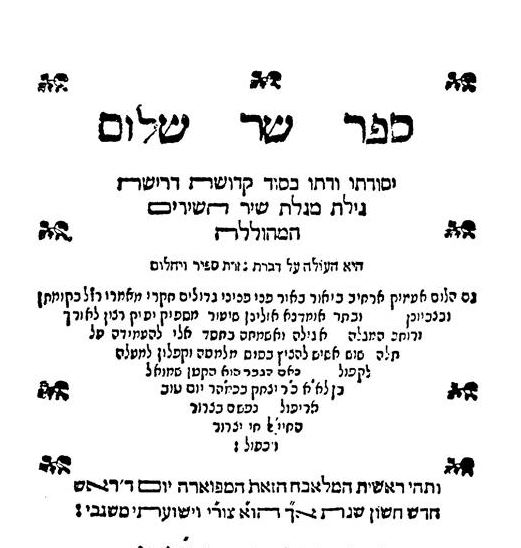
Rabbi Shmuel Aripol
talmid of the Mabit
c. 1585
<p>Rabbi Shmuel Aripol wrote in his commentary Sar Shalom to Shir Hashirim 2:7:</p><p>I adjure you, daughters who once lived in Jerusalem, and have now gone out and become scattered in a place of gazelles and deer of the field, i.e. in uninhabited places – still, you must not wake up and arise before the End.</p><p>In order words, even if you live in exile in places where the gentiles have relatively little control over you, do not arise from exile.</p><p>He explains the double expression “do not arise and do not arouse” as follows:</p><p>You yourselves must not arise, and you must not arouse a king or an official with you, to arise with you.</p><p>He continues: If we understand the words “gazelles and deer of the field” as being the anchor of the oath (i.e He made them swear by the gazelles and deer), then we can explain the choice of these animals as follows: A gazelle sleeps with one eye open. A deer runs while looking back at its pursuer. G-d warned the Jewish people: Even when you are asleep in exile, keep an eye out for the evil that will come upon you if you rise up before the time.</p>
Source
№
94

Rabbi Shmuel ben Yitzchak Yaffe Ashkenazi of Constantinople
author of Yefei Kol
1525-1595
<p>The Midrash (Shir Hashirim Rabbah 2:7) tells us the reason for the oath against going up as a wall: “If so, why does the king moshiach have to come to gather the exiles of Israel?”</p><p>The Yefei Kol explains: “If we come up as a wall from exile, why will the king moshiach have to come to gather the exiles of Israel? And since we know from many verses in Tanach that moshiach will gather our exiles, we cannot gather ourselves together.”</p><p>On the words of the Gemara (Kesubos 111b), “The Holy One, blessed is He, made Israel swear not to go up as a wall.” Rashi says, “Together, with a strong hand.” This seems to mean fighting a war to leave exile..</p><p>The Yefei Kol asks on Rashi: If going up as a wall means fighting a war to leave the exile, then why do we need an extra oath for that? There is already an oath not to rebel against the nations. He gives two answers. The first is that rebelling against a nation means only refusal to obey its laws while living under it, such as paying taxes. But if a nation does not allow its Jews to leave, and they sneak out, that is not rebellion. For that we have a special oath not to go up as a wall.</p><p>There is a flaw in this answer. It assumes that “going up as a wall” is a form of rebellion against the host country under which Jews live in exile. If so, sneaking out of one’s country should be a violation of this oath, no matter where the Jew is going – for example, from the Soviet Union to America. But we know that the oath only prohibits going to Eretz Yisroel. The entire page of Gemara in Kesubos is discussing only going to Eretz Yisroel.</p><p>Perhaps this is why the Yefei Kol offers a second answer: that going up to Eretz Yisroel is prohibited even with the permission of the nations. Since Hashem is the one who scattered us, we are not allowed to gather ourselves together, but rather we must wait until Hashem sends moshiach to gather us.</p><p>It is interesting that the compiler of the abridged Yefei Kol (printed in the standard Vilna edition of the Midrash Rabbah) only brings the Yefei Kol’s first explanation, which, we have shown, is so problematic.</p><p>The Yefei Kol brings proof to this from the fact that the words “as a wall” are used elsewhere by Chazal to mean peaceful immigration, with permission from the ruling power. “If she is a wall, we will build on her a fortress of silver” (Shir Hashirim 8:9). Chazal explain (Yuma 9b): “If you had made yourselves like a wall and come up, all of you, in the time of Ezra, then you would have been comparable to silver, which does not rot.” Similarly, the Midrash Rabbah on this verse says: “If Israel had come up as a wall from Bavel, the Beis Hamikdash would not have been destroyed for a second time at that time.” Now, we know that Cyrus and later Darius gave permission for the Jewish people to return to Eretz Yisroel. Had they all gone up, it would not have necessitated military conquest. Yet Chazal use the expression “as a wall.” This shows that “as a wall” does not mean by military force, but refers to any mass immigration.</p><p>The Yefei Kol brings a second proof to this from the words of the Midrash on Shir Hashirim 2:7: ““If so, why does the king moshiach have to come to gather the exiles of Israel.” He understands this to mean: If we gather ourselves to Eretz Yisroel, why does the king moshiach have to come to gather the exiles of Israel? And since we know from many verses in Tanach that moshiach will gather our exiles, we cannot gather ourselves together - even with permission from the gentiles.</p><p>The Yefei Kol does not say explicitly that he is disagreeing with Rashi and it is unlikely that he would disagree with Rashi. Rather, he is saying that Rashi also means that the oath applies even with permission from the nations. Rashi’s words “with a strong hand” mean with great effort and urgent appeals, similar to the meaning of the words in Shemos 6:1, "With a strong hand he will expel them from his land." Pharaoh did not use force or warfare to expel the Jews from Egypt; he came knocking humbly on Moshe and Aharon's door, begging them to leave (Rashi on Shemos 11:8).</p><p>According to this we can answer another question. Rashi's words were "together, with a strong hand." If Rashi meant warfare, then how did he know that the oath only applies when all of the Jewish people are together? If it is the rebellion that the oaths come to forbid, shouldn't rebellion by a small group of Jews also be forbidden? But now that we understand that the oath applies even with gentile permission, Rashi has to write the word "together" because that is really the definition of "as a wall": any mass immigration. Then he writes "with a strong hand" to explain why mass immigration is metaphorically described as a wall: because it requires strong efforts, just as a wall is strong. (Vayoel Moshe 1:17)</p><p>The Midrash (Shir Hashirim 2:7) lists the Children of Ephraim as one of the instances when the Oath was violated. They counted the 400 years of Egyptian exile from the time when the decree was made, when the Holy One, blessed is He, spoke to Avraham at the Covenant Between the Parts. But in reality the count began 30 years later when Yitzchak was born. What did they do? They gathered together and went out to war, and many of them fell dead. Why? “Because they did not believe in Hashem, neither did they trust in His deliverance” (Tehillim 78:22).</p><p>The Yefei Kol on the Midrash asks: The children of Ephraim based themselves on their understanding of Avraham's prophecy. So why is this called not believing in Hashem and not trusting in His deliverance? Why is this transgressing the Oath? It was a mere mistake! The answer is, he says, the mistake was deeper than just a misinterpretation of numbers. They thought that when the foretold time came, the Jews would leave Egypt with their own strong hand, without the open intervention of Hashem. Thus they did not rely on the deliverance of Hashem, but on their own swords. Had they understood that the Exodus would be a miraculous event, they would certainly not have taken the initiative without seeing a miracle to demonstrate that this was Hashem's plan. Even when the real redeemer – Moshe Rabbeinu – eventually came and claimed that Hashem had sent him, the Jews were not allowed to believe in him without seeing a miracle. And they had a tradition that the true redeemer would say the words "pakod pakadti". Since the children of Ephraim had no such redeemer, they could not have left Egypt relying on Hashem's deliverance. Clearly, they thought that they would succeed in leaving Egypt and conquering Canaan through purely natural means. This is why the Midrash says that "they transgressed the Oath" – the oath that prohibited the Jews from leaving the exile on their own, without Hashem's intervention. And "they transgressed the End" – since there was no sign from Hashem, they should have realized that their numerical calculation was wrong.</p><p></p>
Source
№
90
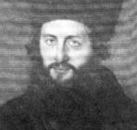
Rabbi Shmuel Binyamin Sofer
the Ksav Sofer
1815-1871
<p>The Ksav Sofer (Drush Leshabbos Hagadol 5606/1846) responds to the accusation that when Jews pray for the redemption and the coming of moshiach, they are rebelling against the government. This is false, he says – we are under oath not to rebel against the nations (Kesubos 111a), and we are commanded to pray for their welfare (Avos 3:2). Furthermore, he says, we must be thankful to our current government for allowing us to practice our religion freely.</p><p>The Ksav Sofer on the Megillah writes that Haman accused the Jews of being disloyal: “And the laws of the king they do not keep” (Esther 3:8). Chazal add that he claimed that the Jews insulted the king (Megillah 13b). Had these accusations been true, we would understand why King Achashveirosh gave the order to kill the Jews. But they were false: the Jews kept the king’s laws and did not rebel against him. In fact, at no time in history had Jews ever rebelled against their king, even when he harmed them. Despite years of slavery in Egypt, the Jews entertained no thought of rebelling, and Pharaoh wrongly suspected them when he said, “Lest they multiply and, in time of war, they join our enemies” (Shemos 1:10). That there was nothing to this suspicion became clear later, during the plague of darkness, when the Egyptians could not see or move for three days, and the Jews could easily have killed them, including Pharaoh himself – yet they did nothing. They did not leave Egypt until Pharaoh commanded, “Arise, go out from amidst my people!” (12:31). That explains why, just after the plague of darkness, the Torah states that the Jews found favor in the eyes of the Egyptians (11:3). The Egyptians realized that they had suspected the Jews wrongly all these years. If this was true in Egypt, where the Jews were harmed and enslaved, all the more so was it true under Achashveirosh, who did nothing against the Jews. On the contrary, he was kind to them and promoted Mordechai to a high position in the palace gate.</p><p>The falsehood of Haman’s accusations became known to all when the Jews realized that the king had approved of genocide against them. They could have organized themselves and gone to war against the Persian Empire – perhaps they would succeed, and even if not, what did they have to lose? But instead, they followed in the footsteps of their forefathers, fasting and crying out in prayer to Hashem to annul the decree. There could have been no greater proof that Haman was a liar.</p><p>This, says the Ksav Sofer, explains why Mordechai, when he was given permission to change the king’s decree, wrote that the Jews would be allowed to kill their enemies. At first glance, this seems strange: wasn’t it enough for him that he had saved his people’s lives? Why did they have to kill their enemies, an act that would surely reignite the hatred and jealousy of the gentiles? But the answer is that Mordechai wanted to prove the above point: that out of loyalty to the king, the Jews had not fought back against Haman’s decree. It was still possible to maintain that the only reason they had not fought back was because they felt too weak, or they did not have the morale or skill for warfare. Now, however, after the Jews, with permission from the king, had demonstrated that they were capable of killing 75,000 of their enemies in one day, it was clear that the only reason they had not done so before was because of their loyalty and obedience to the king.</p><p></p>
Source
№
91
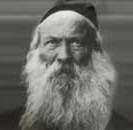
Rabbi Shmuel Borenstein
the Shem Mishmuel
1856-1926
<p>The book of Shemos begins, “And these are the names of the children of Yisroel who came to Egypt, with Yaakov, each man with his household came.” The patriarch Yaakov had two names: Yaakov and Yisroel. Why does the Torah begin with Yisroel and then switch to Yaakov in mid-sentence? The Shem Mishmuel says that the name Yisroel denotes the elevated and noble status of the Jew, as the angel said when explaining this name, "For you have ruled over angels and men and been successful" (Bereishis 32:29). The name Yaakov, on the other hand, denotes the Jew in exile who must lower himself, bow and scrape before the gentiles, just as Yaakov bowed before his brother Esav and called him "my master".</p><p>When Israel began the Egyptian exile, they had to be very careful not to assimilate there and become like the Egyptians. Therefore they armed themselves with three physical boundary-markers that safeguarded the nobility of the Jew, symbolized by the name "Yisroel": they kept their own distinctive names, clothing and language. They viewed their own culture and beliefs as superior to those of the Egyptians; they looked down on and despised the Egyptian idolatry. Hence: "These are the names of the children of Yisroel who came to Egypt" – they survived their stay in Egypt because of the power and nobility of Yisroel.</p><p>Yet at the same time the Torah says "with Yaakov" – that in addition to this nobility they maintained the attitude of subservience indicated by the name Yaakov. They accepted the yoke of exile willingly, and they did not complain about the heavy burden of exile. The Kuzari (3:12) says that a Jew who endures the exile with complaints almost loses his share in the World to Come. There was no contradiction between their subservience and their nobility and superiority, because the subservience was not to Egypt, but to G-d, Who had decreed the exile upon them. These two modes of conduct were what kept the Jewish people alive in exile.</p><p>This conduct must serve as our model during the current long and bitter exile, to feel the nobility of our Torah ways and yet bow to our oppressors, as the prophet writes, "He gives his beater his jaw, and suffers humiliation" (Eichah 3:30). Rabbi Simcha Bunim of Pshischa once said, "If a gentile calls out an insult at a Jew and the Jew answers back, he lengthens the exile, G-d protect us." Rather the Jew must bear the exile while feeling inner strength and nobility. This, he writes, is the opposite of the well-known movement that cannot bear to continue with the subservience and burdens of exile. By so doing, we will soon merit the redemption, when our ashes will be replaced by pride.</p><p></p>
Source
№
92
Rabbi Shmuel Eidels
the Maharsha
1555-1631
<p>Certainly every Jew is permitted to go up to Eretz Yisroel, but they must not go up with a strong hand and to build for themselves the walls of Jerusalem. When Nechemiah said, “Let us build the walls of the city and no longer be a shame” (Nechemiah 2:17), it was with the king's permission, as it is written (2:8). But Toviah, who asked Nechemiah regarding the building of the wall, “Are you rebelling against the king?” did not realize that it was being done with the king's permission. (Maharsha's commentary on Kesubos 111a)</p><p>In ancient times, a city wall was a mechanism of defense. Thus the Maharsha means that for Jews to go up and live in Jerusalem under the protection of the ruling power is fine, but if the Jews start to build the walls without permission, it is a signal that they seek independence and self-defense. It is not the building of the wall that violates the oath; it is the rebellion against the ruling power symbolized by building the wall.</p><p>In our times, city walls are quaint historic structures and they mean little in terms of defense. The Zionists did much more to declare their independence and fight for it. They certainly transgressed this oath according to the Maharsha.</p><p>The Maharsha was clearly against Zionism, because he says that the only time it is permitted to build a wall or other means of self-defense is if Jews live under a ruling power or empire, such as the Persian empire in Nechemiah's time, and the king gives permission. Then their self-defense does not show independence; it is nothing more than a police force against local bands of marauders.</p><p></p>
Source
№
93
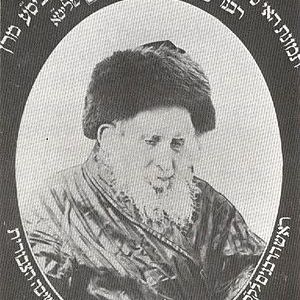
Rabbi Shmuel Salant
Chief Rabbi of Jerusalem
1816-1909
<p>Rabbi Shmuel Salant quotes the law that a wife may force her husband to move to Eretz Yisroel (Kesubos 110b), and then asks why – even according to the Ramban, he says, there is no obligation on every Jew to move to Eretz Yisroel, since this is one of the Three Oaths. He therefore explains that she can only force him to move if she is willing to move even without him. In that case, if he refuses to come along, he is not fulfilling his marital obligations to her, and he must divorce her. But if she wants to move only with him, then he has no obligation to move. In other words, the reason why he must divorce her if she is willing to move to Eretz Yisroel is not because his refusal to move to Eretz Yisroel is considered neglecting his obligations as a Jew. It is only because once she moves, he would be neglecting his obligations as a husband. (Printed in Tzefunos, year 3 issue 1, p. 46)</p><p>Decades ago, a certain Mizrachi activist named Yitzchok Nissenbaum came to the Holy City. Like all Mizrachists in those days, he was dressed like a real religious Jew, with a long, flowing beard. In those days, the battle against Zionism had not really begun, so the common people did not recognize these Zionists and Mizrachist for who they really were. At first, this Nissenbaum met with Rabbi Shmuel Salant and presented his request: he wished to deliver a speech at Yeshiva Etz Chaim. Rabbi Shmuel Salant, who was familiar with worldly matters, of course absolutely refused.</p><p>When he saw that he was not successful with Rabbi Shmuel Salant, he turned to Rabbi Y. Winograd of Yeshiva Toras Chaim, who, without paying enough attention to who he was, gave him permission to speak in Yeshiva Toras Chaim that Shabbos.</p><p>Then Reb Tzvi Michel called his students, Rabbi O. Porush and Rabbi Moshe Semnitzer and others, and sent them to interrupt the speech. And so they did: they called out boldly from the audience and prevented him from finishing the speech. Of course, no one from the yeshiva attended the speech in any case. (Om Ani Chomah, Booklet 10, Tammuz 5729 (1969), p. 262; Mishkenos Haro’im p. 228)</p><p></p>
Source
№
31
II · Lithuanian Tradition
Rabbi Shneur Kotler
Rosh Yeshiva of Beis Medrash Govoha of Lakewood
1918-1982
Rabbi Shneur Kotler said, People call the Satmar Rav's ideas a shitah, but it is not. He proves in Vayoel Moshe that this is what Shas and poskim, Rishonim and Acharonim all held. What he holds is what all gedolei Yisroel once held.
Source
№
95
Rabbi Simcha Yissocher Ber Halberstam
the Chiashenover Rebbe
d. 1914
<p>In its early years, the Zionists plastered signs on the doors of synagogues all over Europe saying, "Dear brothers and sisters! The long, two-thousand-year exile calls to us and says: If I am not for myself, who will be for me (Pirkei Avos 1:14)? If we don't help ourselves, who will take care of us?"</p><p>Rabbi Simcha Yissocher Ber Halberstam, the Chiashenover Rebbe (d. 1914, son of the Shinnover Rebbe and grandson of the Divrei Chaim) wrote in reaction:</p><p>“Woe to the ears that hear such things! The heart is torn in twelve pieces to hear their words and see their signs that they hang on the walls of the shuls and halls of study, openly denying our hope of redemption with words that stab like swords, saying, ‘If I am not for myself, who will be for me?’ These are words that it is forbidden to hear, and with such words they fill the world.</p><p>“And then there arose people who are called Mizrachi, a group which is distinct from the Zionists in name only, but truthfully, inwardly, their ideology is identical to that of the Zionists, for the evil of Zionism lies not in the fact that it is sinners who support it, for the truth is the opposite: Zionism is a dangerous disease in and of itself – heresy and denial of our faith – and that is why these sinners support it.” (Divrei Simcha, 3)</p><p>Rabbi Moshe Dov Weinberger, the Payer Rav, related that he heard from his grandfather, Rabbi Yehoshua Heschel Landau, the Vitker Rav, who was a fiery Chiashenover chossid, that the Chiashenover Rav once said: “There will one day come a time when Jewish blood will be spilled in the streets, and people will run to read the newspapers to see why the bloodshed happened, and they won’t want to know that everything is happening due to the sin of Zionism.</p><p>The Satmar Rav used to quote the Chiashenover Rebbe as saying, "When a day goes by when the Zionists don't write against me in their newspapers, I have to do some introspection and repentance, because it shows that I must have let up a little in my battle against them."</p><p></p>
Source
№
49
IV · Sephardi & German Tradition
Rabbi Solomon Breuer
Rav of Frankfurt
1850-1926
But more than the most radical reform, Jewish truth is threatened by the movement propagated under the name of Zionism, which, if given ever greater influence would, God forbid, only serve to prolong our Galuth. Yet there are numerous Yehudim who do not shrink back from joining this movement which displays the most sinister kfiro on its banner in the hope to return the homeland under its leadership.
Source
Chokhmo U'musar volume Bamidbar-Devarim p. 39-40. Felheim Publishers Jerusalem New York 5737/1977
№
96
Rabbi Tzadok Hakohein of Lublin
1823-1900
<p>After the sin of the spies, Moshe Rabbeinu warned those who regretted their original lack of faith that they should not attempt to go into Eretz Yisrael by force: vehi lo sitzlach, it will not be successful. Rabbi Tzadok Hakohein of Lublin (Tzidkas Hatzadik 46) comments, “Now it will not succeed, but there will be another time when it will succeed. That will be in the time of the footsteps of moshiach.”</p><p>Reb Tzadok doesn't say it will be permitted, only that it will be successful. There is a big difference. He writes that the Jews who attempted to invade the land knew that their act was against the will of Hashem, but justified it based on the statement of Chazal, "All that the host tells you to do, you must do, except for leaving” (Pesachim 86b). They understood this to mean that for the sake of coming close to Hashem, one may sometimes violate the command of Hashem. We need not listen when He tells us to leave Him. Despite these good intentions, they were punished severely for their sin. But Moshe said to them, "And it will not succeed" - this time it will not succeed - hinting that there would come a time when such a sin would have success. “In the Footsteps of the Moshiach, chutzpah will increase” (Sotah 49b). That is the time when such a brazen idea – to conquer the land in violation of Hashem’s command – will meet with some success.</p><p>Furthermore, if you read Reb Tzadok carefully you will see that he is not even talking about the physical conquest of Eretz Yisroel. He interprets the entire story of the spies and the invaders in accordance with the Zohar (3:161) which takes it as a metaphor for Torah. The Jewish people's punishment after the sin of the spies was that they should not get Torah, in accordance with the rule (Tehillim 50:16), "To the wicked, G-d says, Why do you speak of my laws?" In the time before the coming of moshiach, the wicked will brazenly try to learn Torah against Hashem's will. Eventually, the Torah will make them better people and Hashem will be happy with them.</p><p></p>
Source
№
97
Rabbi Tzvi Elimelech of Dinov
author of Bnei Yisaschar
1783-1841
<p>Rabbi Tzvi Elimelech of Dinov once posed the question: Why is our custom regarding the location of a wedding the opposite of the custom at the time of the Gemara? In the Gemara's times, the kallah was brought from her father's house to the chosson's house, and the wedding took place there (Rashi on Kesubos 15b). But our custom is that the kallah's parents make the wedding in their place, and the chosson comes to the kallah. He answers by quoting the Zohar (Vayikra 6a) where Rabbi Acha asked Rabbi Shimon the meaning of the verse, "The virgin of Israel has fallen and will never get up." (Amos 5:2) Rabbi Shimon replied that it means that in the final redemption, Israel will not get up on her own as she did in previous redemptions, such as in Babylonia where the Jews went back with permission from the king. She is not allowed to do so, for Hashem adjured us not to arouse or awaken the love before its time (Kesubos 111a). Rather she will wait in her place in exile until Hashem Himself comes and helps her up. This is why the later generations established the custom of having the wedding in the place of the kallah, and the chosson comes to her to rejoice with her - the chosson symbolizes Hashem, who will come back to the Jewish people in exile. Indeed, all Israel's customs are prophecy, for they are the children of prophets! (Bracha Meshuleshes on Chullin Chapter 5, Mishnah 3)</p>
Source
№
98
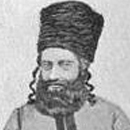
Rabbi Tzvi Hirsch Chajes
known as the Maharatz Chajes, Talmudic Commentator
1805-1855
<p>The Maharatz Chajes writes that ever since Yirmiyahu the prophet commanded, "Seek the welfare of the nation to which I have exiled you" (29:7), and the oaths in Kesubos 111a went into effect, forbidding the Jewish people from going up as a wall or rebelling against the nations, the Jewish people has remained faithful. "We have been scattered among the nations in all parts of the world for a long time, under the rule of various nations and religions, and never has it been heard that we should be disloyal to our government." (Kol Sifrei Maharatz Chajes, Toras Haneviim, in a letter to the Chasam Sofer)</p>
Source
№
99
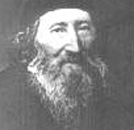
Rabbi Tzvi Hirsch Kalischer
founder of Chovevei Tzion
1795-1874
<p>Rabbi Tzvi Hirsch Kalischer was one of the founders of the Chovevei Tzion movement, and in his 1862 book Derishas Tzion he claimed that Jewish settlement in Eretz Yisroel could be the beginning of the redemption. But he made clear that this did not include fighting wars and conquering the land from the gentiles, which would be prohibited under the oaths:</p><p>Regarding the oath of G-d, which forms the basis for people who retreat from listening to the words of the prophet – “Do not give Him silence until He establishes and makes Jerusalem the praise of the earth” (Yishaya 62:7) – I will respond to you in two ways: Firstly, the warning “do not arouse or awaken” (Shir Hashirim 2:7) only means that we may not go up with a strong hand to the walls of Jerusalem, as it is explicitly stated in the Gemara there (Kesubos 111a) “that they must not go up as walls” and Rashi explains “with strength”; and also that they must not rebel against the nations; but rather they must wait for the kindness of Hashem, that He turn His eye of mercy to us, if He is pleased with the work of our hands. He only made us swear not to engage in forceful immigration, to go up to the mountain with strength, but to desire its stones and to settle the land is fine, and there is no greater mitzvah than this, as I have explained at length. (Maamar Kadishin p. 35b)</p>
Source
№
100
Rabbi Tzvi Hirsch of Ziditchoiv
1763-1831
<p>Reb Tzvi Hirsch gives an astounding explanation of a strange story told by the Gemara (Succah 53a). In the presence of Rabbi Yehudah Hanasi, Levi performed the feat of “kidah” - bowing down and kissing the earth without supporting his weight with anything but his thumbs, and then raising himself up in the same manner. As a result of this Levi became lame. Rashi explains that Rabbi Yehudah Hanasi was the leader of the generation and was constantly worried about all the problems facing the Jewish people, so people used to do tricks in his house in order to cheer him up.</p><p>Reb Tzvi Hirsch explains that Levi’s act contained a hidden message: that the future redemption will come completely from above, without any help or support from human beings, for so were we forsworn by the gazelles and deer of the field not to arouse the love before it is desired by Hashem. This is the meaning of the verse in Yishaya 63:5, “And I will look and there will be no helper, and I will be silent and there will be no supporter; so My arm will save for Me, and My anger will support Me.” (Ateres Tzvi, Bereishis p. 33)</p>
Source
№
101
Rabbi Yaakov Emden
1697-1776
<p>In Perek Shirah we learn: "The animals of the field say, 'Blessed is He Who is good and does good.' The gazelle says, 'And I will sing of Your strength, and praise in the morning Your kindness.'" Rabbi Yaakov Emden in his commentary on the Siddur explains that the "animals of the field" is a hidden reference to the Jews killed in Beitar. By revolting against the Romans, they transgressed the oath against forcing the end of exile, and thereby incurred the punishment: "I will permit your flesh like the gazelles and deer of the field." (Kesubos 111a) This is why they are called "animals of the field." They are now living (=chayos) in Gan Eden, and every day they say, "Blessed is He Who is good and does good," the blessing composed by the Sages after their death. The song of the gazelle, "I will praise in the morning Your kindness," is mentioned immediately afterwards because after the war of Beitar the Jewish people learned not to force the end, only to wait and hope for the "morning," the end of exile known only to Hashem.</p><p>In his Sefer Hashimush (66b) he writes, “Whether Hashem redeems us now, or whether He keeps us in exile for thousands of years more, G-d forbid, we will not give Him up for any other belief. Far be it from us, seed of Israel that was sanctified at Mount Sinai! Hashem chose us for His unique nation in the world. He made us, not we. We have never known anything besides Him, and there is no G-d but He. We will not even seek to get our land, our inheritance – not by might and not by power. We have already been foresworn not to go up as a wall, not to rebel against the government; and Chazal permitted our flesh like the gazelles if we attempt such presumptuous things. Our eyes are uplifted to Hashem our G-d until He has mercy on us and returns our exiles, and shows us wonders as in the days of the exodus from Egypt.”</p><p>In the same work on page 76b he writes that we have suffered too many times from false messiahs, and therefore we have taken upon ourselves never to arouse the love before its time. “We will not seek to free ourselves on our own, until Hashem’s word comes, He sends His moshiach and frees us.”</p><p>In a treatise on love (Migdal Oz, Aliyas Ahava Chapter 12), he speaks about the various loves: love of wisdom, love of long life, and love of honor. Then he says: “There is another love that is good and important, but it is hated and forbidden when at the wrong time, due to the prohibition on forcing the hour, as it is written, ‘I adjure you…not to arouse or awaken the love until it is desired.’ However, we are always to await redemption soon.”</p><p>In Toras Hakanaus (p. 26), Rabbi Yaakov Emden says, “One who looks forward to the salvation and does not force the hour will merit to see the comforting of Zion and the building of Jerusalem.”</p><p></p>
Source
№
29
II · Lithuanian Tradition
Rabbi Yaakov Kamenetsky
Rosh Yeshiva of Torah Vodaas
1890-1986
For He will see that the enemy's hand is strong, and no one is saved or supported. The Gemara in Sanhedrin 97a derives from here that moshiach will not come until the Jewish people gives up on the redemption and thinks that there is no supporter or helper for Israel.
Source
Devarim 32:36
№
102
Rabbi Yaakov Sasportas
Rabbi of Amsterdam
1610-1698
<p>Rabbi Yaakov Sasportas published a book called Tzitz Novel Tzvi about the Sabbatean movement and his reaction against it. The book has been republished many times in an abridged form, called Kitzur Tzitz Novel Tzvi. Reading this book, we notice some similarities between Sabbateanism and Zionism, and from Rabbi Sasportas’s reaction we can learn what our reaction should be today.</p><p>For example, he writes (p. 37a) of a certain follower of Shabbesai Tzvi, “How could he have had the audacity to claim that moshiach will go and ask the Turkish Sultan to set Israel free and make him king? This is wrong, for the redemption will not come through any man, but only through Hashem’s hand, as it says, ‘On that day I will raise up the fallen succah of David’ (Amos 9:11). And in the dream of Nevuchadnetzar, ‘a stone broke off, not by hands’ (Daniel 2:34), which meant that ‘the G-d of Heaven will establish a kingdom that will never be destroyed’ (v. 44). So how could it happen through the Turkish Sultan?”</p><p>Rabbi Sasportas prints a letter by the rabbis of Venice, bemoaning the fact that their community strayed after Shabbesai Tzvi: “Who does not understand the acts of Hashem? The justice of Hashem is true and right, measure for measure. Because our community did not keep the oath not to arouse or awaken the love, we were punished with anger and powerful hatred that is aroused against us among the gentiles in all places.”</p><p>In a letter of advice to a rabbi who was attempting to convince his community not to join the Sabbateans (p. 50b), he writes: “In general, you should warn them not to force the end of exile and not to violate the oaths written in Shir Hashirim (2:7) ‘not to arouse or awaken the love before it is desired.’ Remind them of history, of past generations who erred in following false messiahs and prophets. In cases where danger is likely, we must not rely on miracles! This is especially true of the western communities, whose exile is much more difficult due to the oppressive governments they live under. They must lend their shoulder to bear the yoke of exile, and wait for their redeemer, though he may tarry. They must hope and hope again, for he will surely come and not delay. And in reward for their hoping, the redemption will come sooner, as Chazal say, ‘Israel has no merit but hoping. They are worth redeeming in reward for the waiting’ (Yalkut Shimoni Tehillim 736).”</p><p></p>
Source
№
103
Rabbi Yaakov Yehoshua Falk
author of Pnei Yehoshua
1680-1756
<p>The Pnei Yehoshua, on Kesubos 111a, asks how the oath on the nations of the world fits in with the verse "do not arouse or awaken the love before it is desired" which refers to the redemption of the Jewish people. He answers that if the nations afflict the Jews too much, they will cause the Holy One, blessed is He, to hasten to bring the redemption before its time, as we find in the case of the Egyptian exile. Even then, it will be Hashem bringing the redemption early, not the Jews on their own as Zionists claim (that once the gentiles violate their oath the Jews may violate theirs).</p><p>The Pnei Yehoshua also asks how the oath against revealing the secret to the nations (one of the six oaths derived from the verses in Shir Hashirim) has to do with the redemption. He answers based on Rashi's second explanation, that "the secret" refers to the reasons behind the Torah. When the gentiles learn the reasons and secrets of the Torah, they will come to recognize the great love between Hashem and the Jewish people, and they will then stop ruling over them and will arouse the redemption before its time. Thus Chazal with their holy inspiration foresaw today's situation, where 85 million Christians are strong supporters of Zionism and push the Jewish people out of exile prematurely, all due to the fact that they have read the Torah and recognize that the Jews are Hashem's beloved people.</p><p>In Kesubos 110b, the Pnei Yehoshua brings the Gemara in Yuma 9b, which says that Reish Lakish was swimming in the Jordan River, and Rabbah bar bar Chana came and offered him a hand. Reis Lakish said to him, "By G-d, I hate you! For it says, 'If she is a wall, we will build on her a fortress of silver; and if she is a door we will fashion upon her a plank of cedar' (Shir Hashirim 8:9). If you had made yourselves like a wall and come up, all of you, in the time of Ezra, then you would have been compared to silver, which does not rot. Now that you have come up like doors, you have been compared to cedar, which does rot." Some Zionists understand this to mean that Reish Lakish disagreed with the Three Oaths. He held that there would have been nothing wrong with all the Jews returning from Bavel. The Pnei Yehoshua concludes, "It is not a unanimous opinion and there are conflicting Agados."</p><p>However, the Pnei Yehoshua writes this only because he learns that the Three Oaths took effect at the beginning of the Babylonia exile, after the destruction of the First Beis Hamikdash. That is when the verse "they will be brought to Bavel and remain there" was said. The permission granted by Koresh was not a real redemption, he says, and that is why the majority of Jews did not respond to it. They were waiting for the true redemption with moshiach. This is similar to the Ramban in Sefer Hageulah. Accordingly, he says, Reish Lakish must disagree with this Gemara in Kesubos. But Reish Lakish still agrees to the Three Oaths and would say that they went into effect after the destruction of the Second Beis Hamikdash.</p>
Source
№
104

Rabbi Yechezkel Landau of Prague
the Noda Biyehuda
1713-1793
<p>The Noda Biyehuda spoke strongly against any Jew who entertained thoughts of revolting against Queen Maria Teresa. To prove that the obligation of honoring a monarch and not rebelling against him or her applies to a non-Jewish monarch, he cited two of the Three Oaths in Kesubos 111a: the prohibition on going up as a wall (which means, in his words, “that Israel must not gather together to go up and conquer Eretz Yisroel”) and the prohibition on rebelling against the government. (Printed in Kovetz Kerem Shlomo, year 16, Iyar 5753, p. 7.)</p>
Source
№
105
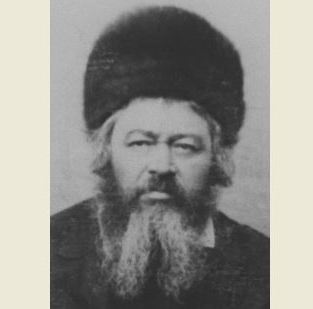
Rabbi Yechiel Michel Epstein
Author of Aruch Hashulchan
1829-1908
<p>We are also obligated to make sure that there not be found among the Jews, Heaven forbid, any thought, even in the heart, of rebellion against our master the Czar and his ministers. Chazal have already stated that the Holy One, blessed is He, made Israel swear not to rebel against the governments (Kesubos 111a). And it is written, 'Fear Hashem, my son, and the king.' And a kingdom on the earth symbolizes the Kingdom of Heaven. (Aruch Hashulchan, Choshen Mishpat 2:1)</p>
Source
№
107
Rabbi Yehoshua ibn Shuaib
student of the Rashba
1280-1340
<p>"I have adjured you..." (Shir Hashirim 2:7) The prophet says that G-d made them swear in Egypt not to force the end. In the end it did happen: the Bnei Ephraim forced the end and left 30 years early, for they counted the 400 years of exile from the time of the decree (the Covenant Between the Parts, when Avraham Avinu was 70 years old), while in reality the count befan when Yitzchok was born, as the Torah says, "Your seed will be strangers..." (Bereishis 15:13). That is why He made them swear by the deer and gazelles, for it is known that the nature of these animals is that during the month of mating season (the rut), they walk around without thinking, like drunkards, and that is why it's so easy for the hunters to catch them at that time. So too, the Jewish people: only love could confuse them such that they fall into the hands of their enemies, as happened to the Bnei Ephraim when they fell into the hands of the Philistines. (Drashos Ri Ibn Shuaib, Pesach)</p><p>The Midrash (Bereishis Rabbah 75:6) tells how Rabbi Yehuda Hanasi instructed Rabbi Efes to write a letter from him to “our master, King Antoninus.” Rabbi Efes wrote, “From Yehudah the Nasi to our master, King Antoninus.” Rabbi Yehuda Hanasi took the letter, read it and tore it up, telling him to write instead, “From your servant Yehuda, to our master, King Antoninus.” Rabbi Efes asked, “Rabbi, why do you ignore your own honor?” Rabbi Yehuda Hanasi replied, “Am I better than my grandfather? Didn’t he say ‘so says your servant Yaakov’?”</p><p>Rabbi Yehoshua ibn Shu’ib cites a version of this Midrash in which Antoninus received the letter and responded, “If only I would be your servant in the World to Come!” (Cf. Avodah Zarah 10b.) But Rabbi Yehudah Hanasi says again, “I am no greater than my grandfather who humbled himself before your grandfather.”</p><p>Ibn Shu’ib stresses that we, the Jewish people in exile, must follow in the footsteps of Yaakov Avinu, bearing our trials and responding to danger by humbling ourselves before the gentiles. We must call them our masters and ourselves their servants. Furthermore, when speaking to them we must minimize our own greatness, just as Yaakov Avinu said, “I have sojourned with Lavan” – I have not become a powerful or wealthy figure. “I have acquired an ox and a donkey” – the blessings of my father, that I would get the dew of heaven and the fats of the earth, were not fulfilled, for oxen and donkeys are neither from heaven nor from earth. And the singular “ox” and “donkey” also minimized Yaakov’s wealth (Rashi). This is the humble way we must speak to the gentiles. (Drashos)</p><p></p>
Source
№
43
III · Jerusalem Tradition
Rabbi Yehoshua Leib Diskin
Chief Rabbi of Jerusalem
1817-1898
When Rabbi Yehoshua Leib Diskin, in his last years, heard about the new Zionist movement, he realized the danger it posed to the Jewish people. He called for his two of his greatest disciples, Rabbi Zorach Braverman and Rabbi Moshe Frankenthal, and said to them: Write letters in my name to three of the gedolei hador, asking them to call a meeting of rabbanim to decide how to stop this movement before it is too late.
Source
Mara D'ara Yisroel v. 2 p. 43
№
106
Rabbi Yehoshua Trunk of Kutna
1821-1893
<p>Even the Ramban, who lists conquering Eretz Yisroel as one of the 613 commandments, would not obligate conquest nowadays. Since the mitzvah is conquering the land and it doesn't apply nowadays, we aren’t really doing the mitzvah when we live in Eretz Yisroel. What we are doing is preparation for the mitzvah, just like baking matza is a preparation for the mitzvah of eating matzah. (Yeshuos Malko, Yoreh Deah 66)</p>
Source
№
111
Rabbi Yehuda ben Maharam Chalava
1300's
<p>Rabbi Yehuda ben Maharam Chalava comments on Yaakov Avinu’s three preparations for meeting Esav: “What happened to Yaakov with Esav will happen to us in all generations, and we must prepare ourselves with prayer and gifts, but not with war. Scripture has prohibited this under oath, as it says, ‘I adjure you, daughters of Jerusalem, by the gazelles and deer of the field.’” (Imrei Shefer on Vayishlach)</p>
Source
№
108
Rabbi Yehuda Greenwald
Rav of Satmar, Hungary
1845-1920
<p>It should not occur to you that you, by human hands, can build the ruins of Jerusalem, and arouse the end of exile with great love of the Jewish people, to improve their state through this action, as the Zionists hold. Only Hashem is the healer of the broken-hearted and the bandager of their pains, and if Hashem does not build a house, its builders work in vain. (Zichron Yehuda 1:187)</p>
Source
№
109
Rabbi Yehuda Halevi
author of the Kuzari
1075-1141
<p>Rabbi Yehuda Halevi describes a dialogue between the king of the Khazars and a rabbi. The rabbi states that the Jewish people is closer to G-d today, in their humble state of exile, than if they were a mighty nation. The king asks: "That might be so if your humility were voluntary; but it is involuntary, and if you had power you would slay." The rabbi replies: "You have touched our weak spot, O King of the Khazars. If the majority of us had accepted our humble status for the sake of G-d and His Torah, G-d would not have forced us to bear it for such a long period. But only the smallest portion of our people thinks thus. Still, the majority can expect some reward as well, because they bear their degradation partly from necessity, partly of their own free will. For whoever wishes to do so can become the friend and equal of his oppressor by uttering one word, and without any difficulty. Such conduct does not escape the just Judge. If we bore our exile and degradation for G-d's sake, as we should, we would be outstanding even by the standards of the generation of the messianic era, for which we hope, and we would accelerate the day of our long-awaited deliverance." (Kuzari Maamar 1, 113-115)</p><p>Today Rabbi Yehuda Halevi is portrayed by some as a Zionist, because he wrote beautiful poems of longing for Zion, and made "aliyah" himself at the end of his life. But the above passage from the Kuzari shows us that this is a great error. Rabbi Yehuda Halevi considered it a great merit to accept exile for G-d's sake; his longing was not to break out of exile by force, only to experience the long-awaited redemption and, in the meantime, to see the beloved Holy Land.</p><p></p>
Source
№
110
Rabbi Yehuda Loew of Prague
the Maharal
1520-1609
<p>The Midrash Rabbah on Shir Hashirim 2:7 begins: “I adjure you, O daughters of Jerusalem.” With what did He make them swear? Rabbi Eliezer says: He made them swear by heaven and earth.</p><p>The Maharal (Netzach Yisroel, Chapter 24) explains this in a manner similar to Moshe Rabbeinu’s warning to the Jewish people to keep the Torah (Devarim 30:19). Moshe said, “I call witness to you today heaven and earth: I have placed life and death before you, the blessing and the curse; and you shall choose life, so that you might live, you and your offspring.” Rashi explains: "The Holy One, blessed is He, said to Israel: Look at the heavens that I created to serve you. Have they ever changed their ways? Did the sun ever fail to rise from the east and light up the world? Look at the earth that I created to serve you. Did it ever change its ways? Did it ever fail to sprout when you planted it? Did it ever grow barley when you planted wheat? If the heavens and the earth, which are not rewarded or punished, never failed to do their jobs, then you who are promised reward or punishment should certainly keep the commandments of the Torah."</p><p>Here too, says the Maharal: Just as the heavens and the earth keep to the order of nature decreed by G-d, never changing, in the same way the Jewish people must keep the order of exile decreed by G-d. And just as the heavens and earth, if they were to change their nature and order, would bring havoc and destruction to the world, so too if the Jewish people leaves the exile decreed on them by G-d it would mean destruction for them, G-d forbid. Therefore they must not violate the decree.</p><p>After Rabbi Eliezer’s opinion that He made them swear by heaven and earth, the Midrash brings Rabbi Chanina’s opinion, that He made them swear by the Patriarchs and Matriarchs, and Rabbi Yehuda’s opinion, that He made them swear by circumcision. Then comes the Rabbis’ opinion: He made them swear by the Generation of Martyrdom. “By the tzvaos” – they did My will (tzivyoni) in the world, and I did My will with them. “Or by the deer of the fields” – they pour out their blood for the sanctification of My name like the blood of the gazelle and the blood of the deer. This is the meaning of the verse, “For on Your account we were killed all day long; we were considered like sheep to be slaughtered” (Tehillim 44:23). Rabbi Chiya bar Abba said: If someone were to say to me, give your life for the sanctification of the name of the Holy One, blessed is He, I would give it, but only if they would kill me quickly. But in the Generation of Martyrdom I would not be able to withstand the trial. What did they do in the Generation of Martyrdom? They brought balls of iron, made them white-hot in the fire and placed them under their armpits and burned their souls out of them. And they brought shells of reeds and placed them under their nails and burned their souls out of them. This is what Dovid said: “To You, Hashem, I raise up my soul” (Tehillim 25:1). The written text says not “esa” (I raise up) but “asi” (I burn). (This is not true of our text of Tehillim, but the Midrash must have had a different text.)</p><p>The Maharal explains the progression of the Midrash as follows. Rabbi Chanina held that swearing by heaven and earth would not be enough, because the Jews in exile could argue that the motions of heaven and earth are natural, whereas the exile goes against a man’s nature. Perhaps in those circumstances they would not be obligated to keep to the terms of exile. Therefore, he says, Hashem made the Jews swear by the Patriarchs and Matriarchs, who withstood trials and did His will even when it was difficult for them.</p><p>Rabbi Yehuda holds that swearing by the Patriarchs would not be enough, because the Jews in exile could argue that the Patriarchs, despite all their trials, did not actually get killed, whereas in exile Jewish blood flowed like water. Perhaps in those circumstances they would not be obligated to keep to the terms of exile. Therefore, he says, Hashem made them swear by circumcision, which does involve loss of blood.</p><p>The Rabbis hold that swearing by circumcision would still not be enough, because the Jews in exile were subjected to more than just bloodshed – they were tortured and burned alive. Jews might argue that under such circumstances, the oath need not be kept. Therefore, they say, Hashem made them swear by a generation of martyrdom. Just as Jews kept the terms of exile even during the reign of Hadrian, when they were tortured and burned, so too they must keep it in all times.</p><p>At this point, the Maharal is bothered by a question: isn’t this circular reasoning? The Jews today must keep the oath, because the Jews during Hadrian's reign kept it. But what was forcing the Jews during Hadrian's reign themselves to keep it? He answers that indeed, they did not have to, but they did; and the oath is based not on their obligation to stay in exile under those conditions but on the fact that they did so.</p><p>Then he proposes a different explanation of the entire Midrash. The Midrash does not mean that Hashem made them swear by heaven and earth, the Patriarchs, circumcision, and the Generation of Martyrdom. It means that the oath applies even in heaven and earth, in the Patriarchs, in circumcision and in a Generation of Martyrdom. Even if the nations torture the Jews to death, they are not allowed to violate the oaths and leave exile, says the Maharal.</p><p>The Satmar Rav asks: How can the Maharal say that one must keep the oaths even in a case of death and torture? Don’t we hold that there are only three sins – idolatry, murder, and immorality - for which one must be killed rather than transgress? The Satmar Rav answers that violating the oaths is tantamount to heresy, because when the Jewish people rebel against the nations in exile or try to leave exile, they are in effect saying, “Our fate is in our own hands; Hashem does not run the world.” In other areas such as making a living or medicine we are permitted to make efforts and so those efforts do not amount to denial of Hashem; but in the area of exile and redemption human effort was explicitly forbidden by the oaths. Thus, a violation of the oaths is, in effect, a denial of Hashem’s control over the world. The Radbaz (4:92) rules that heresy has the same status as idolatry, for which one must be killed rather than transgress. Similarly, the Shulchan Aruch Yoreh Deah 157:3 rules: "A Jew may not say he is a gentile to avoid being killed." The Tur explains the reason: "For by saying he is a gentile he is agreeing to their religion and thus denying the basic principles of Judaism." We see that although the Jew has no intention at all of denying a principle of Judaism, and he is only saying it out of fear for his life, yet since he would be causing the gentiles to think he is agreeing to their religion, he may not do it. Here too, even if someone has no intent of denying the coming of moshiach and replacing Hashem's redemption with a man-made substitute, yet since he appears to be doing just that, it is forbidden. (Vayoel Moshe 1:76).</p><p>Another answer to the Satmar Rav’s question is given by Rabbi Yehoshua Dovid Hartman in his footnotes on the Maharal. The Minchas Chinuch in mitzvah 425 argues that the obligation to fight the Canaanite nations applies even when the Jewish lives will be endangered by fulfilling this obligation, because it is only natural that in the course of a war, some people are killed on both sides, and the Torah’s laws are not predicated on miracles. So it must be that implicit in the command to wage war is the fact that one must give his life for this mitzvah. In a similar way, we can say that the prohibition to rebel against the nations or to leave exile on our own is, by its nature, a law that implies danger and even death, since the nature of life among the nations is that sometimes they kill Jews. When the Gemara says that there are only three sins for which one must be killed rather than transgress, it does not need to count laws such as fighting the Canaanites or the Three Oaths, which are by their very nature dangerous laws. It counts only the prohibitions on idolatry, murder and immorality, the keeping of which do not usually result in danger to life – only when the Jew is threatened and forced into doing it.</p><p>Based on the Maharal in Chiddushei Agados on Kesubos, we can offer another answer. He says there that the exile is an unnatural phenomenon, and therefore three oaths – three decrees – were necessary to maintain it in a constant state. Two decrees were placed upon the Jewish people that they should not lessen or negate the exile by rebelling or gathering themselves to Eretz Yisroel, and one decree was placed upon the nations that they not increase the exile. The Maharal concludes, “Understand these things well, for there is no doubt that any change in this matter would be a very, very dangerous thing.”</p><p>Hashem decreed that any human effort to end the exile will fail. This explains why the Maharal holds we must keep the oaths even when our lives are in danger in exile: because we know that any effort to leave exile on our own would result in even greater loss of life.</p><p>As to why the Maharal calls the oaths "decrees", we must note that there are many commentators who ask how the oaths had force on the Jewish people. We do not find that Shlomo Hamelech ever gathered the entire people and spoke the words of these oaths to them, so that they could reply “Amein”. And even if he did, an oath only applies to the people who took it, not to their descendents for all time. One cannot impose an oath on unborn people (Yoreh Deah 228:35). And certainly the gentile nations never accepted any oath, so how can the Gemara say an oath was imposed on them? It could be that the Maharal is answering this question by saying that the oaths are really decrees, that is, things Hashem causes to happen as part of a punishment. For example, Chazal sometimes say that Hashem “decreed” death on a certain person. Does that mean he is obligated to go and kill himself? No. It simply means that all his efforts to save himself will fail. Here too, in order to maintain the state of exile, Hashem decreed that the Jewish people would never be successful at gathering themselves or at rebelling against the nations. Any attempt to contravene the decree would meet with failure, as the Gemara concludes: “If you keep the oath, good; but if not, I will make your flesh ownerless like the gazelles and deer of the fields.”</p><p>Some Zionists claim that from the fact that Zionism succeeded, we have proof that the decree has ended. But the history of Zionism is not over, and no one knows what will happen in the end.</p><p>Furthermore, you cannot say that the intent of the decree was that the Jewish people should keep trying to violate it until they chance upon the right moment. Look at the severity of the consequences of failure! It is certainly foolish to attempt something that will almost certainly lead to the failure expressed by the terrifying words of the Gemara, and called by the Maharal “a very, very dangerous thing.” The intent of the oaths was obviously that we should not make any such attempt. We should simply wait for moshiach.</p><p>Furthermore, it is important to realize that these decrees are not simply part of nature; they are part of the Jewish belief system. The Maharal understood the oaths not as regular prohibitions, like the commandments not to work on Shabbos or eat pork, but as part of the prophecy that Hashem sent us into exile and will one day redeem us. The commandments of the Torah are given to us and we have free will to obey or disobey them. The very existence of a commandment is proof that free will exists in that area. Free will is the only area of the world in which Hashem removed His control and allowed us to choose; thus our choice, right or wrong, does not contradict the principle of faith that Hashem controls the world. For example, someone who succumbs to temptation and eats pork may still believe in Hashem and all the Thirteen Principles of Faith. Even stealing is not tantamount to denial of Hashem's providence.</p><p>But one who violates the oaths, while not violating a specific law, is denying Hashem's mastery over the world and the truth of His promises. The oaths are not commandments given over to our free will. They are Hashem's decree of exile and promise of redemption.</p><p>As an analogy, if someone goes through a red light, he will have to pay a fine, but it will not be too severe, because even as he was breaking the law, he recognized the authority of the government and its right to make laws; he simply broke the law for his own convenience. But if someone takes his king's army and, in the name of his country, wages war on another country, he will be punished severely, because his crime shows that he does not recognize the king as the only one authorized to make such a decision. He may protest before the court and say, "Where in the lawbooks is there any law against what I did? I thought it was permitted." They will reply, "Didn't you know there was a king running this country? How could you have thought that you had the right to do it yourself? That is the height of treason against the king."</p><p>Similarly, the oaths are not a technical law on the books; they are the ultimate statement of Jewish belief that Hashem alone decides when we are to be exiled and when we are to be redeemed. You cannot decide to violate them and then use your temporary success to justify your decision.</p><p>The Maharal in Be’er Hagolah (Be’er Hashvii, p. 147) responds to the accusation that Jews pray for the downfall of the gentiles in the Blessing Against Heretics. If this were true, he says, it would contradict this mishnah in Pirkei Avos as well as the words of Yirmiyahu. Our Sages exhorted us to accept the authority of the nations, during exile, and taught that we were commanded under oath not to rebel against them. This exhortation is so crucial, the Sages say, that the punishment for violating it is that our flesh will be made ownerless like the gazelles and deer of the field (Kesubos 111a). Without a doubt, the reason is that it is Hashem’s decree that we live under the government of the nations, and we must not annul this decree by force. We may only pray for the time when the Jewish kingdom will be restored, as we say in the later blessings of Shmoneh Esrei, “the sprout of David your servant” and “to Jerusalem Your city may You return in mercy.”</p>
Source
№
112
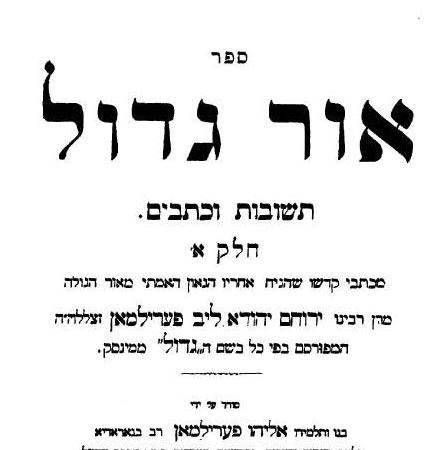
Rabbi Yerucham Yehuda Leib Perlman
known as the Gadol of Minsk
d. 1896
<p>The Gadol of Minsk writes in a halachic response regarding the settlement of Eretz Yisroel: "This mitzvah is different from all others. All other mitzvos are absolute personal obligations: every single Jew must do them, without any conditions or limitations. The mitzvah of settling Eretz Yisroel, on the other hand, devolves only on the Jewish people in general, and it has limitations. Chazal foresaw with their holy inspiration that if this mitzvah were given over to all and were set up as an obligation for everyone, the people would burst in unlawfully and immigrate by force, without any planning or sensibility. From the corners of the earth there would stream Jews by the thousands, and they would then commit two wrongs. </p><p>1) Since they would have no reliable source of income, they would struggle against one another for money, crime would increase and poverty would be rampant. Destitution would drive the Jews to go against their own best judgment and against their Creator; they would defile the holiness of the place, strip the land of its honor, and the losses would outweigh the benefits. </p><p>2) Such a movement of awakening could lead to a spirit of rebelliousness against the just kings of the earth under whom the Jewish people live. The Jews' evil inclination and irrational behavior would induce them to throw of the yoke of their government, and leave in a rebellious manner. Then the hearts of the rulers would turn against the Jews, they would remove their protection from them and the Jewish people would be subject to persecutors and plunderers.</p><p>Therefore, Chazal informed us that Hashem made Israel swear not to go up as a wall (which Rashi explains to mean together) and not to rebel against the nations - and according to the above, the second oath is the reason for the first. Through this oath, Chazal weakened the power of the mitzvah [to settle Eretz Yisroel] and limited its scope due to the needs of the times. This is an example of the principle, 'When it is time to act for Hashem, they annulled Your Torah' (Tehillim 119:126)."</p><p>To counterbalance this, Chazal broadened the mitzvah of settling the land and placed it upon the Jewish people as a whole. Over the course of time, a wonderful, lasting solution for how to fulfill this mitzvah has developed: the Jews of the Diaspora lands honor Eretz Yisroel with their money by making regular contributions to the support of that tiny number of poor Jews who live in Eretz Yisroel. This is the rationale behind the Rabbi Meir Baal Haness fund, established in all our countries, which the Jewish people have accepted upon themselves as a permanent law. Thus some fulfill the mitzvah with their money, and others with their bodies." (Printed in Sinai v. 6, p. 213)</p><p></p>
Source
№
114
Rabbi Yishaya ben Eliyahu di Trani
c. 1300
<p>Rabbi Yishaya ben Eliyahu di Trani codifies the halachos of living in Eretz Yisroel as follows: "A man should rather live in Eretz Yisroel, even in a city of mostly gentiles, than outside the Land, even in a city of mostly Jews, for whoever lives in Eretz Yisroel is similar to one who has a G-d, and whoever lives outside the Land is similar to one who has no G-d, as Scripture says, 'For they expelled me today from basking in the property of Hashem, saying, go worship other gods' (Shmuel 26:19). Nevertheless, Israel must not all go up together with a strong hand, in an act similar to the ingathering of the exiles, for they are not permitted to hasten the end, until the Creator hastens our redemption, as Scripture says (Shir Hashirim 2:7), 'Do not arouse or awake the love before it is desired.'" (Piskei Riaz, Kesubos 13:8)</p>
Source
№
113
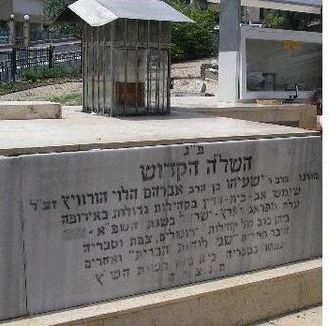
Rabbi Yishaya Horowitz
the Shelah Hakadosh
1565-1630
<p>The Shelah Hakadosh says: Just as Yaakov used prayer, gifts and war, so do we approach Esav's descendants in our times. Our power is only through our mouth, to pray to Hashem in difficult times. But war – to fight with the nations – does not apply to us. Our "war" with them means activism – that Jewish activists must boldly face kings and leaders and work for the good of the Jewish people. Even if the leaders throw them out angrily, they must keep coming back; this is our pillar of existence in exile, until moshiach comes. (Vayishlach, Amud Hagolah)</p><p>In another place (Torah Shebichsav, Parshas Shemos) the Shelah says that in the era of exile we must bear our fate, as the Midrash says on the words “I adjure you,” that we should not rebel; and on the contrary, we must accept it submissively and do as Yaakov Avinu did, presenting gifts.”</p><p>The Shelah also says (Torah Shebichsav, Vayakhel Pekudei) that even when it comes to mitzvah observance, where we must resist anti-Torah government decrees, we must take care to speak submissively: “All the seventy nations do not have the power to make one Shabbos-observer violate Shabbos. Still, in order not to start a fight with the nations, Hashem commanded us to hide this fact from them.”</p>
Source
№
45
IV · Sephardi & German Tradition
Rabbi Yisrael Abuhatzeira
The Baba Sali
1890-1984
Rabbi Yisrael Abuhatzera, the Baba Sali, held the Satmar Rebbe and his sefer Vayoel Moshe in very high esteem. In Hasaba Kadisha Baba Sali, Rabbi Yehuda Yehudayoff, the Baba Sali's son-in-law, recounts how his father-in-law asked him to buy a copy of Vayoel Moshe.
Source
Tiferes Yoel v. 3 pp. 113-114
№
7
I · Chasidic Tradition
Rabbi Yisroel Hager
Vizhnitzer Rebbe
1860-1936
Satan is constantly changing his disguise and sending his agents to entrap the Jewish masses in his net, so that they throw the yoke of the Torah off their necks. The names of these agents change every few generations. Today, they are called Zionists.
Source
Kedosh Yisroel ch. 16 p. 276


